Between Stifling Cash Flow And Lost Confidence, Iraq Faces A Banking Reform Battle To Save Its Economy.
Economy Yesterday, | 558 Baghdad Today – Baghdad Financial and economic expert Ahmed Al-Tamimi stressed, on Wednesday (August 13, 2025), that reforming the banking system in Iraq has become an urgent necessity to address the deep structural challenges that hinder the growth of the national economy.
Al-Tamimi told Baghdad Today that “excessive reliance on cash transactions,weak digital infrastructure, and limited financial inclusion have hindered private sector growth and limited opportunities for citizens,” stressing that the required reform must be “radical and urgent.”
He explained that the reform plan should include updating technological systems, strengthening banking oversight, developing anti-money laundering mechanisms, adopting global governance and transparency standards, and rebuilding trust between banks and the public,
describing this step as “the cornerstone of any successful reform.”
Al-Tamimi added, “Reforming the banking system is not a luxury, but an economic and security necessity.
It requires the government and the Central Bank, in coordination with international institutions,
to adopt a comprehensive vision to ensure the development of a banking sector capable of keeping pace with global developments and supporting economic development in the country.”
Iraq’s banking system has suffered for years from deep structural imbalances,
most notably its near-total reliance on cash transactions, weak digital infrastructure, and limited financial inclusion.
These have slowed private sector growth and reduced investment opportunities.
The trust gap between the public and banks has been exacerbated by weak governance and transparency, the absence of strict oversight, and the prevalence of phenomena such as
money laundering and financial corruption.
Economists believe that despite attempts by the Central Bank and the government to launch partial reforms, the lack of a comprehensive vision and effective coordination with international institutions has prevented tangible change.
This comes at a time when economic and security pressures are mounting, making banking sector reform a crucial step to keep pace with global developments and support the national economy. https://baghdadtoday.news/280659-.html
CBI Selects Oliver Wyman To Develop The Banking Reform Plan
Iraq Amr Salem August 13, 2025 315 The Central Bank of Iraq. Photo: AFP Baghdad (IraqiNews.com) – Officials from the Central Bank of Iraq (CBI) met on Tuesday with representatives from Oliver Wyman, a global management consulting firm, to discuss a banking reform proposal offered by the Iraqi Private Banks League (IPBL) to modernize Iraq’s banking industry and align operations with worldwide practices.
The CBI mentioned in a statement that Governor Ali al-Alaq and a specialist team met with representatives from Oliver Wyman to review the details of the IPBL’s proposal,
the state-run news agency (INA) reported. Al-Alaq acknowledged that the
CBI had held an in-depth discussion during which participants indicated
comprehension of the plan’s key aspects and
how certain elements might be flexibly changed to enable implementation processes.
The strategy intends to stabilize the banking sector so that it can function securely and effectively in accordance with international norms and standards, as well as local legislation, while also strengthening governance, compliance, and risk management.
The strategy also allows banks to perform an economic role that promotes growth while providing the most effective services possible. The CBI noted that adopting the strategy will boost local and international trust in Iraq’s banking industry. https://www.iraqinews.com/iraq/cbi-selects-oliver-wyman-to-develop-the-banking-reform-plan/
Iraq And Its Economic Role
Economic 2025/08/12 Mohammed Hassan Al-Saedi Iraq possesses significant economic potential that qualifies it to play a pivotal role in the region’s economy.
However, this role has been fluctuating and declining over the past decades due to wars, corruption, and mismanagement.
Today, with regional and international transformations, attention is turning to Iraq as a potential economic player,capable of exerting influence not only through its geographic influence,
but also through its wealth, human capital, and unique strategic location linking the Arabian Gulf,
the Levant, Turkey, and Iran.
Natural resources are the foundation of this economic role,
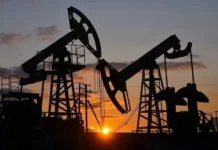
as Iraq ranks fifth in the world in terms of proven oil reserves.
Its oil exports are the primary source of national income, and Iraqi oil constitutes a fundamental element of regional energy security.
Several neighboring countries, such as Jordan and Turkey, rely on Iraqi oil,
whether through pipelines or direct exports.
However, the Iraqi economy suffers from “rentierism,” as it relies almost entirely on oil revenues, making it vulnerable to fluctuations in global market prices and limiting its ability to exert economic influence beyond this framework.
Despite Iraq’s vast mineral, agricultural, water, and population resources, weak investment and
rampant corruption have prevented these resources from being transformed into economic strengths.
Iraq’s geographical location represents a major gateway for trade and transit, and
is one of the most significant elements of its potential economic strength.
It forms a natural corridor between the Gulf and the Levant, and
possesses an important sea outlet to the Arabian Gulf via the port of Umm Qasr.
It could also become a major hub for regional land and rail trade routes,
particularly in light of the “Development Road” project, which aims
to connect the Grand Faw Port to Turkey and Europe via a modern transportation network.
If implemented, this project will provide a vital alternative to traditional trade routes and position Iraq strategically on the regional and international economic map.
However, it still requires effective regional partnerships and legal guarantees to attract investment and implement the required infrastructure.
On the economic front, Iraq seeks to strengthen cooperation with neighboring countries,
particularly Saudi Arabia, Iran, Turkey, and Jordan, through electricity interconnection projects, trade exchange, and joint industrial zones.
These initiatives are part of a drive to reduce reliance on the single market, diversify sources of income, and restore a balanced economic role.
However, these relations are often affected by political conflicts and regional tensions, which weakens Iraq’s ability to impose its economic priorities or create a sustainable cooperative environment.
For Iraq to become a leader and an effective regional economic player,fundamental transformations are necessary in the country’s economic and administrative structure, beginning with institutional reform and combating corruption, moving on to modernizing infrastructure, and culminating in developing a clear strategic vision for the national economy, based on diversification and openness.
Restoring regional and international confidence in Iraq as a safe investment environment requires
political stability, an impartial judiciary, and flexible economic legislation,which can be achieved with serious political will.
Iraq is not a resource-poor or weakly influential country; rather, it is rich in natural and human potential and a strategic location.
However, activating these elements and transforming them into tools of regional economic influence requires a comprehensive renaissance in thinking, policies, and management.
A stable, open Iraq with an economy free from corruption can be a major economic player in the region,
not merely an arena for conflict or a marketplace for others. https://alsabaah.iq/118881-.html
Kurdistan And Self-Sufficiency
Economic 2025/08/13 Yasser Al-Mutawali With every visit to the Kurdistan Region, I discover a unique phenomenon: the region is advancing with confident steps and achieving successes on the ground.
Perhaps one of my interests as a journalistic observer of economic phenomena,
within my specialization in economic journalism, is to identify everything new and useful to serve as a model for an important experience that can be utilized for generalization at the level of Iraq.
This is the best way to benefit from the experiences of others in a single environment and a single country, and certainly in specific aspects.
However, this does not mean not benefiting from successful experiences around the world in other aspects.
The developments that I observed during the ten days I spent recently are in addition to what I have followed since the period of change after the year (2003) during my continuous visits to the region and
I wrote a lot about them in the economic page of Al Sabah newspaper and described it as a model experience.
This model is embodied by the significant development in the fields of construction, development, services, organization, and cleanliness, all framed by a strict law against any violations of regulations.
This is an indicator of a civilized phenomenon and a civilized model that we have always called for emulation, foremost among which is the traffic system, as it is the umbrella of the law.
Security stability was one of the most important reasons for achieving this exemplary development.
This is true, and it was the argument used by the governorate administrations when demanding the achievement of such a model.
Now that stability has been achieved, the argument for achieving this model has fallen, of course.
Now the discussion will be limited to food self-sufficiency, as food security is the ultimate goal in the face of global crises,
in which food is often used as a weapon to maintain citizens’ livelihoods.
In this regard, we point to a recent example of the use of food as a weapon,
namely the Russian-Ukrainian war, which saw Europe cut off strategic grain supplies.
My focus here is on achieving food self-sufficiency, which is a logical consequence of this stability.
In the markets of vegetables, red and white meat, you find a difference in prices of about (25) percent compared to the rest of the governorates of Iraq and (35) percent compared to the prices in the capital, Baghdad.
Thus, you find that the purchasing power in the region is able to easily acquire its sustenance despite the challenges of (delaying salaries) for reasons that we are not concerned with regarding the delay here.
Along the vast expanses of the region’s entrances, you can see farms irrigated using modern irrigation techniques, and vegetables filling the springs.
You can also see factories manufacturing feed for model livestock, advanced food industries, dairy products, and packaging factories that cover the region’s need for poultry meat, eggs, dairy products, and locally manufactured foods, with a surplus exported to the center and sometimes to neighboring countries.
The region is also known for its abundant production of strategic crops,
including wheat, corn, barley, and fodder crops, using modern and advanced agricultural methods.
There are signs that this is being achieved in a number of Iraqi cities following the recent stability.
This is not all, there is much more to talk about, and this is what the article allowed for.
That’s why we said, “Kurdistan is a model of self-sufficiency.”
We hope to benefit from this model in the rest of Iraq, so that we can be proud of our national production, achieve our food security, and dispense with any imports, and even export the surplus. https://alsabaah.iq/118956-.html
For current and reliable Iraqi news please visit: https://www.bondladyscorner.com