Iraq has moved aggressively in 2025 to overhaul its fuel region—pushing seize initiatives, sealing multi-billion-dollar partnerships, and tying the effort to strength safety and an export ambition by using 12 months’s give up.
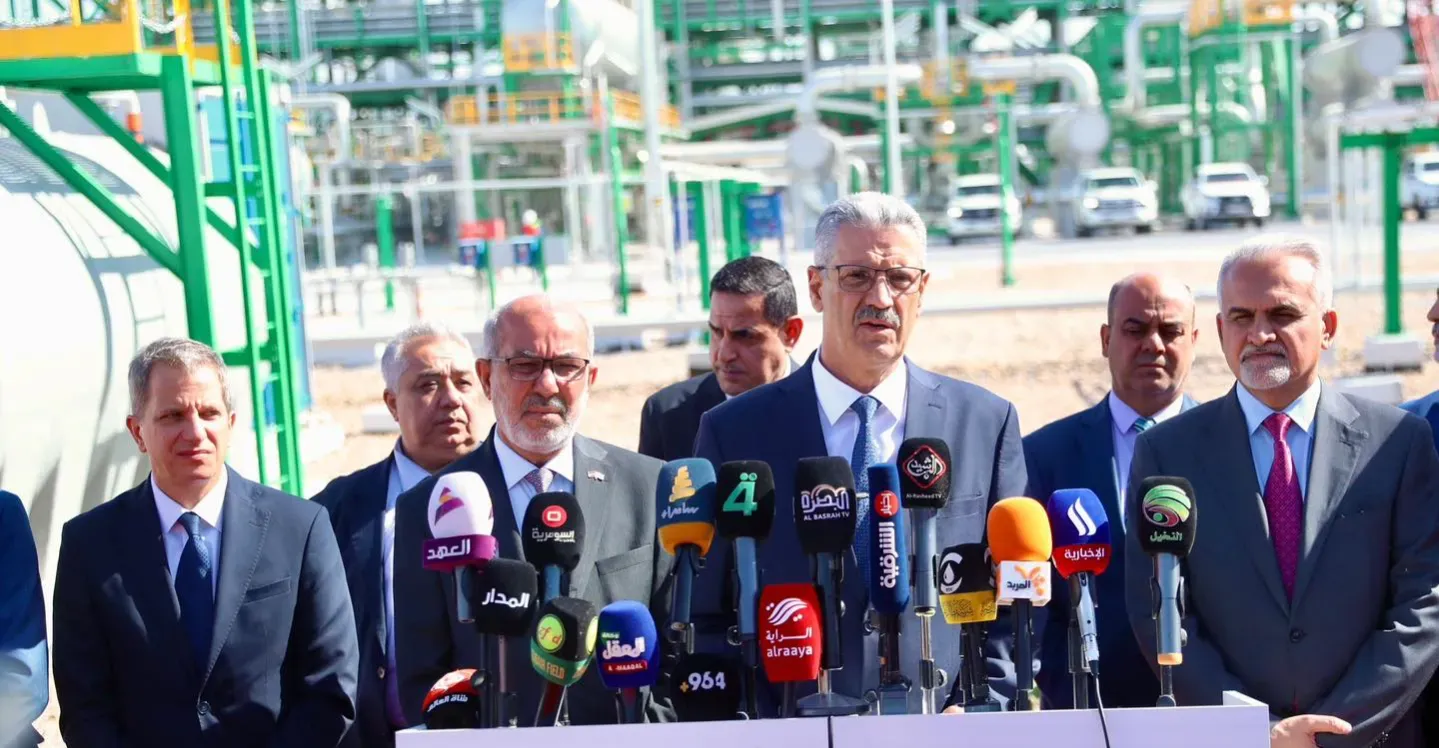
Oil Minister and Deputy top Minister for strength Affairs Hayan Abdul Ghani says associated-gas usage has climbed above 70%, a shift he frames as the backbone of Iraq’s power transition and financial stability.
Wealth Ignited
Iraq sits on giant natural-gasoline reserves—variously estimated at 127–132 trillion cubic toes—yet production and usage have long lagged, with most volumes tied to grease output and historically burned off on the wellhead. multiple datasets and ministry briefings area Iraq many of the international’s top flarers, with 2024 flaring at more or less 17.37 bcm (down from 2023) as capture projects slowly come online.
the gap displays lacking midstream: processing flowers, compression, and pipelines, and fragmented governance that slowed investment cycles for years.
2025 Momentum
Baghdad’s most seen lever is the $27-billion fuel increase integrated mission (GGIP) anchored in Basra. In September, the authorities presided over joint operating agreements a few of the Oil Ministry, TotalEnergies, QatarEnergy, and the Basra Oil agency—an umbrella supposed to capture and procedure related gas, upload solar capability, and supply the water-injection infrastructure that sustains oil output. The companions reiterated plans to recover up to six hundred mmscfd of fuel alongside oil improvement and software-scale solar.
at the floor, 2025 has featured challenge starts and facility launches. In January, Abdul Ghani laid the muse stone for a quick-track gas plant on the Artawi (Ratawi) subject in Basra, designed at 50 mmscfd. the “ArtawiGas25” is expected to strength round 200,000 Basra-vicinity homes as soon as operational.
In July, the minister inaugurated new processing capacity in Basra—which include a central processing facility and a clean line at the Basra natural gasoline Liquefaction plant—increasing aggregate potential by an envisioned 330 mmscfd while re-committing to cease routine flaring earlier than the decade’s cease.
Baghdad has paired this with broader upstream cooperation. Senior Iraqi and corporation officials emphasize that GGIP’s fee lies in integration: gas capture feeding electricity flowers, a sun build to ease top loads, and seawater injection to stabilize oil fields—elevating universal machine efficiency rather than including isolated assets.
Tehran’s Shadow
From the podiums this year, Abdul Ghani’s message has been consistent: fuel seize above 70% is a ground, not a ceiling, and flaring need to stop through 2028–2029 with the present day venture pipeline. He has additionally related liquid self-sufficiency (notably diesel) to the identical suite of investments and logistics improvements, signaling a pivot away from emergency fuel imports which have strained the budget.
inside parliament, the tone is greater careful. “there’s no instant alternative for Iranian gas,” lawmaker Ali Saadoun al-Lami informed Shafaq information in March, warning that a unexpected deliver surprise could shave megawatts off Iraq’s grid and hit Baghdad and the provinces hardest. That assessment resurfaced whilst sanctions dynamics complicated import waivers and when assaults disrupted Iranian infrastructure—episodes that uncovered Iraq’s vulnerability before home capture and processing absolutely mature.
Molecules to Megawatts
specialists speaking to Shafaq information have careworn that 2025’s gas push only pays off if midstream and power-sector reforms flow in lockstep. strength analyst Hassan Abdul Jabbar said the revived BP partnerships inside the north are significant because they “encompass superior structures designed to amplify [processing] capability and reduce operational waste”—the sort of incremental fixes that rely among flagship tasks.
Deputy Oil Minister for fuel Affairs Ezzat Saber has one at a time argued that utilization profits have to be matched via power-area restructuring and demand-side management to translate molecules into stable hours of supply.
on the intake facet, international facts ranked Iraq 38th globally in gas use this 12 months at extra than 19.three bcm—a reminder that demand is already huge and rising. without seize, that demand crowds out available fuel for industry and locks in imports.
Waivers Say No
To bridge close to-term gaps, Baghdad additionally sought opportunity gas through a Turkmenistan swap routed thru Iran and managed by a Swiss intermediary. but the Ministry of electricity recounted to Shafaq news this week that US objections have avoided implementation up to now—any other signal that import-reliant stopgaps remain politically contingent.
Midstream the Wall
Shafaq’s strength insurance this 12 months charts consistent but choppy profits. officially, usage moved from the low-50s to the high-60s and now above 70% as new units got here on-line; flaring volumes fell marginally in 2024 after years near the top of global scores. yet the dimensions of the problem stays monstrous: tens of billions of cubic meters burned over the past decade; billions of greenbacks spent on gasoline imports; and a country wide grid nonetheless quick of height call for in summer time.
four constraints recur in expert and legitimate commentary who spoke to Shafaq information:
- Midstream gaps: Compression, processing, and trunklines are the price-limiters. Even wherein seize rises at the sphere degree, bottlenecks downstream can pressure venting or renewed flaring throughout outages.
- Financing and execution hazard: huge-ticket initiatives like GGIP listen political and contractor chance; slippage on any detail—solar, water injection, or gasoline hubs—cascades throughout the gadget.
- Institutional coordination: Oil, energy, and provincial government ought to synchronize maintenance windows and dispatch; in any other case, captured fuel nonetheless fails to map cleanly into energy.
- Import publicity: Any surprise to Iranian flows—or to waivers—reverberates straight away throughout Iraqi cities, irrespective of development in Basra.
The 2029 Promise
If the 2025 program holds, Iraq may want to turn large volumes from flare stacks into electricity feedstock over the next 24–36 months, with the Artawi units and GGIP levels doing early heavy lifting. Abdul Ghani has tied that trajectory to an export ambition for late 2025—often liquids and condensates linked to gasoline processing—whilst reiterating a 2028–2029 horizon for ending recurring flaring. The credibility of that course will activate how quick the new flowers ramp, how reliably pipelines and compression stay on-line, and whether grid enhancements hold tempo.
signposts to look at
- subject-level throughput: The 50 mmscfd Artawi module is a test of time table area and integration—can Iraq translate modular builds into cumulative capture gains at scale?
- Import international relations: The Turkmen switch’s destiny—and any renewed US waivers—will decide whether or not Baghdad can hedge seasonal spikes till domestic seize saturates the power area.