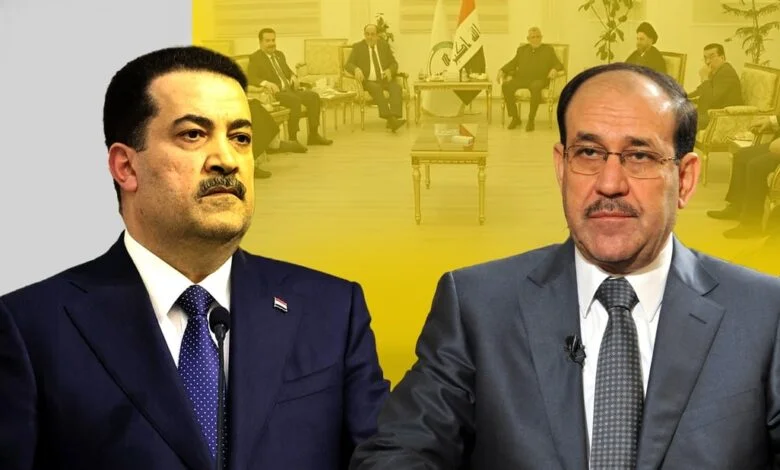
Dr. Fadel Al-Younes says the recent meeting between Nouri Al-Maliki and Prime Minister Mohammed Shia Al-Sudani should not be seen as a real step toward fixing divisions inside the Shiite political bloc. In his view, this meeting is just another round of temporary agreements that show up whenever tensions rise over who controls the prime minister’s seat.
Speaking to Al-Manassat, Al-Younes explained that Iraqi politics does not really run on clear national plans or programs. Instead, it follows quiet, unwritten rules about how power and money are shared. From this angle, the meeting wasn’t about unity. It was about deeper struggles over who holds power and how much power any one leader is allowed to have.
Al-Younes believes Maliki’s chances of returning as prime minister are now very weak. Over time, Maliki’s influence has faded, and his political history is still tied to claims of corruption and security failures. Because of that, Al-Younes says Maliki’s name is mainly used inside the coordination framework as a bargaining tool — not as a serious option to lead the country again.
As for Prime Minister Al-Sudani, Al-Younes sees his chances as more realistic, but still limited. His position depends heavily on regional and international understandings, along with cautious acceptance from the United States. It’s not built on a strong, independent political base. Because of this, Al-Sudani acts more like someone managing balance between forces, rather than a leader making bold, independent decisions.
According to Al-Younes, the real problem sits inside the coordination framework itself. The groups within it coexist without real trust. That lack of trust keeps any prime minister boxed in. They are not allowed to build a strong parliamentary bloc or gain lasting control inside state institutions. This makes it almost impossible for a prime minister to become a true center of power.
Al-Younes ended with a warning. Governments formed under this system are governments of compromise, not governments focused on building a strong state. If this approach continues, Iraq may keep a surface level of stability, but the state itself will remain weak and unable to make real decisions — unless the political rules change from within, or major regional and international shifts force a new balance of power.