The Iraqi government is thinking about changing the original plan for the Baghdad Metro, according to Mohammed al-Najjar, the Prime Minister’s Advisor for Investment Affairs.
Speaking on Thursday, al-Najjar said the goal is to move toward a full transportation system, not just a single metro line. The new vision would combine surface routes, elevated tracks, and underground lines, depending on the area.
In a TV interview, he explained that Baghdad has changed dramatically over the years. The city’s population has grown from about three million to nearly ten million, and the city itself has expanded far beyond its old borders. Because of this, he said the metro’s routes and designs need a serious review.
According to Iraq’s state news agency (INA), the latest report sent to the prime minister presents a comprehensive transport plan. In this plan, the metro would be the core system, fully connected with buses and trams. The idea is to help people move smoothly from metro stations to their final destinations without adding more traffic to the streets.
The metro lines would vary based on location. Surface lines would cost between $20 and $30 million per kilometer. Elevated lines would cost $50 to $70 million per kilometer. Underground lines, which are the most expensive, would cost around $200 million per kilometer.
Al-Najjar said underground lines would only be used in central Baghdad, where population density is very high.
He also revealed that major international institutions, including the World Bank and the European Bank for Reconstruction and Development (EBRD), have shown real interest in working on the project.
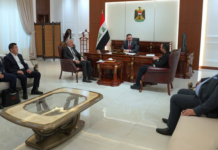
Last week, Prime Minister Mohammed Shia al-Sudani directed that global institutions such as the International Finance Corporation (IFC) and the European Investment Bank review the project proposals and help build a new investment plan alongside Iraqi institutions.
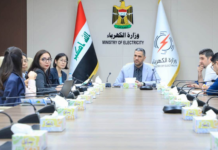
This direction came during a meeting to review a detailed report prepared by the Iraq Development Fund, with input from foreign companies that have already built metro systems in Turkey and China.
The current plan includes seven metro lines, each ranging from 9 to 37 kilometers in length. Together, they would cover most of Baghdad and could later be expanded to reach other areas.
Companies selected to design, build, and operate the Baghdad Metro include France’s Systra and SNCV, Spanish firms Alstom, Talgo, and Sener, several Turkish construction companies, and Germany’s Deutsche Bank.
The project is estimated to cost $18 billion. It would stretch 148 kilometers, include 64 stations, and is expected to be completed within four years once work begins.
If approved, the Baghdad Metro could become one of the most important infrastructure projects in Iraq’s modern history.