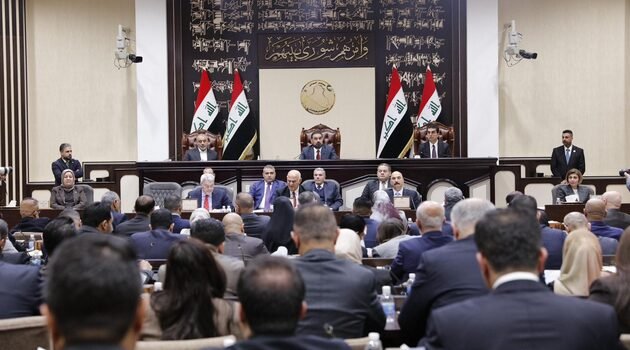
The Iraqi Parliament convened a special session to discuss the country’s worsening water crisis and drought, with the participation of the Minister of Water Resources and the Undersecretary of the Ministry of Foreign Affairs.
During the session, lawmakers reviewed the effects of climate change, declining rainfall, and upstream water management policies on Iraq’s water security. Water Resources Minister Aoun Dhiab Abdullah warned that Iraq is facing its most severe water conditions this year, stressing that the country still lacks a binding agreement with Turkey guaranteeing fixed water-sharing quotas.
The minister outlined several priority measures to address the shortages, including:
- Seawater desalination projects for southern provinces
- Treatment and reuse of wastewater
- Modernization of irrigation systems to replace inefficient traditional methods
Discussions also covered the framework agreement between Iraq and Turkey. The Ministry of Water Resources clarified that the document does not constitute a formal water-sharing treaty. Meanwhile, Foreign Ministry Undersecretary Mohammed Bahr Al-Uloom explained that the framework includes cooperation on cross-border water management, climate change, agriculture, and joint infrastructure projects, aiming to promote fair and efficient use of shared water resources.
Key issues raised by lawmakers included:
- The need to construct new dams to reduce water losses
- Linking water negotiations with broader economic relations with Turkey
- Requiring parliamentary review of agreements before signing
- Ensuring sufficient budget allocations in the 2026 budget for water, agriculture, and housing projects
- Achieving fair water distribution among provinces
Members of parliament also questioned progress on the Basra seawater desalination project, the utilization of rainfall and dam storage, and efforts to reduce salinity levels. Several MPs called for the formation of a specialized parliamentary committee, supported by technical experts, to develop a comprehensive national water management strategy.