Good Morning ,
Trump Cancels EU Tariffs After Greenland Framework Deal
De-escalation at Davos eases markets — but EU caution and trade politics remain in play
Overview
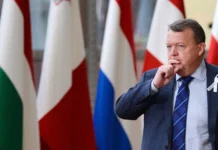
President Donald Trump announced at the World Economic Forum (WEF) in Davos that he will cancel planned tariffs on European Union and NATO countries that had been set to take effect in February. The reversal followed Trump’s statement that he and NATO Secretary General Mark Rutte have reached a “framework of a future deal” on Greenland and the broader Arctic region. The announcement was viewed by markets as a de-escalation of trade and geopolitical risk, triggering rallies in stocks and easing transatlantic tensions — at least temporarily.
Key Developments
1. Tariff Threats Withdrawn After Framework Talks
Trump confirmed that the tariffs — originally intended to pressure Denmark and other European allies over their opposition to U.S. influence in Greenland — will not be imposed on February 1 as previously threatened. He framed this as the result of productive discussions with NATO leadership on Arctic cooperation.
2. Markets React Positively
Financial markets responded sharply to the tariff cancellation. Major U.S. equity indices rose, and safe-haven pressures eased, as investors interpreted the move as a reduction in short-term geopolitical and trade risk.
3. EU Response: Caution and Concern
European leaders and institutions had previously strongly condemned Trump’s tariff threats, with European Commission officials calling the original plan a “mistake” and warning that any coercive trade measures would harm transatlantic relations. Even after the tariff cancellation, the EU emphasized that sovereignty and respect for international trade norms must be upheld, and work on ratifying broader trade agreements may remain paused or subject to review due to the episode.
Why It Matters
This reversal marks a significant softening of one of the most acute trade flashpoints between the U.S. and Europe in years. While it temporarily defuses the threat of a tariff battle that could have spilled into a broader trade conflict, the underlying strategic tensions around Arctic security and alliance cohesion remain unresolved. The incident underscores how geopolitical bargaining can ripple through trade policy, influence markets, and affect policy coordination among major economic powers.
Why It Matters to Foreign Currency Holders
For foreign currency holders monitoring reset and realignment signals:
- Tariff threats and reversals affect risk sentiment, often driving shifts into safe-haven currencies and assets.
- Ongoing U.S.–EU diplomatic friction, even when de-escalated, can fuel demand for reserve diversification.
- The Arctic’s strategic importance and evolving cooperation frameworks could influence long-term commodity flows and capital allocation, which in turn affect currency valuations.
Periods of elevated geopolitical risk tend to coincide with currency volatility and repositioning in global portfolios.
Implications for the Global Reset
Pillar 1: Geoeconomic Policy Intertwined with Security
Trade tools like tariffs are increasingly used within broader security negotiations — a shift that blurs lines between economic policy and strategic competition.
Pillar 2: Transatlantic Trust and Monetary Stability
While the tariff threat has been withdrawn, European caution signals that institutional trust has been tested, potentially weakening cooperative frameworks that support stable currency relationships and economic integration.
This is not merely tariff news — it is a signal of how geopolitical leverage shapes global economic architectures.
This is not a permanent peace — it’s a tactical retreat that leaves underlying strategic tensions unaddressed.
Seeds of Wisdom Team
Newshounds News™ Exclusive
Sources
- Reuters – Instant market reaction as Trump withdraws tariff threat after Greenland framework deal
- Mint – EU considers suspending trade deal amid tariff controversy
~~~~~~~~~~
Putin Signals Russia Could Contribute $1 Billion to Trump’s “Board of Peace”
Russia considers using frozen assets to back U.S.-led peace initiative — a geopolitical pivot with economic ripples
Overview
Russian President **Vladimir Putin said Moscow could provide $1 billion — from Russian assets currently frozen abroad — to support U.S. President Donald Trump’s newly proposed “Board of Peace” initiative. The board was recently unveiled at the World Economic Forum in Davos as part of a broader plan to manage peace, reconstruction, and coordination in Gaza following a ceasefire. Putin’s comments came during a meeting of Russia’s Security Council, as officials weigh the cost, mechanics, and strategic implications of joining the initiative.
Key Developments
1. Putin Offers $1 Billion From Frozen Russian Assets
President Putin stated that Russia could supply $1 billion toward the Board of Peace — a payment reportedly tied to securing a permanent membership seat on the body. He suggested the funds could come from Russian assets currently frozen in the United States, pending further review by the foreign ministry.
2. Security Council Instructed to Study Proposal
Putin said he had directed Russia’s foreign ministry to review the proposal in detail and consult strategic partners before making a formal commitment. The assessment will consider how participation aligns with Russian foreign policy priorities and international positioning.
3. Board of Peace Context and Funding Mechanism
The Board of Peace is a U.S.-promoted international body aimed at coordinating peace, funding, and reconstruction efforts — originally focused on Gaza. Permanent membership reportedly entails a $1 billion contribution, though invited states can participate initially without payment. Several nations have already been contacted, and the board’s mandate could extend beyond the Middle East.
Why It Matters
Putin’s offer — tentative as it may be — signals a rare moment of potential cooperation between the U.S. and Russia on a high-profile international governance project, despite deep tensions over Ukraine and wider geopolitical rivalry. If realized, the move could shift diplomatic perceptions and introduce new financial dynamics into peacebuilding efforts that historically have been led by multilateral institutions like the United Nations.
Putin’s emphasis on using frozen assets adds layers of complexity, as it intersects with sanctions regimes, sovereign claims on foreign-held funds, and broader strategic leverage between major powers.
Why It Matters to Foreign Currency Holders
For currency holders watching reset and realignment signals:
- A high-profile international initiative with state financial contributions can influence investor risk sentiment, especially if linked to asset mobilization from frozen reserves.
- Use of frozen foreign assets in geopolitical diplomacy may shift perceptions of sovereign credit, reserve stability, and external balance sheet risks.
- Cooperative signaling between geopolitical rivals — even tentative — can reduce systemic risk premia and affect currency valuations tied to safe-haven status.
Periods of diplomatic innovation often translate into capital flow shifts and repricing across fixed income and FX markets.
Implications for the Global Reset
Pillar 1: New Models of “Global Governance Funding”
Putin’s statement underscores that future international governance bodies may not rely solely on traditional multilateral banks or IMF structures. Instead, bilateral or ad-hoc finance mechanisms — funded by targeted sovereign contributions — could arise.
Pillar 2: Geopolitical Assets as Economic Instruments
Frozen assets, once tools of economic pressure, are now being repurposed as diplomatic levers. This reflects a broader trend in which financial instruments and reserves are central to geopolitical negotiation, not just monetary policy.
This is not just peace rhetoric — it’s finance meeting geopolitics at the intersection of systemic risk and structural realignment.
This isn’t a signed commitment — it’s a strategic recalibration signal from Moscow, priced in billions.
Seeds of Wisdom Team
Newshounds News™ Exclusive
Sources
- Anadolu Agency / Russian statement — Putin says Russia could pay $1 billion from frozen assets for membership in Trump’s Gaza ‘Board of Peace’
- Daily Sabah / international context — Putin says studying peace board invite as Trump claims he agreed to join
~~~~~~~~~~
France Calls to ‘Build Bridges’ With BRICS Amid G7 Imbalance
Macron pushes multilateral cooperation at Davos as global alliances shift under geopolitical and economic strain
Overview
At the World Economic Forum (WEF) 2026 in Davos, Switzerland, French President **Emmanuel Macron called for Europe and the G7 to expand cooperation beyond traditional allies and “build bridges” with emerging economies, notably the BRICS alliance — signaling a strategic pivot in global diplomatic priorities. Macron emphasized that tackling global economic imbalances and rising geopolitical fragmentation requires stronger engagement with developing countries and multilateral frameworks.
Key Developments
1. Macron Advocates Greater Cooperation With BRICS and the G20
In his address to global leaders, Macron urged that G7 priorities include stronger ties with BRICS countries (Brazil, Russia, India, China, South Africa, and others) and the G20. He argued that “the fragmentation of this world would not make sense” and that major powers must collaborate rather than compete in isolation.
2. G7 to Address Global Imbalances Through Multilateral Frameworks
France, which holds the G7 presidency in 2026, plans to focus the group’s agenda on devising a cooperative framework to tackle economic, security, and development imbalances. Macron framed this as essential for restoring efficient convergence among major economies.
3. Strategic Context: Tensions With the U.S. Influence
Macron’s call comes amid broader transatlantic tensions, including U.S. tariff threats and disputes over Arctic strategy — a backdrop that has made discussions about multilateral cooperation and emerging-market engagement particularly salient.
4. Historical Outreach to BRICS Continues
Although France’s previous attempt to attend the 2023 BRICS summit in Kazan was blocked by Russia and China, Macron has continued to praise the bloc’s approach to global finance and cooperation, signaling a warming diplomatic rhetoric even without formal membership.
Why It Matters
Macron’s remarks mark a notable shift in traditional Western economic diplomacy. Rather than positioning BRICS as a rival or peripheral group, he proposes integrating dialogue with the bloc into the G7’s agenda as part of a broader multilateral strategy. This reflects recognition that emerging economies — representing significant portions of global GDP and population — cannot be ignored in constructing functional global governance frameworks.
In a world of rising geopolitical competition, such bridge-building discussions could reshape how major economic powers interact on trade, investment, development, and security.
Why It Matters to Foreign Currency Holders
For holders monitoring currency revaluation or systemic reset signals:
- Expanded cooperation with BRICS may reduce reliance on traditional Western-centric financial systems, influencing reserve currency dynamics.
- Greater engagement between G7 and BRICS economies could support multipolar currency arrangements and bilateral settlement mechanisms.
- “Bridge-building” rhetoric can signal de-risking from a single-centered monetary order, possibly influencing diversification into alternative assets and currencies.
Periods of geopolitical realignment often precede capital reallocation and currency repricing in markets.
Implications for the Global Reset
Pillar 1: Multipolar Engagement Strategy
Macron’s emphasis on cooperation with BRICS underscores the reality that global economic leadership is no longer confined to Western blocs alone. Strategic integration — rather than competitive exclusion — may define the next phase of global economic order.
Pillar 2: Alliance Structures Redefined
Traditional groupings like the G7 are being reframed to include engagement with non-Western power centers. This shift suggests an evolving global governance architecture where cooperation across ideological and economic divides becomes necessary to manage systemic pressures.
This is not mere diplomacy — it’s restructuring geopolitical engagement in an increasingly complex world.
This is not just a speech — it’s a strategic signal that global cooperation must adapt to multipolar realities.
Seeds of Wisdom Team
Newshounds News™ Exclusive
Sources
- Imbalance in G7: France Calls To ‘Build Bridges’ With BRICS Alliance — Watcher Guru
- WEF 2026: Macron calls to “build bridges” with BRICS, G20 countries to address imbalances — WebIndia123
~~~~~~~~~~
Seeds of Wisdom Team RV Currency Facts Youtube and Rumble
Newshound’s News Telegram Room Link
RV Facts with Proof Links Link
RV Updates Proof links – Facts Link
Follow the Gold/Silver Rate COMEX
Follow Fast Facts
Seeds of Wisdom Team™ Website