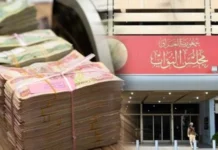
Tishwash: Parliament is moving to host the Minister of Finance to follow up on economic issues and enhance financial transparency.
In a move aimed at strengthening parliamentary oversight of financial and economic affairs, the House of Representatives is moving to host the Minister of Finance as part of its efforts to follow up on issues that directly affect the lives of citizens, particularly with regard to customs tariffs and public revenue procedures.
This move comes in the context of parliamentary efforts to regulate financial performance and address the country’s economic challenges, in a way that ensures transparency and protects the interests of citizens.
MP Abdul Amir Al-Mayahi confirmed that the House of Representatives is determined to host the Minister of Finance to follow up on financial and economic files, noting that working with the automation system in customs ports would control procedures, without imposing additional burdens on the citizen or the merchant.
Al-Mayahi explained that what is being circulated about imposing taxes or price increases is not based on actual procedures, warning that raising such issues in an inaccurate manner leads to unhealthy uproar and inflames public opinion, stressing that parliamentary hearings are an important oversight tool to address shortcomings and improve financial performance.
Regarding parliamentary procedures related to hosting, Al-Mayahi said: Every deputy works within his jurisdiction to legislate and amend laws in a way that serves the public interest, expressing his hope to develop the mechanisms of hosting and address the problems that it faces, especially in the necessary files that affect the lives of citizens.
In the same context, MP Haider Kadhim stated that 48 MPs had collected official signatures to summon the Minister of Finance, indicating that the First Deputy Speaker of Parliament had referred the request to the Presidency Council for the necessary procedures. These parliamentary actions fall within the framework of the Council’s oversight role, aimed at monitoring the financial situation and discussing economic policies to ensure transparency and address issues affecting citizens’ living conditions. link
************
Tishwash: Economist: Smuggling and hoarding behind the high demand for dollars in Iraq
Economic expert Duraid Al-Anzi confirmed on Tuesday that the rise in the dollar exchange rate in the local market is no longer linked to the Central Bank’s procedures or government policies, noting that the dollar is now mainly affected by the movement of gold and silver prices in global markets.
Al-Anzi told Al-Maalouma News Agency that “the significant rise in gold and silver prices makes it illogical for the dollar to remain in a state of decline,” noting that “the two metals are currently playing a leading role in influencing global currencies, which directly impacts the dollar exchange rate locally.”
He added that “the demand for dollars in the Iraqi market has also increased due to smuggling and hoarding operations,” explaining that “the difference between the official price adopted in the budget, the price at which the Central Bank sells to banks, and the market price, has created a large gap that has encouraged citizens and traders to acquire and hold onto dollars.”
Al-Anzi pointed out that “this acquisition has begun to shift from mere saving to trading and speculation, especially with the worsening political crises in the region, stressing that the continued political and economic instability in the region prevents any real decline in the price of the dollar.”
He pointed out that “a decrease in the price of the dollar will not be achieved without political stability in the region, in addition to global economic stability, especially with regard to gold and silver prices, considering that fluctuations in global currencies are directly reflected in the Iraqi market.”
Al-Anzi criticized the caretaker government’s handling of the exchange rate issue, arguing that the lack of a clear vision and reliance on fluctuating decisions contributed to deepening the crisis instead of resolving it. link
************
Tishwash: The US Monitor: Sudani is the biggest beneficiary of Trump’s criticism of Maliki
A report published by the American newspaper Al-Monitor highlighted the repercussions of the recent statements by US President Donald Trump against former Iraqi Prime Minister Nouri al-Maliki, considering that these statements revived the debate about al-Maliki’s chances of returning to the premiership, and at the same time strengthened the position of the current Prime Minister, Mohammed Shia al-Sudani, as a more balanced and acceptable option locally and internationally.
The report, translated by Iraq Observer, indicated that Maliki still faces widespread rejection inside and outside Iraq, due to his political responsibility during a period that witnessed a major security collapse and the rise of ISIS in 2014, a heavy legacy that still casts a shadow over any attempt to return to the political forefront.
She added: “Trump’s criticism also served as a reminder of the negative role played by Maliki, according to the American perspective, which makes it difficult for him to gain real external or internal support.”
In contrast, the report suggests that “Mohammed Shia al-Sudani appears to be a more likely candidate to lead the next phase, given that he is seen by observers as a less confrontational figure and more balanced in dealing with international parties, especially the United States and Iran.”
According to the report, Al-Sudani is a preferred choice within the coordinating framework forces, and he also enjoys a degree of acceptance at the international level, which makes him a candidate to continue as head of government or to lead the post-election phase.
The report concluded that the balance is gradually shifting in favor of al-Sudani, while al-Maliki’s chances remain weak, unless major political developments occur that reshuffle the cards in the Iraqi scene. link