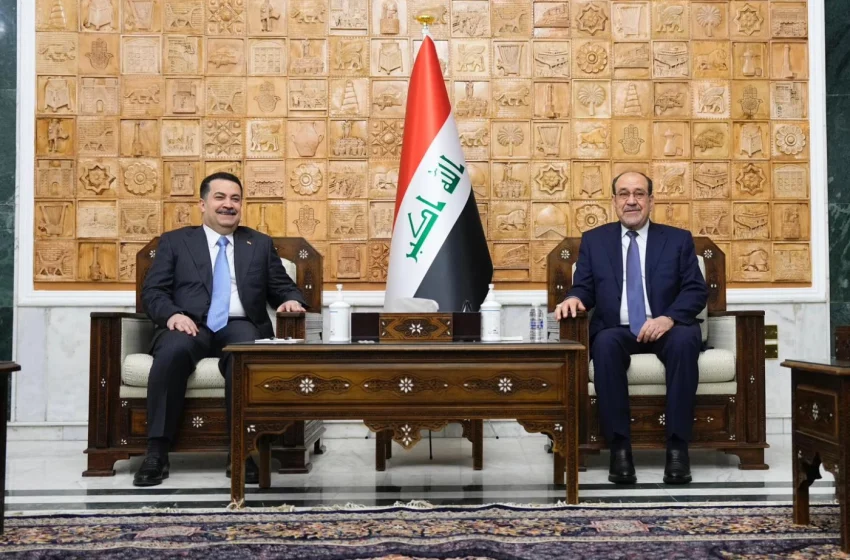
Iraqi Prime Minister Mohammed Shia Al-Sudani appears to have made a bold political gamble — and for now, it seems to be working in his favor.
By allowing former Prime Minister Nouri Al-Maliki to emerge again as a candidate for the top job, Al-Sudani may have been playing a calculated game. Several Iraqi politicians and insiders believe Al-Sudani knew very well that Al-Maliki didn’t have enough backing to return to power. Instead, the move appears aimed at exposing cracks inside the Shi’ite Coordination Framework (CF) and pushing the bloc back toward supporting the current prime minister.
The Coordination Framework, a powerful alliance of Shi’ite parties, has struggled to agree on a single candidate. That division has allowed Al-Sudani to position himself as the safest middle-ground option, especially at a time when concerns over corruption and Iran-aligned factions are growing.
Some political figures say the strategy was deliberate. By letting Al-Maliki’s bid move forward, Al-Sudani may have ensured it would collapse under internal opposition and international pressure. Once that happened, the CF was left with few realistic alternatives.
This drama has played out alongside increased pressure from the United States. President Donald Trump has issued public warnings, and U.S. special envoy Mark Savaya has spoken openly about corruption and the influence of armed groups tied to Iran. While there’s no public proof of coordination, many in Baghdad believe U.S. pressure helped weaken Al-Maliki’s chances and narrow the field in Al-Sudani’s favor.
Al-Maliki’s previous time in office, from 2006 to 2014, remains deeply controversial. Critics link his rule to rising sectarian tensions and the collapse of Iraqi security forces during the Islamic State’s 2014 advance. His close ties to Tehran-aligned groups and strained relations with Gulf countries like Saudi Arabia and the UAE have also hurt his standing internationally.
Al-Sudani, by contrast, has worked to present himself as a steady hand — someone who can balance relations between Washington and Tehran while pushing economic reforms and anti-corruption efforts.
All of this comes as Iraq prepares to elect a new president this week, a key step that will shape the next government and heavily influence who becomes prime minister.
For now, the political deadlock has strengthened Al-Sudani’s position. Rival factions remain divided, and foreign pressure is leaning toward stability rather than confrontation.
Whether this outcome was carefully planned or simply worked out by chance, it highlights how Al-Sudani is navigating internal rivalries and outside influence at a crucial moment in Iraq’s political transition.