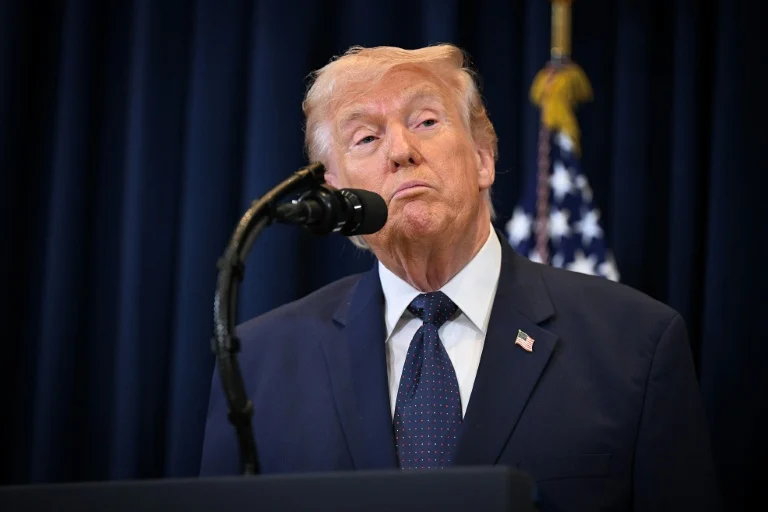
US President Donald Trump said on Monday that he plans to waive certain oil sanctions to increase supply and help lower prices, following market turmoil triggered by the conflict in the Middle East.
The recent **U.S.–Israel strikes on Iran, along with Tehran’s retaliatory attacks across the Gulf, have disrupted global energy and transport markets, especially around the Strait of Hormuz, a key shipping route through which about a fifth of the world’s oil passes.
Trump told reporters after talks with Vladimir Putin that “We’re also waiving certain oil-related sanctions to reduce prices.” He added that sanctions on some countries could remain lifted until the situation stabilizes, though he did not specify which countries. Xi Jinping was also mentioned during the discussion.
The remarks followed market swings, with oil prices dropping and equities rallying after Trump indicated the US-Israel conflict with Iran might end sooner than expected. He repeated that the US is ready to escort tankers through the Strait of Hormuz to keep oil flowing.
Trump’s Treasury Secretary Scott Bessent had previously confirmed Washington was considering easing sanctions on more Russian oil, after temporarily allowing India to buy stranded Russian crude. That authorization is valid through April 3, 2026.
The moves appear partly driven by concerns over high oil prices affecting American consumers ahead of the midterm elections in November 2026.
Trump described his call with Putin on ending the four-year war in Ukraine as “positive.” While easing sanctions could boost global oil supply, it also raises challenges for the US in limiting Russian revenue, which has been squeezed by sanctions over the Ukraine conflict. Russian oil and gas revenues fell to a five-year low in January 2026, while inflation and slow growth have strained the economy.
Rising crude prices have caused panic among importers worldwide. South Korea activated a $68 billion market stabilization fund, and Japan is reportedly considering tapping its national oil reserves. Fuel shortages and long queues have been reported as far as Vietnam, Myanmar, and the Philippines.
Analysts note that disruptions to oil supplies from Iran and Venezuela have unintentionally benefited Russia, giving it opportunities to increase exports to China via pipelines and roads, bypassing maritime routes that could be threatened by US interventions, according to the Carnegie Russia Eurasia Center.
Trump’s statements signal an attempt to stabilize oil markets while balancing geopolitical pressures involving Russia, China, and the Middle East.