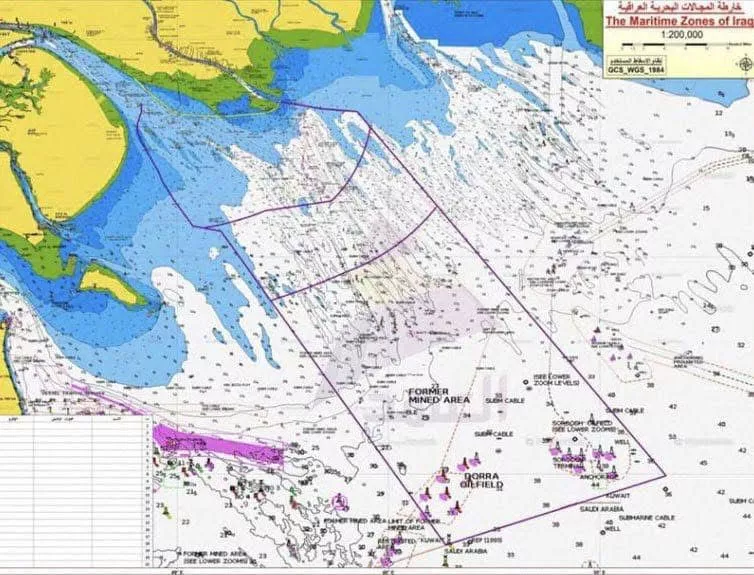
The General Company for Ports of Iraq (GCPI) says Iraq has officially submitted its maritime zones map to the United Nations.
According to GCPI Director General Dr. Farhan Al-Fartousi, Iraq’s Permanent Mission to the UN deposited the documents on February 18. He said the move followed long technical work by Iraqi experts and several government bodies.
The map outlines Iraq’s internal waters, territorial sea, contiguous zone, and exclusive economic zone. It includes detailed coordinates and is meant to serve as a clear legal reference to protect Iraq’s maritime rights.
The Ministry of Foreign Affairs of Iraq said the submission was based on Government Decision No. 266 of 2025. It added that the move follows Iraqi law and aligns with the 1982 UN Convention on the Law of the Sea, as well as recognized principles of international law.
The ministry described the definition of Iraq’s maritime borders as a sovereign matter. It stressed that no other country has the right to interfere, while also saying Iraq remains committed to international legal standards.
But the move has drawn a strong response from Kuwait.
Kuwait’s Foreign Ministry objected to what it called Iraqi claims affecting Kuwaiti sovereignty over certain maritime areas, including Fasht Al-Qaid and Fasht Al-Aij. Kuwait said these areas have never been in dispute and are fully under its sovereignty.
Kuwait summoned Iraq’s chargé d’affaires to deliver an official protest. It also called on Iraq to respect international law, including the 1982 UN Convention on the Law of the Sea, and existing agreements between the two countries.
The issue could affect ongoing discussions about maritime boundaries, including matters related to the Khor Abdullah waterway.
According to Al Jazeera, Kuwait’s position is backed by Qatar, Saudi Arabia, the United Arab Emirates, and Oman.
The situation adds a new layer of tension to maritime boundary talks in the region, with both sides standing firm on their legal positions.
 says Iraq has officially submitted its maritime zones map to the United Nations...)