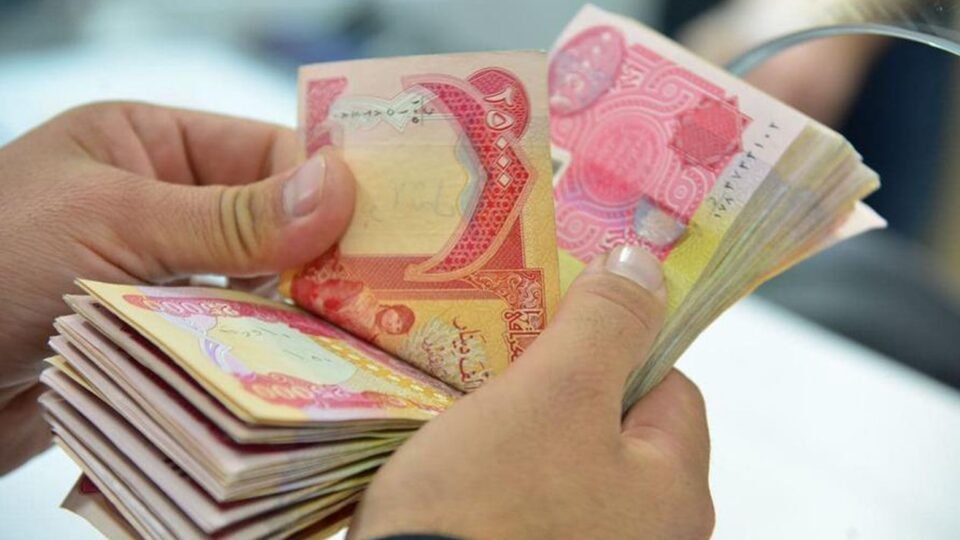
Opinions are split over whether Iraq can overcome its current liquidity crisis, as worry continues to grow among public sector employees still waiting for their salaries.
By January 29, government salaries had not been paid, even though payments usually go out between the 20th and 25th of each month. The delay has caused frustration and anxiety for thousands of state employees who depend on timely income.
An informed source said the problem is not paperwork or procedures. Payroll lists were completed, and funding steps were taken. The real issue, the source explained, is a shortage of cash, especially inside government banks, which has slowed the release of funds.
An official document from the Ministry of Finance shows the seriousness of the situation. The finance minister instructed all departments and branches to stay open during and even beyond official working hours until salary payments are completed. At the same time, the ministry announced it has started releasing salary funds and ordered payments to be made in batches.
Economic analyst Nabil Al-Marsoumi warned that the situation could get worse if Iraq continues without a fully empowered government.
Speaking to dinaropinions.com, Al-Marsoumi said the ongoing political uncertainty is adding pressure to an already fragile financial system. He warned that a possible US veto over naming Nouri al-Maliki as the next prime minister could delay approval of the 2026 federal budget.
“Iraq needs a new government in all cases,” he said, stressing that the caretaker government lacks the authority needed to handle a growing financial crisis. Continued delays, he warned, would deepen economic and financial disruption.
Al-Marsoumi explained that without a new government, the caretaker administration cannot legally borrow from state banks. This means salary delays may continue in the coming months — and could even get worse.
When asked whether the crisis could be resolved without higher oil prices, his answer was blunt: “There is no real hope.”
Although oil prices are currently nearing $70 per barrel, he said the rise is temporary and driven by regional tensions. Once the security situation stabilizes, he expects prices to fall again. Even if oil prices do increase, he warned that any additional revenue would take at least two months to reach Iraq, increasing financial risks during a period of weak political authority.
On the other hand, caretaker Prime Minister adviser Muthir Mohammed Saleh offered a more reassuring view.
Speaking to Shafaq News, Saleh said the government can legally borrow if the federal budget is delayed and a temporary cash shortage occurs — as long as the borrowing is limited, short-term, and used only for essential expenses.
He explained that such borrowing could cover priority payments like salaries, pensions, and social welfare, under the Federal Financial Management Law No. 6 of 2019, specifically Article 29.
Saleh stressed that any borrowing must be domestic, temporary, and clearly separated from long-term commitments or new investment projects. Repayment, he said, would take place once the federal budget is approved.
“Keeping salaries and pensions flowing is essential for economic and social stability,” Saleh said, adding that short-term tools like treasury advances or limited domestic borrowing are acceptable — as long as they don’t turn into permanent financial obligations.
For now, employees remain caught between official reassurances and economic warnings, waiting for relief as political and financial pressures continue to build.