State And Security Employees’ Salaries For February Have Been Disbursed
Money and Business Economy News – Baghdad The Iraqi Ministry of Finance announced on Sunday the release of funds for the salaries of state employees and members of the security forces for the month of February, confirming that it has begun sending the financial allocations to the relevant authorities in preparation for their distribution through approved banks.
The ministry stated in a statement received by “Al-Eqtisad News” that the disbursement procedures came after the completion of the administrative and technical requirements, to ensure the smooth transfer of salaries to the accounts of employees in various governorates.
She added that departments and institutions are expected to begin disbursing salaries gradually over the next few hours, according to the mechanisms of each banking entity. https://economy-news.net/content.php?id=65941
Environment: Iraq Is Internationally Committed To Removing Landmines By The End Of 2028
Money and Business Economy News – Baghdad The Ministry of Environment confirmed on Sunday that Iraq is internationally committed to removing mines and war remnants by the end of 2028, while noting the need to pay attention to the mines issue.
The ministry’s administrative undersecretary, Iktifa al-Hasnawi, said that “Iraq is internationally committed to declaring the country free of mines and war remnants by the end of 2028,” noting that “this commitment faces challenges in the absence of financial allocations.”
She pointed out that “the issue of mines and war remnants depends mainly on national efforts and some investment projects that are coordinated with authorized companies.”
Al-Hasnawi explained that “the United States has stopped its international support for the mine removal program,” stressing the need for “the next government to give special and real attention to the mine issue through financial allocations and logistical support for the national effort, as well as the governors’ interest in supporting and clearing their governorates.” https://economy-news.net/content.php?id=65946
Indonesian President After Canceling Trump’s Tariffs: We Are Ready To Face All Eventualities
Money and Business Economy News – Follow-up Indonesian President Prabowo Subianto said on Saturday that the government is prepared for all eventualities after the U.S. Supreme Court rejected President Donald Trump’s global tariffs.
Prabowo led a government delegation to Washington last week to attend the inaugural meeting of Trump’s Peace Council and to hold a bilateral meeting with the US president to sign a trade agreement that would reduce tariffs on Indonesian exports from 32% to 19%.
“We are prepared for all eventualities,” Prabowo told reporters in a video statement. “We respect the internal politics of the United States, and we will monitor developments.”
On the other hand, Indonesia’s chief negotiator on US tariffs, Airlangga Hartarto, said the government has asked the United States to maintain previously agreed tariff exemptions for a number of Indonesian exports, such as palm oil, coffee and cocoa.
Airlangga added that the trade agreement signed on Friday between Indonesia and the United States remains in effect despite the latest developments, saying that there is different treatment for countries that have signed a trade agreement with Washington. https://economy-news.net/content.php?id=65932
Japan Hosts The First Meeting Of Trump’s National Energy Dominance Council
Money and Business Economy News – Follow-up The U.S. Embassy in Tokyo announced Sunday that President Donald Trump’s “National Energy Dominance Council” will hold its first Indo-Pacific Energy Security Ministerial and Trade Forum with Japan in Tokyo on March 14 and 15.
The statement added that Interior Secretary Doug Burgon, Energy Secretary Chris Wright and Environmental Protection Agency Administrator Lee Zeldin will travel to Tokyo next month to meet with nearly 12 countries from the Indo-Pacific region for talks on energy security.
Burgom serves as the council’s president, while Wright serves as vice president, according to Reuters.
The statement added that government leaders from several countries in the Indo-Pacific region and executives from sectors including energy, infrastructure, industry and finance will attend the forum.
Japanese Prime Minister Sanae Takaichi told Trump in October that it would be difficult to ban imports of Russian liquefied natural gas. https://economy-news.net/content.php?id=65930
The Central Bank Of Iraq Clarifies The Mechanisms For Dealing With The Dollar In All Its Issuances.
Banks Economy News – Baghdad The Central Bank of Iraq, in a directive to licensed banks and non-bank financial institutions, stressed the importance of reducing discrimination in the exchange rate of the US dollar between old and new issues, stressing the need for all banks and financial institutions to adhere to the instructions for trading and exchanging banknotes, in accordance with the approved standards for foreign banknotes, especially the US dollar, in order to ensure the safety of monetary transactions and market stability.
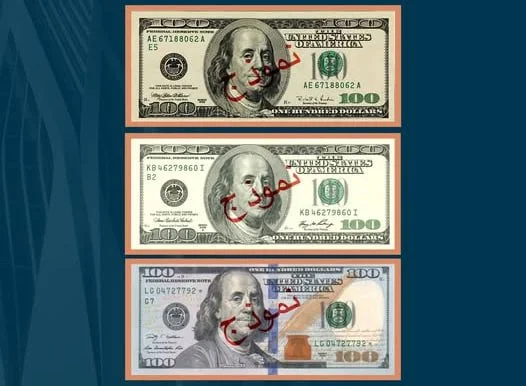
The Central Bank clarified that the laws, instructions and regulations in force do not adopt any discrimination between the different editions of the US dollar currency, noting that the bank continues to receive these issues and deal with them through all authorized banks, provided that they are within the internationally and locally approved standards and regulations.
This clarification comes within the framework of the Central Bank of Iraq’s commitment to enhancing transparency and discipline in the banking sector, protecting customers, and supporting monetary and financial stability in Iraq.https://economy-news.net/content.php?id=65731
Supreme Court Ruling On Trump’s Fees Ignites Legal Battle To Recover $170 Billion
Money and Business Economy News – Follow-up Thousands of companies are preparing to launch what could become a protracted legal battle to recover up to $170 billion in tariffs they have already paid to the U.S. government, after the Supreme Court struck down a key trade policy tool of President Donald Trump, Bloomberg reported.
The Supreme Court did not address the issue of recovering the funds when it ruled on Friday that Trump did not have the legal authority to impose those tariffs under an emergency law.
“They take months to write their opinion, and they don’t even discuss this point,” Trump said during a press conference following the ruling, adding, “We will finish this in the courts within the next five years.”
Following the Supreme Court’s decision, the US president announced the immediate imposition of new global tariffs of 10%, based on a different legal provision. However, this will not stop the flood of lawsuits that companies intend to file in an effort to recover the tariffs they have paid.
Global Repercussions And Legal Preparations
The loss to the US administration is expected to reverberate across the global economy, as the size and scope of any potential recovery would be unprecedented, according to Bloomberg.
A wide range of companies, large and small, public and private, have spent the past months preparing to improve their legal positions to recover the fees they paid, should the court overturn Trump’s actions.
Among the companies being asked to reimburse are retailers such as Costco, major industrial companies such as the American aluminum producer Alcoa, along with well-known brands and hundreds of small businesses. Most of these companies are based in the United States, but they also include local branches of foreign companies.
The White House announced on Saturday that the administration of US President Donald Trump will end some customs measures, following the Supreme Court’s decision to overturn the tariffs.
Among the key questions left unanswered for U.S. importers by the Supreme Court ruling are the opportunities and mechanisms for recovering funds collected by the government during the past year under the International Emergency Economic Powers Act, the law that formed the core of the case.
The vote against the Trump administration’s decisions was 6-3, with Justice Brett Kavanaugh dissenting, stating, “The Court today says nothing about whether, and if so, how, the government should return the billions of dollars it collected from importers.” He added, “But that process is likely to be messy, as was acknowledged during oral arguments last November.”
$170 billion
U.S. Customs and Border Protection has so far collected an estimated $170 billion in tariffs imposed by Trump based on the International Emergency Economic Powers Act, the law that has been the subject of legal dispute, Bloomberg noted.
The court ruled that the use of the International Emergency Economic Powers Act to impose customs duties was not legal, but the judges did not address the issue of importers’ right to a refund, leaving these matters to the lower court to decide.
The case is scheduled to return to the U.S. Court of International Trade for a new round of legal wrangling.
While the judges were considering the case, more than 1,500 companies filed their own claims before the Commercial Court, with the aim of securing a place in the queue of those claiming a refund of fees.
In recent months, the U.S. Commercial Court has been pressing the Justice Department for at least a preliminary indication of how it will handle the issue of restitution if the administration loses to the Supreme Court.
US President Donald Trump is set to impose additional global tariffs of 10% within the next three days.
Retail and clothing companies were the most concerned, as the tariffs added significant costs for companies that import goods from Asian countries such as China and Vietnam.
The ruling comes amid a wave of earnings announcements from retailers, including Home Depot, which is scheduled to announce its results next Tuesday.
Although most companies report results for financial periods that ended before the decision was issued, Neil Saunders, managing director at data analytics firm GlobalData, said the move could affect earnings and future guidance.
He added: “If companies have already factored in very high costs for fees, there may be room for additional gains.”
For his part, Zach Stambour, principal analyst at market research firm eMarketer, wrote: “While the decision provides some near-term relief, it does not dispel the broader uncertainty surrounding trade policy that retailers and brands are facing.”
He added: “We expect the ruling to create a moderate boost to retail sales starting this year, but this effect will gradually fade by 2028.”
In written memoranda, government lawyers said the administration would not contest the court’s authority to issue orders to recalculate duties, but left open the possibility of seeking to restrict the scope of importers eligible for refunds.
The U.S. Court of International Trade has experience in managing mass refunds. In 1998, after the Supreme Court overturned the port maintenance levy imposed on exporters, the court established a mechanism for receiving claims.
According to court records and reports from that period, the battle at the time involved approximately 4,000 cases and nearly $750 million in taxes paid.
However, the scope of the disputed tariffs imposed by Trump is much larger, as the US government informed the trade court that by the end of 2025, more than 300,000 importers had paid those tariffs.
Legal Dispute Over The Form Of Restitution
Ted Murphy, a partner at Sidley Austin, said the ruling means for importers “there is a possibility of a refund,” adding that the form and duration of the refund process “are a big issue.”
For his part, Daniel Mack, a partner at the international law firm Brian Cave Leighton Paysner, considered the issue of recovery to be “solvable,” explaining that the Commercial Court could consolidate all individual claims into a single case.
The National Retail Federation called for a simplified refund mechanism, with David French, the federation’s executive vice president of government relations, saying in a statement: “We urge the lower court to ensure a smooth process for returning duties to American importers,” adding that easing the burden of duties would provide an economic boost that would allow companies to invest in their operations and other areas.
The emergency law of 1977 makes no mention of customs duties and has never been used to impose them. However, businesses remain subject to other customs procedures.
According to Treasury Secretary Scott Bessent, the U.S. Treasury Department, which has about $774 billion in cash, has enough liquidity to reimburse the revenues from the duties imposed under the International Emergency Economic Powers Act, if ordered to do so, but the process could take weeks or months, and could extend for more than a year.
US President Donald Trump said on Friday he intends to use new trade powers in response to the Supreme Court ruling that overturned the sweeping tariffs.
Bisent also pointed out that refunds could turn into an “institutional waste” for companies that passed the burden of the fees on to consumers, asking: “Costco, which is suing the U.S. government, will it refund its customers?”
Michael Feder, chairman and co-founder of Lalo, a baby products company, told Bloomberg that his company will take all necessary steps to recover more than $2 million in fees it paid under the latest Supreme Court orders.
He added: “We don’t expect refunds to be issued overnight even if our files are complete, but we want to be at the front of the line.”
He noted that the company worked with its suppliers to reduce costs, and passed on only a “limited amount” of the fee burden to customers, and has not yet decided how to proceed if those funds are recovered, saying: “We’ll cross that bridge when we get there.”
Disparities Between Sectors And Companies
Bloomberg believes that some industries are likely to receive a larger share of the fees collected under the International Emergency Economic Powers Act up to December 14.
According to an analysis by Bloomberg Economics, the textiles, toys, food and beverage sectors top the list of industries that import finished goods, including wholesalers, retailers and manufacturers with factories outside the United States. Companies that import tariff-subject components to manufacture goods within the country are led by the machinery, electronics and automotive sectors.
Nicole Gorton-Karatelli and Chris Kennedy of Bloomberg Economics said the construction sector, from its purchases of electrical equipment and appliances that may be installed in new buildings, also appears to be particularly vulnerable.
They added that “the size of the company will play a role in determining the value of potential refunds, as any refunded amounts will go to the registered importer who actually paid the duties, meaning that large companies that import themselves will be more likely to receive a refund directly compared to small companies that buy from wholesale importers.”
Joe Feldman, an analyst at Tielsey Advisory Group, said the ruling raises more questions than it provides definitive answers for the retail sector.
Congress was divided after the Supreme Court’s ruling to overturn Trump’s tariffs, with some Republicans and Democrats offering a cautious welcome, while Republican leaders sought an alternative course of action.
He explained that companies’ attempts to recover the money they paid will take time, and that commodity prices often do not decrease after they rise, with the exception of basic commodities such as milk and eggs.
Although some operators may benefit from improved profit margins in the near term, they are unlikely to get a sudden cash flow or radically change their pricing structure.
Meanwhile, customs brokers and lawyers warned companies that the US administration might place obstacles in the way of obtaining refunds, such as requiring companies to prove that they did not pass the cost on to consumers, or to provide detailed documentation for each shipment.
Currently, importers are required to at least organize their records in anticipation of refund claims being paid, even if the mechanism for this is not yet clear.
U.S. Customs and Border Protection recently announced that, effective February 6, the Treasury Department will no longer issue the agency’s refunds via paper checks, but will instead switch to electronic payments.
https://economy-news.net/content.php?id=65907