The Minister Of Finance Has Directed That The Accounting And Banking Departments Continue Operating To Complete The Payment Of Employee Salaries.
Money and Business Economy News – Baghdad Finance Minister Taif Sami directed on Wednesday that work continue in the accounting and banking departments to complete the payment of employee salaries for the month of March.
Sami told the Iraqi News Agency, as reported by “Economy News,” “We have directed the continued operation of the accounting and banking departments to complete the payment of employee salaries for the month of March in the remaining spending units.”https://www.economy-news.net/content.php?id=67395
Marvel Technology Shares Jump 11% After Nvidia Acquires A $2 Billion Stake
Money and Business Shares in Marvel Technology jumped more than 11% after Nvidia announced plans to invest $2 billion in the semiconductor company, amid a race among companies to meet the growing demand for artificial intelligence technologies.
The agreement allows Marvel Technology to be integrated into Nvidia’s AI ecosystem, making it easier for customers to develop their infrastructure. The two companies will also collaborate on developing silicon photonics technology.
“It’s time for a shift in inference,” said Nvidia CEO Jensen Huang in the statement. “The demand for token generation is mounting, and the world is racing to build AI factories. With Marvel Technology, we are enabling customers to leverage Nvidia’s AI architecture ecosystem and scale to build specialized AI computing.”
In recent months, Nvidia has made a series of $2 billion investments in technology companies, including Synopsys, CoreWave, Coherent, and Lumentum. Most recently, Nvidia invested $2 billion in Nebius Group, where the AI cloud computing company unveiled plans on Tuesday to build one of the largest data centers in Europe.
The leading chipmaker has been one of the biggest beneficiaries of the artificial intelligence boom that has swept Wall Street in recent years, thanks to its graphics processing units (GPUs) that support large language models.
Marvel Technology is another major winner in the race, with its shares surging this month after the company issued strong forecasts and called for accelerated revenue growth through 2027 as demand for artificial intelligence increases.
Marvel Technology CEO Matt Murphy said, “Our expanded partnership with Nvidia reflects the growing importance of high-speed connectivity, optical connectivity, and accelerated infrastructure in scaling AI.” https://www.economy-news.net/content.php?id=67374
Syria Is Preparing To Open Its Second Border Crossing With Iraq.
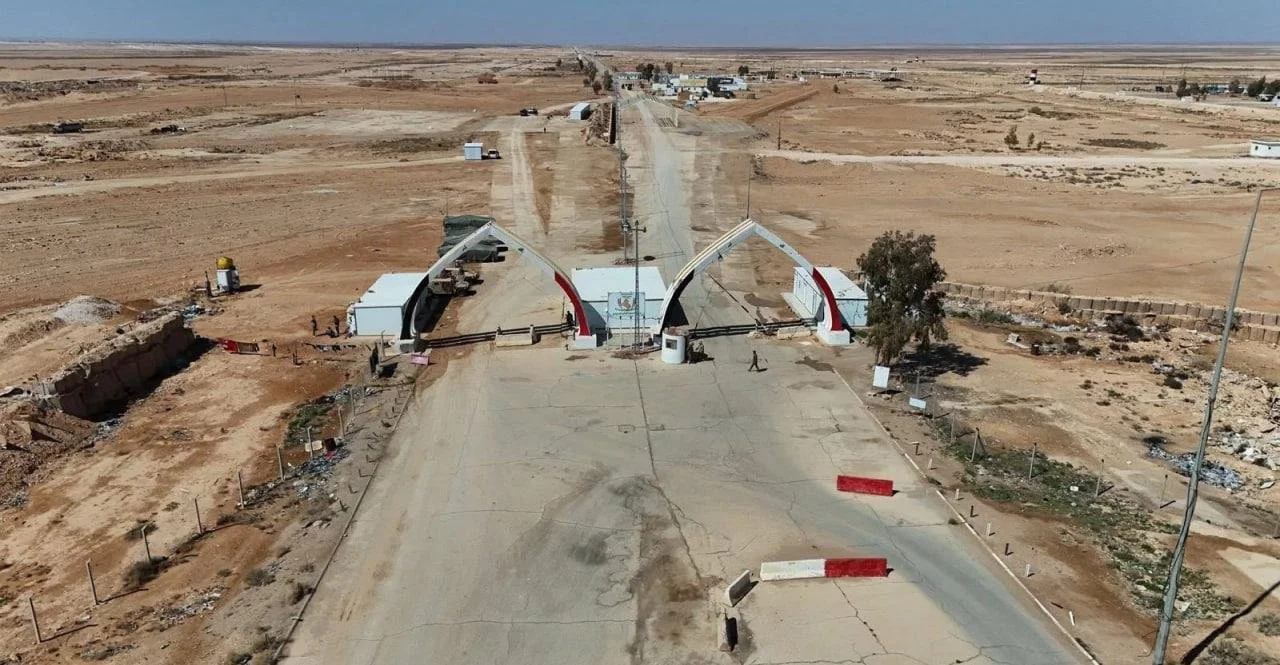
Money and BusinessEconomy News – Baghdad Officials from the Syrian General Authority for Ports and Customs conducted an inspection tour of the Al-Yarubiyah border crossing with Iraq in Al-Hasakah Governorate, as part of monitoring the rehabilitation work and raising operational readiness in preparation for its reopening.
Khaled Al-Barad, the assistant head of the authority, accompanied by a delegation of directors of the central directorates, conducted a field tour to see the reality of the work being carried out at the port, and to follow up on the implementation of maintenance and equipment plans.
The Syrian General Authority for Ports and Customs stated on its Facebook page that the tour included reviewing the infrastructure maintenance work being carried out by the Directorate of Facilities and Maintenance, which includes rehabilitating service facilities and improving the readiness of squares, internal roads, passenger halls and customs, in addition to raising the efficiency of technical and logistical equipment to ensure that crossing traffic is accommodated in an organized and safe manner.
The authority explained that the rehabilitation and maintenance work is expected to be completed during the coming period, with the opening of the crossing scheduled for the beginning of next May, in a step aimed at supporting trade and strengthening economic ties, in addition to facilitating the movement of citizens through this vital crossing with Iraq.
She emphasized that these efforts are part of a plan to rehabilitate border crossings and raise their operational efficiency, in line with the requirements of the current stage and to enhance the readiness of the infrastructure to serve transit traffic.https://www.economy-news.net/content.php?id=67364
60 Oil Tankers Crossed Through The Al-Walid Border Crossing And Headed To Revive The Haditha-Aqaba Pipeline.
Money and Business Economy News – Baghdad Anbar Provincial Council member Adnan al-Kubaisi announced on Tuesday that more than 60 trucks loaded with Iraqi oil have begun crossing through the al-Walid border crossing, expecting the number of trucks transporting oil to rise to between 600 and 700 in the coming period.
Al-Kubaisi said, “There is a trend to resume the mechanism of exporting oil through the Syrian and Jordanian ports in quantities that may exceed 200,000 barrels per day, as was the practice before 2003 using tankers.”
He added that “the next stage may witness parliamentary action to compel the government to implement the modern Aqaba pipeline project, given its strategic importance in diversifying oil export outlets.”
Al-Kubaisi pointed out that “the project was previously approved but faced objections, but there is currently pressure to reactivate it and proceed with its completion, given the economic benefits it provides, as well as its positive impact on Anbar Governorate, especially with regard to the petrodollar file.” https://www.economy-news.net/content.php?id=67362
Qatar Central Bank Issues Government Bonds Worth 3 Billion Riyals With A Return Of 4.5% Annually
Banks The Qatar Central Bank issued government bonds worth 3 billion riyals for terms of 5 and 3 years.
The new issuance was distributed in two tranches, with a value of 1.5 billion riyals for each issuance, and a return rate of 4.5%.
According to a statement from the Central Bank, the first issue is due on August 24, 2030, while the second issue is due on January 16, 2029.
It is noted that the outstanding balance of government bonds in Qatar amounted to 61.98 billion riyals at the end of March 2026, representing 47% of the total value of public debt instruments amounting to 131.5 billion Qatari riyals.
https://www.economy-news.net/content.php?id=67383
The Dollar Index And The Upward Trap Amid The Growing Shock Of Regional War
Dr. Haitham Hamid Mutlaq Al-Mansour Economy News – Baghdad Recent warnings from Morgan Stanley indicate the possibility of the dollar falling into an upward trap during the current regional war, pointing to a clear contradiction in the behavior of financial markets.
The US dollar may rise strongly in crises, but this rise may not necessarily reflect sustainable economic strength, but rather a short-term response to a geopolitical shock whose effects will soon be reversed.
At the outset of crises, investors globally flock to the dollar as a safe haven, a highly liquid asset, and the world’s reserve currency. This explains why the US dollar accounts for approximately 58-60% of global central bank reserves and is used in roughly 80% of international trade.
This sudden surge in demand drives the dollar index (DXY) upward, often resulting in gains of 3% to 7% during the initial weeks of major geopolitical shocks.
As the war escalates and oil prices soar—sometimes jumping 15% to 25%—the demand for the dollar, driven by energy demand, intensifies, further bolstering its short-term gains.
Conversely, the euro faces significant pressure, as the Eurozone imports over 60% of its energy needs. Consequently, rising oil and gas prices increase the import bill and strain the trade balance, typically leading to a 2% to 5% decline in the euro in the short term during energy crises.
This disparity widens the temporary gap between the two currencies and creates the impression that the dollar is entering a strong upward trend.
However, according to Morgan Stanley, this rally could be misleading. As the global oil price shock continues, markets are rapidly correcting the inflationary impact of rising energy costs.
With the general price level rising as a reflection of this shock, economic entities anticipate interest rate hikes and continued tight monetary policy, which quickly supports the dollar. At this point, markets will focus on the immediate effect of inflation.
But the more profound impact of slowing economic growth is quickly underestimated. Economic modeling suggests that every 10% increase in oil prices can shave roughly 0.2% to 0.4% off global growth over a year.
If prices remain above $100 a barrel, growth in the Eurozone could fall below 1%, with increasing recession expectations, which would then impact the US economy, slowing it from around 2% to 1% or less.
Herein lies the paradox. The strong dollar, which surged in response to the shock of war, is gradually becoming a source of internal pressure on the US economy. A 5% to 10% appreciation of the dollar leads to a 3% to 5% decline in the profits of multinational corporations due to the exchange rate effect, and it also weakens the competitiveness of exports.
As signs of a slowdown increase, the US Federal Reserve may be forced to adjust its course, either by halting interest rate hikes or even lowering them, which would hinder one of the most important monetary policy tools used to support the dollar.
Historically, data shows that the dollar tends to rise at the start of crises and then lose momentum. In past crises, such as the oil shock or major geopolitical tensions, the dollar made initial gains but subsequently declined by 4% to 8% over three to six months as market focus shifted from fear to economic fundamentals.
Accordingly, the “upside trap” occurs when investors enter at high levels, driven by the momentum of the crisis, while the true supporting factors have already peaked. As attention shifts from inflation to growth, and from the shock to the fallout, investment moves in the opposite direction, signaling the onset of a slowdown and recession.
At present, the dollar appears outwardly stable, supported by three pillars: demand for it as a safe haven, a liquid asset, and a global reserve currency; high energy prices; and the Federal Reserve’s continued relatively hawkish stance. However, these same pillars contain elements of their own erosion.
The longer the war continues and the higher oil prices rise, the greater the pressure on global economic growth will become, and markets willgradually begin to reprice away from the crisis and toward fundamentals.
Therefore, if oil prices remain above $100 and growth indicators gradually begin to emerge, the probability of a dollar decline rises to between 60% and 75% within a period of 3 to 6 months. In this scenario, the dollar typically falls by 4% to 8% from its peak.
Domestically, a 5% rise in the dollar leads to a 3% to 5% decrease in US corporate profits, a 2% to 4% drop in exports, and a reduction of approximately 0.2% to 0.4% in overall GDP growth due to increased costs.
If the dollar rises by 10%, these effects nearly double, and the relationship becomes non-linear and reversible, pushing the economy toward recession and prompting the Federal Reserve to ease monetary policy.
In short, the dollar’s rise during this war may shift from strength to weakness, as it is driven by temporary precautionary demand rather than a fundamental improvement in economic activity.
If signs of a global slowdown stabilize, this rise could transform from a source of strength into a point of decline, thus reshaping the relationship between the dollar, the euro, and global markets in the post-shock era.
https://www.economy-news.net/content.php?id=67343