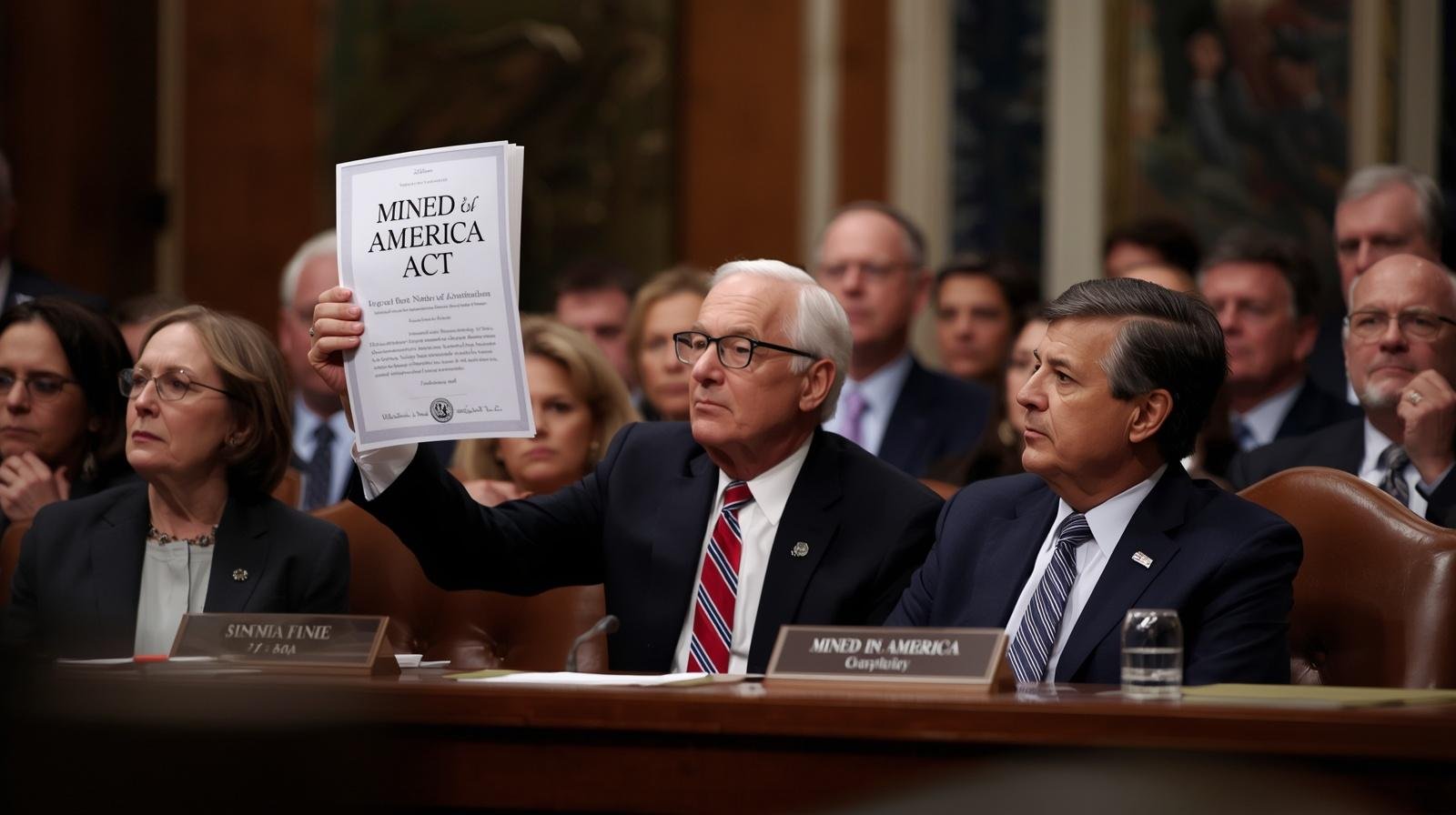
Two U.S. senators—Bill Cassidy and Cynthia Lummis—have introduced a new bill aimed at boosting Bitcoin mining inside the United States and reducing reliance on foreign equipment.
The bill, called the “Mined in America Act,” is designed to encourage companies to build and use mining hardware made in the U.S., while also supporting the idea of a national Strategic Bitcoin Reserve.
In simple terms, the goal is to bring more of the crypto mining industry back home.
Under this proposal, mining companies can choose to join a certification program. If they do, they’ll need to gradually stop using equipment linked to foreign rivals and switch to hardware made in the U.S.
The bill also asks government bodies like the National Institute of Standards and Technology to help American companies develop better mining machines—ones that are more secure and energy-efficient.
Senator Cassidy put it plainly: crypto mining is becoming a big part of the economy, and the U.S. should be leading it, not depending on others.
Right now, the U.S. already plays a major role in Bitcoin mining. It contributes a large share of the network’s total power. But there’s a catch—most of the hardware still comes from abroad, especially from China.
Companies like Bitmain and MicroBT dominate the global supply of mining machines. That’s raised concerns in the U.S., especially as tensions between the two countries continue.
These concerns are not just political—they’ve already caused real problems. Recently, U.S. mining companies faced delays when shipments of equipment were held up at ports due to regulatory checks.
There are also security worries. Elizabeth Warren has raised questions about potential risks linked to foreign-made mining hardware, particularly from Bitmain, and has asked for more investigation.
So this bill is really about two things: control and security. It aims to make the U.S. less dependent on foreign tech, while also building a stronger, more secure crypto industry at home.
If passed, it could reshape how Bitcoin mining works in the U.S.—shifting more production, innovation, and control back within the country.