Good Morning ,
Oil Shock Reverberates, Capital Flight Risks Rise, and Central Banks Face Policy Trap
Fresh global developments show energy instability, fragile capital flows, and limited policy options converging at a critical moment
Overview
In the last 24 hours, new developments highlight a global financial system under mounting strain from multiple directions. Energy markets remain volatile, emerging markets face rising capital flight risks, and central banks are increasingly constrained in how they respond.
This convergence points to a system where traditional tools are losing effectiveness, increasing the likelihood of structural financial change rather than cyclical adjustment.
Key Developments
1. Oil Market Instability Continues to Ripple Across Global Economy
Oil prices remain highly sensitive following recent disruptions, with markets reacting to fragile ceasefire conditions and supply uncertainty.
- Prices surged sharply, briefly pushing toward $100 per barrel levels
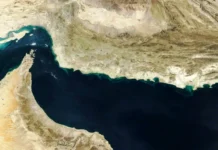
- Ongoing concerns about key shipping routes like the Strait of Hormuz
- Energy volatility feeding directly into inflation and growth concerns
Why it matters: Energy shocks act as a system-wide multiplier, impacting inflation, trade costs, and central bank policy simultaneously.
2. IMF Warns of Capital Flight and Financial Instability in Emerging Markets
New warnings highlight that emerging economies are increasingly exposed to rapid capital outflows and financial shocks.
- Heavy reliance on non-bank lenders and hedge fund capital
- Risk of sudden withdrawals triggering currency declines
- Growing exposure to private credit and opaque financing structures
Why it matters: These markets are often the first to destabilize in global financial shifts, acting as early indicators of broader systemic stress.
3. Central Banks Face a Policy Trap Between Inflation and Growth
Policymakers are increasingly constrained as inflation risks remain elevated while growth slows.
- Oil-driven inflation complicates rate-cut decisions
- Higher energy costs reduce consumer purchasing power
- Risk of simultaneous inflation and economic slowdown (stagflation dynamics)
Why it matters: Central banks are losing flexibility, signaling a shift toward a system where policy can no longer easily stabilize markets.
Why It Matters
These developments are deeply interconnected and signal structural pressure building across the system:
- Energy shocks driving persistent inflation volatility
- Capital flows becoming unstable and reactive
- Emerging markets acting as pressure points
- Monetary policy tools reaching practical limits
This combination reflects a system transitioning away from centralized stability toward fragmented and reactive financial conditions.
Why It Matters to Foreign Currency Holders
- Capital flight risks may trigger sharp currency devaluations in vulnerable regions
- Energy-driven inflation can reshape global purchasing power dynamics
- Policy limitations increase the likelihood of alternative monetary frameworks emerging
- Volatility creates both risk and opportunity across currency markets
Implications for the Global Reset
- Pillar 1: Capital Flow Instability
As investment becomes more volatile, the system shifts away from stable long-term capital allocation toward short-term, reactive flows.
- Pillar 2: Policy Constraint & Stagflation Risk
Central banks facing simultaneous inflation and slowing growth signals a structural imbalance requiring new solutions beyond traditional tools.
Closing Perspective
The global system is no longer operating under stable conditions—it is reacting to overlapping shocks.
When energy volatility, capital instability, and policy constraints align, the result is not just uncertainty—it is systemic transition.
This is not just economic pressure — it’s the framework of global finance being tested in real time.
Seeds of Wisdom Team
Newshounds News™ Exclusive
Sources
- Oil rises and global markets react to fragile ceasefire and supply concerns – The Guardian
- IMF warns emerging markets face capital flight risks from hedge fund exposure – The Guardian
~~~~~~~~~~
A Message to Our Currency Holders
If you’ve been holding foreign currency for many years, you were not foolish.
You were not wrong to believe the global financial system would change.
What failed was not your patience — it was the information you were given.
For years, dates, rumors, and personalities replaced facts, structure, and proof. “This week” predictions created cycles of hope and disappointment that were never based on how currencies actually change.
That is not your failure.
Our mission here is different: • No dates • No rates • No hype • No gurus
Instead, we focus on:
• Verifiable developments • Institutional evidence
• Global financial structure • Where countries actually sit in the process
Currency value changes only come after sovereignty, trade, banking, settlement systems, and fiscal coordination are in place. History and institutions confirm this sequence.
You will see silence. You will see denials. That is not delay — that is discipline.
Protect your identity. Organize your documents. Verify everything.
Never hand your discernment to anyone who cannot show proof.
You deserve truth — not timelines.
Seeds of Wisdom Team
Newshounds News™
~~~~~~~~~~
Seeds of Wisdom Team RV Currency Facts Youtube and Rumble
Newshound’s News Telegram Room Link
RV Facts with Proof Links Link
RV Updates Proof links – Facts Link
Follow the Gold/Silver Rate COMEX
Follow Fast Facts
Seeds of Wisdom Team™Website