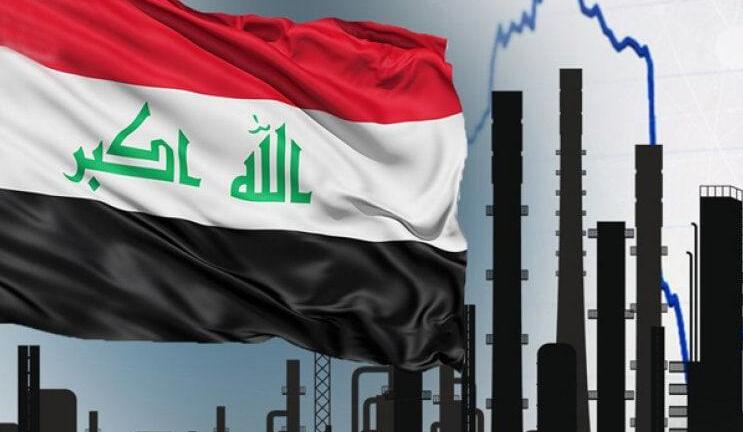
Economic advisor to Iraq’s Prime Minister, Mazhar Muhammad Saleh, says Iraq’s economy still has some room to handle the pressure coming from tensions around the Strait of Hormuz.
Saleh explained that Iraq’s large foreign currency reserves are the country’s main line of defense right now. These reserves help protect the exchange rate and keep the financial system stable in the short term. He also said the Central Bank of Iraq has enough flexibility to step in and manage sudden market swings if needed.
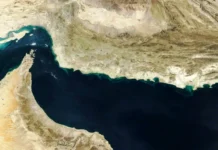
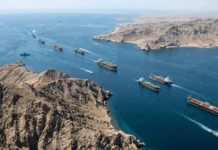
He pointed out that the Strait of Hormuz, located in the southern Gulf, is one of the most important waterways in the world. About 11% of global trade passes through it, along with roughly 20% of the world’s oil and gas exports. For Iraq, the situation is even more serious because more than 94% of its oil exports move through southern ports and then pass through this strait.
Saleh warned that if the strait were closed, Iraq’s oil exports could collapse from more than 3.4 million barrels per day to less than 250,000 barrels. That could cost the country between $200 million and $255 million every single day.
Even if oil prices jumped to around $150 per barrel, Iraq would still face major losses. Monthly revenue could fall from about $7 billion to just over $1 billion—far below what the government needs. That amount would only cover about 25% to 30% of Iraq’s monthly operating expenses.
He also explained that Iraq has very few backup options for exporting oil. The main alternative is the Kirkuk-Ceyhan Pipeline, which can carry between 200,000 and 210,000 barrels per day and could possibly be expanded. There is also a very small amount—less than 10,000 barrels—that could be transported over land to Jordan. But even together, these options are only a tiny fraction of Iraq’s normal exports.
Saleh stressed that the stability of the Iraqi dinar is closely tied to oil revenue. Most of the dollars entering Iraq come from oil sales that are deposited in the Federal Reserve in the United States. If oil exports drop, the flow of dollars into the country also drops. That would likely push people and businesses to seek dollars as a safe haven, increasing pressure on the dinar.
If the crisis lasts a long time, Saleh warned that Iraq could start using up its foreign reserves to keep the economy stable. In that case, the government might eventually be forced to adopt austerity measures depending on how long the Gulf conflict continues.
He also warned about other economic problems that could follow. Since Iraq imports most of its food, medicine, and basic goods, higher shipping and insurance costs could drive prices up. In fact, these costs have already jumped by about 50%, which will likely make many goods more expensive over time.
Another concern is the damage that could happen to oil fields if production suddenly stops. Saleh explained that shutting down fields for a long time could permanently harm oil reservoirs. Even after exports restart, it could take years and major investment to return production to previous levels.
In the end, Saleh said the real solution is clear. Iraq must move faster to diversify its oil export routes and restart inactive pipelines. Without those alternatives, the country’s economy will remain vulnerable to regional crises.
For now, he said, Iraq’s ability to handle the situation in the short term depends largely on how strong its foreign currency reserves remain.