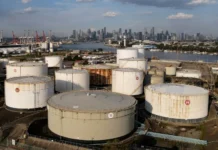
Global markets surged Wednesday after political signals suggested the Middle East conflict could ease, even as oil prices climbed on continued supply fears.
What happened
- Donald Trump said the war in the Middle East could be over within “two to three weeks,” and hinted at a possible deal or US withdrawal from the conflict.
- Masoud Pezeshkian responded that Iran has “the necessary will” to end the conflict, if conditions and guarantees are met.
These statements triggered optimism in global equity markets.
Market reaction
Asian and global stocks rallied strongly:
- Hong Kong, Tokyo, Seoul, Shanghai, and other Asian markets jumped sharply
- US indices also surged, with the Nasdaq rising nearly 4% and the S&P 500 up almost 3%
Investors appeared to interpret the comments as a possible de-escalation of geopolitical risk.
Oil markets moved the other way
Despite the stock rally, crude oil prices rose again:
- Brent crude climbed above $105 per barrel
- US West Texas Intermediate also gained over 1%
The main concern is the strategic Strait of Hormuz, through which about a fifth of global oil flows. Any disruption there keeps energy markets on edge.
Why oil is still rising
Even with talk of peace, traders remain worried because:
- Military activity in the region is still ongoing
- Shipping routes remain vulnerable
- Energy supply risks have not been resolved
Analysts warn that high oil prices could:
- Increase inflation globally
- Tighten financial conditions
- Slow economic growth
Bigger picture
Markets are reacting to two opposing forces at once:
- Hope for peace → boosts stocks
- Fear of oil disruption → pushes energy prices higher
Until there is a confirmed diplomatic resolution and stable shipping routes, volatility is likely to continue across both equities and energy markets.