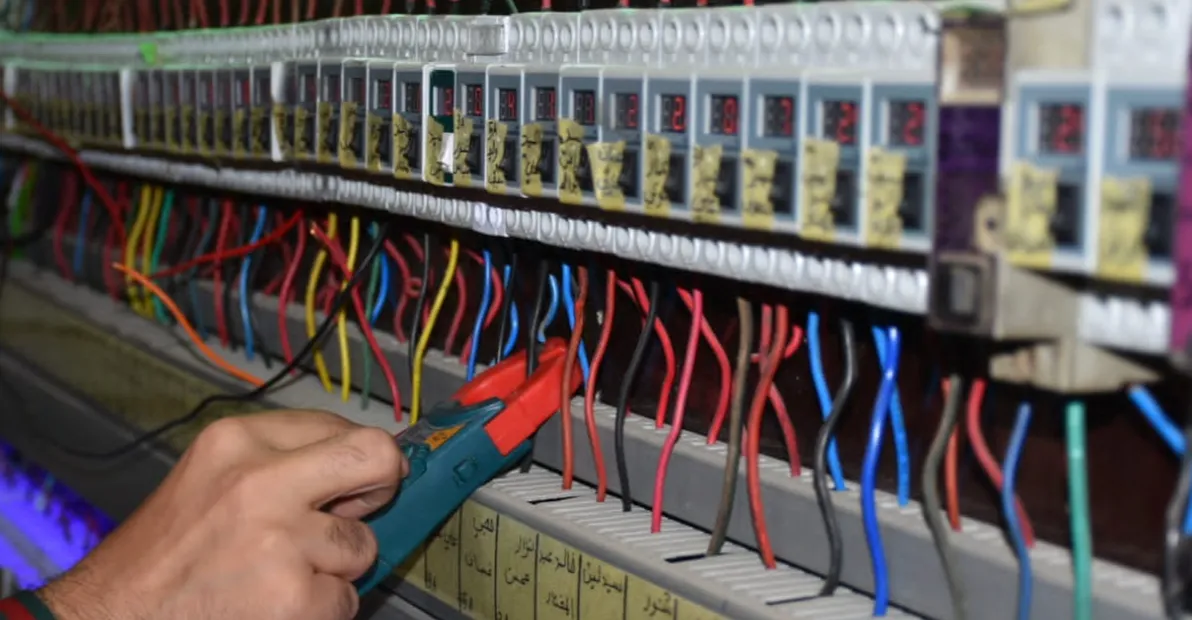
Authorities in Iraq’s Dhi Qar province rushed on Thursday to deal with a sudden power shortage after private electricity generators across the province were shut down. The outage hit Nasiriyah and nearby areas, cutting electricity at a time when the grid is already under pressure.
Governor Haitham Aziz Adel ordered private generator owners to resume operations immediately, enforcing a decision by the provincial council. At the same time, local officials opened talks with federal agencies in Baghdad, including the General Commission for Taxes and the Oil Products Distribution Company, to fix the dispute that caused the shutdown.
The problem started when the Association of Private Generator Owners stopped work in protest. They said the government suspended gas fuel supplies used to run generators unless owners provided tax clearance certificates. For many operators, that requirement uncovered old tax debts they say they were never told about.
According to the association’s head, Muhannad Al-Husseinaoui, more than 2,500 generators were shut down across Nasiriyah and surrounding districts. That sharply reduced daily electricity hours and added more stress to the local power system.
Al-Husseinaoui said many generator owners were shocked when they visited tax offices and were told they owed dues going back more than 15 years.
“Some operators suddenly found debts of 30 to 40 million Iraqi dinars, without any prior warning,” he said. “The amounts were unexpected, and there’s no clear way to deal with them.”
He warned that the shutdown will continue unless authorities agree to start tax payments from 2026 onward, arguing that owners should not be forced to pay old debts they were never officially notified about.
Meanwhile, Ali Saber, a member of parliament from Dhi Qar, said the province has a serious and long-standing electricity shortage. He explained that Dhi Qar needs at least 900 megawatts just to maintain a basic two-hours-on, two-hours-off power schedule. To improve service, it would need 1,200 megawatts, and for stable winter electricity, 1,500 megawatts.
Right now, the province only receives about 5% of Iraq’s winter power output. After electricity is diverted to Basra, hospitals, and other critical facilities, Dhi Qar is left with just 650 to 700 megawatts.
Saber called on the government to increase the province’s power share, review national distribution rules, and make sure production and consumption data are accurate so provinces don’t lose electricity meant for them. On the generator issue, he said unpaid taxes are the real problem, noting that more than 90% of generator owners still haven’t settled old dues.
For residents of Dhi Qar, the situation highlights a familiar problem: weak infrastructure, rising demand, and disputes that leave ordinary people sitting in the dark.