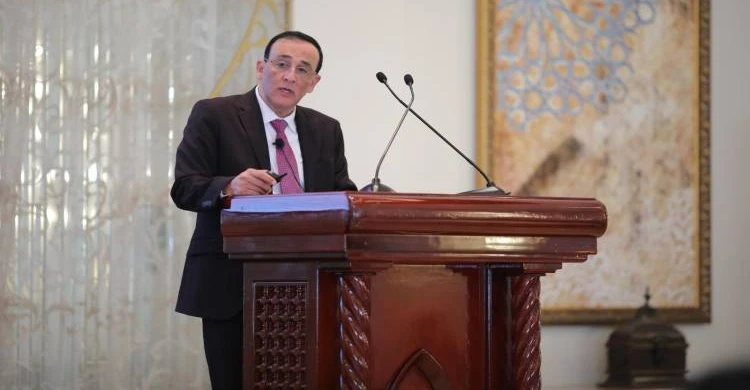
A Republican figure in the United States, Frank Mismar, said on Friday that the White House is already taking steps to control prices in global markets and stock exchanges because of the rising tensions with Iran. He also claimed that the situation inside Tehran is getting very serious and could be close to breaking point.
Speaking to a media outlet, Mismar explained that what’s happening in the region is not just a short pause or a temporary truce. According to him, big changes are coming. He pointed to the large U.S. military buildup near Iran’s coast and the heavy economic pressure being placed on the country. All of this, he says, is forcing Iran’s leadership into very difficult decisions.
He described it as a mix of military pressure and economic timing working together.
Mismar said that the ten-day truce period announced by Donald Trump was not random. Instead, he believes it was carefully planned to keep global markets stable while also giving Iran time to respond. Originally, Trump had given Iran five days, but then extended it to ten days to allow more room for negotiations.
He also talked about U.S. military movements, saying that several important naval units are being positioned in the region. Along with these, elite forces like Delta Force and the 82nd Airborne Division are also being deployed. According to him, this shows that the U.S. is fully prepared and has a clear timeline if things move toward military action.
On the economic side, Mismar said the U.S. and Israel have different goals. Israel is mainly focused on stopping Iran’s missiles and its regional allies. But the United States, he says, is looking at the bigger picture—especially oil.
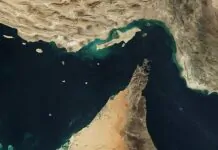
He claimed that Washington wants to control the flow of oil going from Iran to countries like China. He added that if key locations like Kharg and Qeshm islands are controlled, Iran’s ability to export oil could be completely shut down. This would also affect what he called Iran’s “shadow fleet,” which helps fund its activities in the region.
Talking about the situation inside Iran, Mismar said the leadership is weakening. He believes power is becoming divided among different groups, almost like local warlords. In his view, this kind of internal division is a sign that the system is under serious stress.
He also warned that if the U.S. decides to speed things up, it could target civilian infrastructure. That, he said, could lead to a full collapse of the state, creating chaos. However, he suggested that Washington may want to avoid that scenario and is possibly looking for a new leadership group to take over during any transition.
At the end, Mismar raised questions about what the future of the region will look like. He said recent Iranian actions have pushed Arab countries closer together. There are now serious discussions about forming a stronger alliance, sometimes described as an “Arab NATO,” which could include Gulf countries, Jordan, and Morocco.
He also mentioned talks about protecting key waterways and finding new ways to export oil without relying on vulnerable routes like narrow straits.
In his view, this crisis will not simply end and go back to normal. Instead, it could reshape the region completely—changing power balances, security systems, and economic relationships for years to come.