The Kurdistan Region is going through a very difficult time. Political tensions are rising, the economy is under heavy pressure, and a new regional government still hasn’t been formed. On top of that, signs of financial and administrative corruption are becoming harder to ignore. All of this is starting to threaten stability and weaken trust between the people and those in power.
This crisis isn’t new. It’s the result of years of unresolved problems. There is renewed tension between Erbil and Baghdad, ongoing power struggles inside the Kurdistan Region, and long-standing political disputes that have made it hard for past governments to meet people’s needs or improve daily life.
Many political figures also link the region’s crisis to Iraq’s wider political scene. Some believe that any agreement inside Kurdistan could directly affect the choice of Iraq’s next prime minister.
Lawmakers and independent politicians say the situation has reached a dangerous point. The current government is only a caretaker and does not have full constitutional powers. At the same time, no political party holds a clear majority in parliament, making it even harder to form a new government.
Former MP Rezan Sheikh Diler told dinaropinions.com that the absence of a fully empowered government has had a direct impact on basic services. She said government employees in the region received only ten salaries during 2025, which made the economic and social situation even worse.
Diler also pointed to ongoing disputes between the Kurdistan Democratic Party (KDP) and the Patriotic Union of Kurdistan (PUK), along with disagreements involving opposition parties. She said these divisions are a major obstacle to forming a stable government, especially since some opposition groups refuse to join a power-sharing deal with the two main parties.
Corruption allegations deepen the crisis
At the same time, serious corruption accusations are coming to light. Independent politician Didar Haval revealed what he described as widespread manipulation inside the Kurdistan Region’s Ministry of Finance, particularly involving traffic fine revenues.
Speaking to dinaropinions.com, Haval claimed that large sums of money are being stolen every month. He said official documents and receipts were destroyed to hide the thefts, with losses reaching millions of dollars each month.
Haval also said that recent increases in traffic fines—directed by the KDP—have placed extra financial pressure on citizens and made transparency problems inside the region’s financial system even worse.
These claims come as international reports continue to highlight major corruption cases in the Kurdistan Region, sparking growing calls for independent investigations and real accountability.
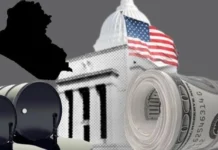
The crisis in Kurdistan isn’t just about internal corruption. It’s also closely tied to long-running political and legal disputes with Baghdad, especially over oil and financial rights. These unresolved issues have played a major role in weakening the region’s economy and financial stability over the years.
Without serious reforms and political compromise, many fear the situation will continue to spiral—at a growing cost to citizens and the future of the region.