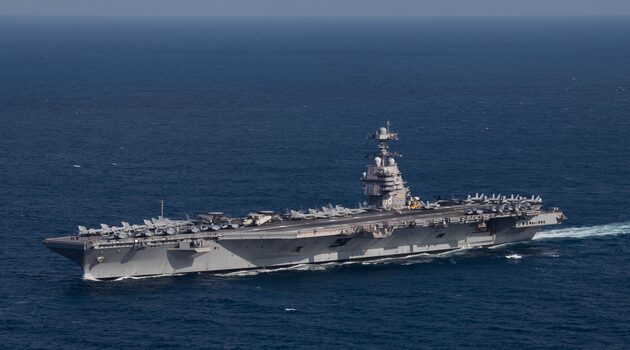
The Iraqi dinar sits in a very uncomfortable place right now. If a military conflict breaks out between Donald Trump and Iran, Iraq’s currency could easily get caught in the middle. The Middle East is already tense. The United States has moved a large amount of military power into the region, including carrier strike groups, warships, and hundreds of aircraft positioned close to Iran. At the same time, talks have been taking place in Geneva between Trump’s envoy Steve Witkoff and Iranian officials. Reports say there has been progress, but no one knows if Iran will offer enough concessions for Trump to claim a win. If diplomacy fails, military action becomes a real possibility. And if that happens, Iraq’s currency could feel the shock almost immediately.
To understand why, you have to understand Iraq’s situation. Iraq sits directly between the United States and Iran in both geography and politics. The country works closely with the United States on security, and American troops are still stationed there. At the same time, Iraq’s economy is deeply tied to Iran. Iraq spends close to $900 million every month buying goods from Iran, especially electricity and gas that help power Iraqi cities. On top of that, several Iranian-backed militias operate inside Iraq and even hold influence within state institutions. So Iraq is constantly trying to balance both sides. That balancing act also affects its currency.
The Iraqi dinar has had a long and difficult journey. Before 1991, the exchange rate was around three dinars to one U.S. dollar. After decades of wars, sanctions, and corruption, the currency weakened dramatically. Today the rate sits around 1,310 dinars to the dollar. In recent years, Iraq has slowly tried to stabilize things. The government has benefited from strong oil revenue, and the International Monetary Fund has provided guidance on economic reforms. The Central Bank of Iraq also maintains a managed peg to the U.S. dollar to keep the currency stable. As the second-largest oil producer in OPEC, Iraq has strong revenue potential. But all of that stability could come under pressure if the United States attacks Iran.
One possible situation is a limited strike. This is the scenario that has been discussed most often in Washington. In this case, the United States might launch a short and focused attack on specific Iranian military or nuclear sites. The goal would be to pressure Iran into negotiations while showing that U.S. threats are serious. Targets could include missile bases, nuclear facilities, or locations linked to the Iranian Revolutionary Guard. If something like this happens, the Iraqi dinar would face mixed forces.
Oil prices would likely jump quickly. When conflict threatens the region, global oil markets usually react with fear. For Iraq, higher oil prices normally mean more government revenue. Since Iraq depends heavily on oil income, a surge in prices could help the government bring in more money and support the dinar. But at the same time, Iran would almost certainly respond. Many U.S. military bases in the region are located inside Iraq. Iran has thousands of ballistic missiles and has long prepared retaliation plans that involve striking U.S. bases across the Middle East. Iraqi militias aligned with Iran have also warned that attacks on Iran could trigger a broader conflict.
If violence spreads into Iraq, confidence in the dinar could fall quickly. Investors would pull money out of the country. Iraqi citizens would rush to convert dinars into U.S. dollars. This usually causes the black-market exchange rate to rise quickly above the official rate. The Central Bank of Iraq normally protects the currency by selling dollars through daily auctions. But if demand for dollars becomes too strong, even large foreign reserves can start to shrink. If that pressure continues for long enough, the government could eventually be forced to weaken the currency.
A much more serious situation would be a longer war between the United States and Iran. Some military plans reportedly include weeks of operations aimed at damaging Iran’s military power. In the most extreme case, the conflict could even turn into an attempt to change Iran’s government. If that kind of war happens, Iraq’s economy could face a much deeper shock.
One major weakness for Iraq is its dependence on Iranian energy. Iran supplies gas and electricity that help keep Iraq’s power grid running. If war disrupts those supplies, Iraq could experience widespread power shortages. Blackouts would hit businesses, factories, and daily life. Economic activity would slow down quickly. At the same time, the Iraqi government would struggle to keep paying salaries and maintaining services. Even if oil prices are high, the damage to the economy could still push the dinar downward.
Another risk is migration. Iran has a population of more than 90 million people. A large regional war could push huge numbers of refugees toward neighboring countries. Iraq shares a long border with Iran and would likely be one of the first destinations. Managing that kind of humanitarian pressure would place huge financial strain on Iraq’s government and infrastructure.
History gives us a rough idea of what could happen. During the 2003 invasion of Iraq, Iraq’s currency markets experienced extreme disruption. People rushed to hold dollars instead of dinars. Black markets for currency trading expanded rapidly. The old Saddam-era dinar was eventually replaced, and over time the currency stabilized again. But the early years were chaotic. A new conflict nearby could create similar pressures even if Iraq itself is not the main battlefield.
Oil prices add another complicated layer to the story. A war involving Iran would almost certainly send oil prices higher, especially if the conflict threatens shipping through the Strait of Hormuz. Around 20 percent of the world’s oil passes through that narrow waterway. Any threat there would send global markets into panic. For Iraq, higher prices could bring more money into government accounts. But the same conflict could also damage Iraq’s own oil infrastructure, scare away investors, and increase security costs. So even with higher oil revenue, the overall impact on the dinar could still be negative.
Sanctions are another major pressure point. The U.S. government has already taken steps to monitor Iraqi banks that may be helping Iran move money. If tensions rise, Washington could impose tougher financial restrictions. Iraqi banks that are accused of helping Iran could lose access to the U.S. dollar system. That would be extremely damaging because Iraq’s economy depends heavily on dollar transactions. If banks start losing access to dollars, it would make it harder for businesses to operate and for the central bank to control the exchange rate.
For ordinary Iraqis, the response is usually simple. When people lose confidence in the dinar, they buy dollars. This process is called dollarization, and it has happened many times during past crises. As more people hold dollars instead of dinars, pressure on the local currency increases even more.
For anyone watching the Iraqi dinar, there are a few key signals to monitor. One of the most important is the foreign reserve level at the Central Bank of Iraq. If reserves start falling quickly or if dollar auctions slow down, it could mean the bank is struggling to defend the exchange rate. Another signal is the difference between the official exchange rate and the rate in the street market. When this gap grows larger, it often means the currency is under stress. Energy supplies are also critical. If Iranian gas and electricity stop flowing into Iraq, the economic impact could be immediate. And finally, the behavior of Iran-aligned militias inside Iraq will matter greatly. If they become active after U.S. strikes, Iraq could quickly shift from being an observer to becoming part of the conflict.
In the end, the Iraqi dinar has very little control over its own destiny in a situation like this. Iraq sits between two powerful rivals, and any serious conflict between them will send shockwaves through the country’s economy. The Iraqi government can try to protect the currency, but its ability to do so is limited when the forces shaping the crisis come from outside its borders.
If the conflict turns out to be short and limited, the dinar may experience only temporary damage. People may rush into dollars for a while, the black-market rate could rise, and the central bank might need to use some of its reserves. But stability could eventually return once tensions ease. If the conflict becomes larger and longer, involving militias, energy disruptions, and regional instability, the dinar could face its most serious challenge since the war that reshaped Iraq more than two decades ago. In that situation, the currency would once again be forced to survive in the middle of a storm that Iraq itself did not create but cannot avoid.