Qi Card Company Tightens Control In Iraq In Cooperation With The US: We Closed 3,000 Accounts
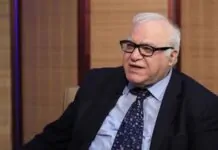
Shafaq News – Translation Bahaa Abdul Hadi, Chairman and Co-Founder of the International Smart Card Company, owner of the QI electronic card, revealed that the company is implementing a strict policy to monitor and prohibit suspicious activity in cooperation with Iraqi and US authorities, confirming that approximately 3,000 accounts have already been closed.
In an interview with the English-language newspaper The National in Abu Dhabi, translated by Shafaq News Agency, Abdul Hadi said that the transition to a cashless economy in Iraq is gaining momentum, but there is still much to be done.
According to the report, the Iraqi government has introduced financial and economic reforms since early 2023, including the use of electronic payment systems by the government and private sector, and reforms to regulations requiring electronic payment service providers to tighten anti-money laundering and cybersecurity rules.
The report quoted Abdul Hadi as saying that many Iraqis are now using cards and phones instead of withdrawing large amounts of cash from their pockets, indicating a change in payment habits. However, digital awareness remains the biggest challenge, he explained, adding that better incentives are needed to encourage more Iraqis to trust and adopt digital payments and transition away from paper cash.
However, he noted the importance of digital solutions as a turning point in bridging the cash gap in urban areas over the next five years, indicating that it will take 10 years to reach rural areas.
The report also explained that the global smart card company launched the Qi card in 2007, initially as an electronic payment service for public sector salaries and pensions. The company now claims to have more than 11 million users and a network of 23,000 points of sale covering all Iraqi governorates, including remote villages.
He continued: “For the government and the Central Bank, the risks are significant, but the transition of millions of Iraqis from cash to cards and electronic wallets could limit corruption, expand financial inclusion, and enhance the stability of the dinar. However, the abuse of these same systems is also possible.”
The National recalled what the American Wall Street Journal reported last May, stating that QI cards were being exploited in dollar arbitrage schemes for Iranian-backed groups, allowing local salaries to be converted into hard currencies abroad to help Iran circumvent US sanctions. Financial transactions using the cards increased from $50 million to $1.5 billion per month between early 2023 and April 2023, generating profits estimated at $450 million in 2023 alone.
However, the report said that Abdul Hadi strongly denied these allegations, stressing that Qi adheres to a “zero tolerance” policy for any misuse.
He also stated that “when our system detects any warning sign, we immediately close the suspicious account,” adding that more than 3,000 accounts have been banned.
According to Abdul Hadi, in cases where external parties attempted to exploit the broader card system for arbitrage purposes, we actively cooperated with the Central Bank of Iraq and Visa and Mastercard, taking measures such as freezing accounts, limiting the volume of cross-border transactions, and blocking thousands of suspicious cards.
He added that the company uses biometric authentication and real-time monitoring to detect any misuse, noting that in June, the company signed a three-year partnership with the American consulting firm K2 Integrity to enhance oversight.
Abdul Hadi indicated that no US agencies have contacted QI to date regarding these allegations, explaining, “We have not received any warnings… and the company is fully committed to cooperating with both US authorities and Iraqi regulatory bodies should they request information through legal channels.”
Abdul Hadi noted, as quoted in the report, that “the company has suspended the payment of salaries to the Popular Mobilization Forces,” explaining that this decision “was made in consultation with our risk and compliance advisors to ensure full compliance with international regulations and avoid US pressure.” LINK
No-Gas Burning Technology
Walid Khaled Al-Zaidi Since the discovery of oil in Iraqi lands in (1927), from the Baba Gurgur field in Kirkuk, through the Iraq Petroleum Company, at a depth of (1521) feet, this discovery was a major turning point in the country’s economic history, as it was followed by other explorations in other regions of the center, south, north and east, but signs of maximum benefit from the gas associated with the extraction of crude oil from the earth’s interior did not appear.
Over a period of nearly (100) years, our specialized engineering cadres were not able to seriously comprehend the great importance of the gas associated with the extraction of petroleum raw materials produced from all fields, despite the fact that they are considered enormous resources that can establish a national energy industry and great economic wealth in the country.
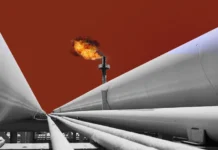
Gas in our various fields is a wasted natural energy source that appears burned and accompanies crude oil extraction operations. It is a large part of the country’s wealth that suffers from the burning of large quantities of it despite the efforts made to invest it.
The reason for this is the destruction of infrastructure in previous periods due to wars and corruption, in addition to neglect and short-sightedness in previous eras regarding the future of energy in the world. However, as soon as last year came, the federal government included in its programs the implementation of work plans to stop the burning of associated gas until the year (2027), in order to use it to operate power plants and reduce dependence on imported gas from various foreign sources, which burdens the Iraqi treasury with huge sums to purchase it.
Not only that, but this strategy also included the process of improving the environment, which is in line with the will of the international community and UN resolutions to reduce thermal emissions that pollute the environment.
The current national trends in this vital field were not random, but rather were based on a clear and well-thought-out scientific and professional vision when it extended communication channels with the State of Qatar, as it is the most important gas producer in the region, and one of the most prominent sources of its production in the world.
The plans showed that 70% of the gas would be invested instead of burning it by the end of this year, in preparation for the emergence of Iraq as a producer of this promising energy, through the signing of the joint operating agreement between the French energy company Total, Basra Oil Company, Qatar Gas Company and the Federal Ministry of Oil, under the auspices of Prime Minister Mohammed Shia Al-Sudani and in the presence of the Minister of Energy of the State of Qatar, in addition to important international figures in the field of implementing oil and gas projects from Korea, China and Turkey.
Governmental measures in the field of gas investment, in cooperation with the relevant authorities in this vital field, embody Iraq’s desire to increase the scope of investments with Qatar Energy and the French company Total, as the main operator of the Artawi oil field south of Basra, to implement the integrated gas development project,
in addition to signing the contract for the central oil and gas processing plant between the French company Total Energy and the Turkish company Enka, which included, among other things, the production of (163) million standard cubic feet of gas per day,
in addition to the technology of not flaring gas, which indicates in a striking way the confidence of international parties specialized in this field in the strength of the Iraqi economy and inspires hope in seeing an advanced investment environment on our land, and an eloquent message that the Iraqi market is open at all levels to solid international economic contributions.https://alsabaah.iq/121404-.html
Rentier No More? Baghdad’s $17B Gamble On The Development Road
Economy & Business Iraq breaking Turkiye Development Road Rentier 2025-09-30 08:40 Shafaq News – Baghdad / Abu Dhabi Iraq’s $17 billion Development Road Project will be the backbone of a new, non-oil economy, linking the Gulf to Europe and reshaping regional trade, Transport Minister Razzaq Muhaibis al-Saadawi said on Tuesday.
During the Global Rail 2025 exhibition in Abu Dhabi, al-Saadawi called the rail-and-highway corridor “ a lifeline that carries jobs and investment, not just freight.”
He said international experience shows that modern rail networks slash transport costs, strengthen supply chains, and drive competitiveness — outcomes Iraq aims to replicate by making rail the centerpiece of the project.
The Development Road will span 1,200 kilometers from Iraq’s southern ports to Turkiye,combining an electrified railway with a high-speed highway.
Construction is planned in three phases through 2050, with the first stage expected to create more than 100,000 jobs.
For decades, Iraq has functioned as a rentier economy, deriving over 90% of state revenues from oil exports. This dependence has left public finances highly vulnerable to price swings, limited private-sector growth, and entrenched unemployment among a young population.
Economists warn that without diversification, Iraq’s fiscal system risks recurring crises and an inability to sustain basic services when oil markets weaken.
https://www.shafaq.com/en/Economy/Rentier-no-more-Baghdad-s-17B-gamble-on-the-Development-Road
For current and reliable Iraqi news please visit: https://www.bondladyscorner.com