The Prime Minister Directs The Relevant Ministries And Authorities To Remove Obstacles Facing The Private Sector.
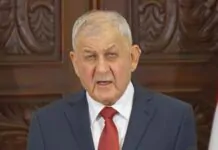
Yesterday, 19:10 Baghdad – INA Prime Minister Mohammed Shia al-Sudani directed relevant ministries and agencies on Monday to remove obstacles facing the private sector, stressing the importance of providing an enabling environment for private sector activity across various industrial sectors.
The Prime Minister’s media office said in a statement received by the Iraqi News Agency (INA):
“Prime Minister Mohammed Shia al-Sudani chaired the regular meeting of the Industrial Coordination Council,in the presence of the Minister of Finance and the Ministers of Oil, Trade, Industry and Minerals, the Chairman of the Advisory Board, the Chairman of the Iraqi Federation of Industries, and a group of representatives of the industrial sector.”
Al-Sudani directed, according to the statement, “all relevant ministries and authorities to remove obstacles facing the private sector and adapt laws to support industrial development plans and projects implemented throughout Iraq.”
He stressed the importance of providing a suitable environment for the private sector to operate in various industrial fields, by focusing on the industrial, legal, and legislative environment to ensure the wheel of investment is stimulated in the country.
He also directed “members of the Industrial Coordination Council to prioritize the private industrial sector and work to resolve the problems and obstacles facing its operations, with the aim of expanding its participation and activity in developing the national economy.”
The statement continued, “The meeting reviewed the topics included on the agenda,as it was agreed to include partnership contracts concluded in all public companies affiliated with the Ministry of Industry and Minerals, with the private sector, by Cabinet Resolution (24413 of 2024),
until the issuance of the new Federal General Budget Law, and because the paragraph (Supporting the Industrial Sector / 2 / First) of the aforementioned resolution came in an absolute manner to include all raw materials entering into local industries without discrimination between the importing party.”
He added, “The meeting witnessed the approval to reduce the price of the liquefied gas product (LPG) to become (300) thousand dinars per ton, for industrial projects, except for brick factories that have a certificate of completion of establishment issued by the General Directorate of Industrial Development, the National Investment Authority or all investment bodies,” explaining,
“It was approved to oblige ministries and entities not affiliated with a ministry and all governorates to cover their needs for liquid medical gases, industrial gases, liquid nitrogen, and argon from national factories.” He pointed out that
“the meeting approved exempting industrial projects from the advertising and competition requirement,
provided that the Minister of Industry and Minerals and the head of the Federation of Industries submit a specific recommendation on the subject,” explaining that
“the meeting agreed not to transfer industrial projects that have obtained the necessary approvals from the General Directorate of Industrial Development at the Ministry of Industry and Minerals, the National Investment Authority, and the Federation of Industries,
which prove that they do not have an impact on the environment according to environmental impact studies, and that the relevant departments in the governorates direct the owners of industrial projects to address their environmental violations.”
Regarding addressing the obstacles to the allocation and ownership of industrial projects established on shared agricultural land, the statement stated that
“the Iraqi Federation of Industries was directed to hold a workshop attended by the Director General of the Real Estate Registration Department and the Director General of the Agricultural Lands Department, regarding environmental issues, with the governorates being required to obtain the approval of the industrial and agricultural sector authorities before proceeding with urban planning modernization procedures for cities.” He pointed out that
“the Ministry of Commerce’s proposals were approved, which include the Ministry of Commerce/Private Sector Development Department coordinating and cooperating with the Ministries of Industry and Minerals, Planning, Labor and Social Affairs, and the Iraqi Federation of Industries, to prepare training programs for the private sector to develop small and medium enterprises, as well as expanding contracts with local factories to market their products through their hypermarket outlets.”
As part of efforts to support national products and advance the production and industrial sector, the statement explained that “approval has been given to the Ministry of Planning to update the National Product Promotion Guide, with regard to information pertaining to industrial sectors, on the ministry’s electronic platform.” https://ina.iq/ar/economie/245087-lpg.html
Internal Audit Charter
October 06, 2025 Internal Audit Charter :diamonds: 2019 / 2021 / 2025
https://cbi.iq/static/uploads/up/file-164490791249341.pdf
https://cbi.iq/static/uploads/up/file-164490793413698.pdf
https://cbi.iq/static/uploads/up/file-175973217568117.pdf
https://cbi.iq/news/view/3003
Securities: Modernizing The Working Methods In The Iraqi Market In Cooperation With Specialized International Companies
Local The Securities Commission confirmed on Monday that it is modernizing the infrastructure and operating methods of the Iraqi market in cooperation with specialized international companies, while emphasizing its efforts to enhance oversight and expand the base of listed companies.
Member of the Securities Commission Board, Yassin Taha Weiss, said: “The Commission is the body responsible for monitoring, supervising and regulating the securities sector in Iraq, and was established pursuant to Legislative Order No. (74) of 2004, which defined its legal, administrative and financial duties.
He added, “The Commission, twenty-one years after its establishment, is still young and capable of growth and development, and has witnessed remarkable progress in the preparation of regulations and systems.”
He explained that “the Commission is currently working on preparing a new draft law to replace the dissolved Coalition Provisional Authority order, in line with modern Iraqi legislation and increasing investment guarantees.”
He added, “The proposed law has been given a second reading in the House of Representatives and is expected to strengthen the legal and regulatory environment for the securities sector.”
He noted that “the Commission has developed in the areas of regulation and supervision, and has contributed to supporting the Iraq Stock Exchange by modernizing its infrastructure and working methods in cooperation with major international companies specializing in electronic systems for securities trading.”
Weiss pointed out that “the Authority is looking forward to increasing the number of listed companies and improving their performance,” explaining that “improved performance of joint-stock companies leads to increased investor interest in trading their shares, and the broader the base of listed companies, the higher the volume of investment in the market, which is the goal the Authority is seeking to achieve in coordination with relevant sectoral entities.” https://economy-news.net/content.php?id=60815
Rafidain Bank Closes Its Branches In Sana’a After Previous US Threats.
Banks Economy News – Baghdad Yemeni Minister of Information, Culture and Tourism Muammar al-Eryani revealed on Sunday that the Iraqi state-owned Rafidain Bank has closed its branches in Sana’a.
Al-Eryani said in a blog post on the “X” website that “the decision of the Iraqi Rafidain Bank to close its branch in Sana’a and end its financial and banking activities is a step in the right direction and a direct result of international efforts aimed at drying up the sources of funding for the terrorist Houthi group affiliated with Iran.”
He pointed out that this measure “reflects a positive response to government warnings and US and international pressure, and sends a clear message to other regional and international financial institutions about the need to review their activities and ensure they do not fall into the cycle of exploitation or use to serve the agendas of the Iranian regime and its terrorist arms in the region.”
Al-Eryani asserted that “the Houthis have transformed financial and banking institutions operating in areas under their control into tools for plundering Yemenis’ money and financing their cross-border terrorist activities.”
Last August, US Representative Joe Wilson accused the state-owned Rafidain Bank of conducting financial transactions with the Houthi group in Yemen, threatening to cut off US financial support to Iraq as a result.
Wilson wrote in a post on X (formerly Twitter) that “the Iraqi state-owned Rafidain Bank is conducting financial transactions for the Houthis, a terrorist organization,” adding, “We have a name for these countries: state sponsors of terrorism.”
“I will work to cut off funding to Iraq during the next appropriations legislation” in the US budget, he added.
Wilson also urged the US Treasury to “punish” Rafidain Bank. https://economy-news.net/content.php?id=60756
For current and reliable Iraqi news please visit: https://www.bondladyscorner.com