Global Gold Buying Jumps, Iraq Adds Nearly 12 Tons
2026-01-31 Shafaq News– Baghdad The Central Bank of Iraq purchased 11.9 tons of gold in 2025, ranking the country eighth globally among the world’s largest central bank gold buyers, according to data released by the World Gold Council. According to the data, 95% of central banks expect global official gold reserves to grow over the next year, the most optimistic reading in the survey’s eight-year history. A record 43% of central banks plan to increase gold holdings, up from 29% in 2024, with none expecting reductions.
Poland topped the list with gold purchases of 101.9 tons, followed by Kazakhstan with 56.9 tons, Brazil with 42.7 tons, Azerbaijan with 38.2 tons, and China with 26.7 tons. Turkiye ranked sixth with 26.6 tons, while the Czech Republic followed with 20.4 tons. Cambodia and Uzbekistan rounded out the top buyers, purchasing 7.9 tons and 7.7 tons respectively. https://www.shafaq.com/en/Economy/Global-gold-buying-jumps-Iraq-adds-nearly-12-tons
Dollar Gains On Fed Chair Nomination Speculation
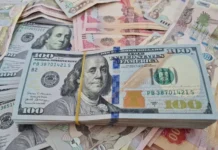
2026-01-30 Shafaq News The dollar rose on Friday, clawing back some of its slide on the week, after U.S. President Donald Trump said he would soon announce his nominee to head the Federal Reserve while optimism grew for Washington to avert a government shutdown.
Trump said he intends to name his pick to replace Fed Chair Jerome Powell on Friday, following news that former Fed Governor Kevin Warsh visited the White House. The Japanese yen fell, and cryptocurrencies tumbled.
The greenback recovered some of this week’s losses after tension between Trump and Cuba, Iran, Venezuela, Greenland and Europe hit some investors’ confidence in U.S. assets.
“The appointment of Warsh, if it’s true, will be seen as someone who can, in a way, remain independent, and not someone seen as likely to be subservient to Trump’s wishes,” said Khoon Goh, head of Asia research for ANZ in Singapore.
“Any sensible market participant would not want to carry a big position into the weekend,” he added. “So some of this could just be positioning lightening up. If you’re short dollars, you’ve done well, take your chips off the table.”
The dollar index, which measures the greenback against a basket of currencies, rose 0.4% to 96.55, trimming its weekly slide to 0.9%.
The euro dipped 0.4% to $1.1922, while the yen weakened 0.5% to 153.85 a dollar. Sterling slid 0.4% to $1.3751.
Bloomberg News said Warsh would get the nod to replace Powell at the Fed, while a person familiar with the matter told Reuters he met Trump at the White House on Thursday.
The dollar also received a lift after Republican and Democratic lawmakers hammered out a deal to stave off a looming government shutdown.
Escalating conflict abroad and unease over domestic immigration crackdowns have hammered the U.S. currency, driving the dollar index to a four-year low earlier this week.
Overnight, the White House said Trump signed an executive order for tariffs on countries that provide oil to Cuba, while he threatened new tariffs on Canada and said the United States was decertifying business jets made there.
With tension simmering in Iran, Trump said on Thursday he planned to speak with leaders in Tehran, even as the U.S. dispatched another warship to the Middle East and Pentagon chief Pete Hegseth said the military would be ready to carry out whatever the president decided.
The dollar closed last week with its biggest fall since last April, driven in part by the Trump administration’s tariff threats against European countries if they stood in the way of his ambition of buying Greenland.
The spat over Greenland was the start of wider geopolitical concerns that have dragged the currency broadly lower, said Westpac Group senior economist Mantas Vanagas.
“It’s the fact that the ‘Sell America” trade has resurfaced, and investors are questioning to what extent the United States is still a trustworthy partner for other economies,” he added.
The dollar found some support after the Fed held interest rates steady on Wednesday against the backdrop of what Fed Chair Powell described as a solid economy and diminished risks to both inflation and employment.
The yen broke back above 154 to the dollar, but is still poised for its second straight weekly gain, as Japanese policymakers hinted at possible coordinated currency market intervention with the United States to defend the currency.
The yen fell to a near 18-month low last week as concerns about Japan’s finances mounted before a snap election in which Prime Minister Sanae Takaichi and her opponents are campaigning on a plank of tax cuts.
The Australian dollar weakened 0.7% versus the greenback to $0.6997, and the kiwi lost 0.5% to $0.6046.
In cryptocurrencies, bitcoin tumbled 2.2% to $82,519.22, touching the weakest since November 21, while ether sank declined 3% to $2,732.04. (Reuters) https://www.shafaq.com/en/Economy/Dollar-gains-on-Fed-chair-nomination-speculation
USD/IQD Exchange Rates Climbs In Baghdad, Erbil
2026-01-31 Shafaq News– Baghdad/ Erbil The US dollar opened Saturday’s trading at a higher rate in Baghdad and Erbil, gaining 500 Iraqi dinars compared with the previous session.
According to a Shafaq News market survey, the dollar traded in Baghdad at 150,400 Iraqi dinars per 100 dollars, up from 149,900 dinars recorded on Thursday at Al-Kifah and Al-Harithiya central exchanges in Baghdad.
Local exchange shops in the capital sold the dollar at 151,000 dinars per 100 dollars, while buying prices stood at 150,000 dinars. In Erbil, the selling price reached 150,650 dinars for every 100 dollars, and the buying price was 150,300 dinars.https://www.shafaq.com/en/Economy/USD-IQD-exchange-rates-climbs-in-Baghdad-Erbil
US Pressure On Iran Intensifies; Analysts Assess Strike Scenarios And Regional Risks
2026-01-31 Shafaq News– Washington Iran and much of the region are facing a period of heightened unease as Washington escalates its rhetoric under President Donald Trump, warning of possible strikes against Iran’s leadership and nuclear facilities. The external pressure coincides with weeks of unrest inside Iran, where protests have continued amid reports of widespread repression and a near-total internet shutdown, deepening international concern over Tehran’s handling of domestic dissent.
The tense atmosphere has been reinforced by the arrival of US naval and military assets in the Middle East, fueling speculation about an imminent military move. The buildup, analysts say, has raised expectations that Washington may opt for a limited strike as a way to break the political deadlock with Tehran and respond to the growing instability inside the country.
Frank Mesmar, a Republican Party member and Chair of the Advisory Council at the University of Maryland, told Shafaq News that the scale of the US military deployment suggests that action is approaching, arguing that President Trump has positioned himself in a way that leaves little room to step back without political cost, “the [US] administration has amassed a massive military force near Iran’s borders, making a strike increasingly likely.”
Mesmar outlined several possible outcomes if the United States proceeds with military action. One scenario would involve precise air and naval strikes against bases linked to the Islamic Revolutionary Guard Corps (IRGC), the Basij paramilitary, missile launch and storage facilities, and what remains of Iran’s nuclear program. Such an operation, in his view, could accelerate the collapse of a system he described as already fragile, potentially opening the way —over time— to a genuine democratic transition.
He also pointed to a second scenario in which the regime survives but is forced to adjust its behavior, similar to what he described as a “Venezuelan model.” In this case, Iran would retain the structure of the Islamic Republic but would be compelled to reduce support for armed groups across the region, curb its nuclear and ballistic missile programs, and ease its crackdown on protests.
Mesmar stressed, however, that this outcome is unlikely, given that Iran’s leadership has resisted meaningful change for decades and appears incapable of altering its trajectory now.
The most probable scenario, according to Mesmar, is one in which the current system collapses but is replaced not by civilian rule, but by a military-led government. While repeated protest waves have steadily weakened the regime’s legitimacy, he noted that Iran still has a powerful and deeply rooted security apparatus with a vested interest in preserving the status quo. In the turmoil that could follow US strikes, power could ultimately shift to a strong military authority dominated by figures from the IRGC.
Despite the clear imbalance between US and Iranian conventional forces, Mesmar warned that Tehran retains the ability to respond forcefully. Iran’s missile and drone capabilities could be used against US bases spread along the Arab side of the Gulf, particularly in Bahrain and Qatar. “Tehran could also target critical infrastructure in countries it views as complicit in any US attack, including Israel or Jordan.”
Maritime security presents another major risk. Iran has long threatened to disrupt shipping in the Gulf, particularly by mining key waterways. The Strait of Hormuz, a narrow passage between Iran and Oman, remains a critical chokepoint for global energy supplies. Around 20 percent of the world’s liquefied natural gas exports and between 20 and 25 percent of global oil and petroleum products pass through the strait each year; therefore, “Iran has repeatedly trained for rapid naval mine deployment, and any attempt to close or disrupt the passage would have immediate repercussions for global trade and oil prices.”
Beyond military retaliation, Mesmar highlighted the dangers of a power vacuum inside Iran. The collapse of central authority, he said, could lead to prolonged chaos, raising fears among neighboring states of civil conflict similar to that seen in Syria, Yemen, or Libya. Such instability could also inflame ethnic tensions, as Kurdish, Baluchi, and other minority groups seek to protect their communities amid nationwide disorder.
A similar assessment was offered by US-based Iranian-American political analyst Hassan Hashemian, who said Tehran has largely lost its room to maneuver in negotiations with Washington, arguing that the United States is now seeking sweeping concessions that go well beyond the nuclear file, including uranium enrichment, missile development, regional proxies, and Iran’s broader role in the Middle East.
Hashemian told Shafaq News that Washington also wants “guarantees related to the rights of the Iranian people,” particularly an end to the killing and repression of protesters and the restoration of internet access. Entering talks under such conditions, he said, would amount to full surrender—something the Iranian leadership is unwilling to accept.
Describing the Iranian system as suffering from a profound legitimacy crisis, he pointed out that “decades of violence and repression have alienated the population.” In his assessment, the regime no longer has a supportive public base and instead relies on security forces and allied militias abroad.
“If senior figures, including Supreme Leader Ali Khamenei and top IRGC commanders, were targeted in any attack, popular anger could quickly translate into mass action against state institutions.”
Hashemian also pointed to the European moves to classify the IRGC as a terrorist organization, saying such steps further isolate Tehran internationally and intensify pressure alongside US policy. He said this trend has effectively closed most diplomatic avenues, leaving the Iranian leadership with few options other than accepting both domestic and international demands.
Amid the mounting tension, Iranian officials have signaled a conditional openness to diplomacy. Foreign Minister Abbas Araghchi, speaking during a visit to Turkiye alongside his Turkish counterpart Hakan Fidan, said Iran is prepared to return to negotiations with the United States if they are based on fairness and mutual respect. At the same time, he emphasized that Tehran would not bow to external pressure, adding that while Iran is ready for talks, it is also prepared for war.
The convergence of internal unrest, external military pressure, and a narrowing diplomatic path has pushed Iran into one of the most uncertain moments in its recent history. Whether the crisis leads to confrontation, forced compromise, or a deeper rupture with regional and global consequences remains unclear, but the risks of miscalculation continue to rise for all sides involved. For Shafaq News, Mostafa Hashem, Washington, D.C. https://www.shafaq.com/en/Report/US-pressure-on-Iran-intensifies-analysts-assess-strike-scenarios-and-regional-risks
Gold Prices Dip In Baghdad, Erbil
2026-01-31 Shafaq News– Baghdad/ Erbil Gold prices declined on Saturday in Baghdad and Erbil markets, reversing gains from the previous session, according to a survey by Shafaq News.
In Baghdad’s Al-Nahr Street wholesale market, the selling price of 21-carat gold—including Gulf, Turkish, and European varieties—fell to 1,040,000 Iraqi dinars per mithqal (about five grams), with a buying price of 1,036,000 dinars, down from 1,171,000 dinars recorded last Thursday.
The selling price for 21-carat Iraqi gold stood at 1,010,000 dinars per mithqal, while the buying price was 1,006,000 dinars.
In jewelry shops, the selling price of 21-carat Gulf gold ranged between 1,040,000 and 1,050,000 dinars per mithqal, while 21-carat Iraqi gold sold for 1,010,000 to 1,020,000 dinars.
In Erbil, gold prices also edged lower, with 22-carat gold selling at 1,130,000 dinars per mithqal, 21-carat gold at 1,078,000 dinars, and 18-carat gold at 925,000 dinars.https://www.shafaq.com/en/Economy/Gold-prices-dip-in-Baghdad-Erbil-0
Crude Slides But Heads For Biggest Monthly Gain In Years
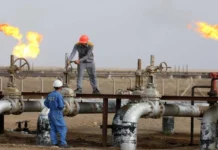
2026-01-30 00:17 Shafaq News Oil prices slipped more than 1% on Friday from multi-month highs, though they are set for their most substantial gains in years, as the risk premium surged due to a potential U.S. attack on Iran that could disrupt supplies.
Brent crude futures fell 91 cents to $69.80 a barrel at 0332 GMT after rising 3.4% to close at its highest point since July 31 on Thursday. The March contract expires later on Friday. The more active April contract slid $1.07 to $68.52.
U.S. West Texas Intermediate crude dropped $1.06 to $64.36 a barrel after gaining 3.4% to settle at its highest level since September 26 in the previous session.
Prices eased after last night’s rally as anticipation of a possible attack on Iran and the blockage of the Strait of Hormuz has yet to materialise, said LSEG senior analyst Anh Pham.
Tensions have escalated due to a U.S. military buildup in the Middle East. U.S. President Donald Trump urged Iran on Wednesday to make a deal on nuclear weapons or face an attack. Tehran responded by saying it would strike back hard.
The dollar rose on Friday, paring a weekly slide, after Trump said he would soon announce his nominee to head the Federal Reserve and on optimism that lawmakers in Washington would avoid a government shutdown.
Both oil benchmarks are set to record their first monthly gains in six months, with Brent up 14.7% to notch its biggest jump since January 2022. WTI is on track to rise 12% in January, its biggest monthly gain since July 2023.
The Trump administration is hosting senior defence and intelligence officials from Israel and Saudi Arabia for separate talks on Iran this week in Washington, according to two people familiar with the matter. U.S. officials say Trump is reviewing his options but has not decided whether to strike Iran.
“Given elevated inflation and this year’s midterm elections, we do not anticipate protracted oil supply disruptions,” JPMorgan analysts led by Natasha Kaneva said in a note.
“If military action does occur, we expect it to be targeted, avoiding Iran’s oil production and export infrastructure.”
Citi expects the U.S. and Israel to take restrained actions against Iran in the near-term, including oil tanker seizures; it cited a 70% probability for this outcome.
Disruptions in Kazakhstan, Russia and Venezuela affected a combined 1.5 million barrels per day (bpd) of supply in January, JPMorgan analysts said, adding that the Arctic wave in the U.S. is estimated to reduce crude and condensate output by 340,000 bpd this month.
On Wednesday, Kazakhstan said it was restarting the huge Tengiz oilfield in stages, aiming to reach full production in a week after three unexplained electrical fires earlier this month impacted 7.2 million barrels of oil output.
Bad weather has hit Russian oil exports, while Venezuela was forced to cut production after U.S. forces ousted President Nicolas Maduro early this month.
The country’s interim government on Thursday approved a sweeping reform of its main oil law. The Trump administration also broadly eased sanctions on Venezuela’s oil industry on Thursday, actions that could raise Venezuela’s oil and gas output and encourage investment.(Reuters) https://www.shafaq.com/en/Economy/Crude-slides-but-heads-for-biggest-monthly-gain-in-years