Iraq Recovers $379 Million And More Than $2 Billion Held In Lieu Of Funds From Türkiye, Jordan And Syria
Money and Business Economy News – Baghdad The Iraqi Funds Recovery Fund revealed on Sunday the mechanisms for recovering funds smuggled from abroad, while noting the recovery of about $379 million and efforts to conclude international agreements in this regard.
The Chairman of the Board of Directors of the Fund, Muhammad Ali Al-Lami, said that “the Fund adopts multiple legal and diplomatic mechanisms to cooperate with countries and international organizations with the aim of recovering Iraqi funds smuggled abroad,” explaining that “the Fund adopts two basic methods in the recovery process, the first is direct, and it is done through consultation, contracting or cooperation with international companies specializing in recovering funds and assets, in addition to law firms.”
He added that “the second indirect method is done through communication with international and diplomatic bodies via the Iraqi Ministry of Foreign Affairs and Iraqi embassies and attachés abroad.”
He pointed out that “all recovered funds are deposited into the accounts of the Ministry of Finance based on the amended Fund Law No. (9) of 2012, specifically Article (4/Ninth), which stipulates opening one or more closed accounts inside or outside Iraq in the name of the Ministry of Finance to deposit the revenues obtained by the Fund, and then including them in the state’s general budget.”
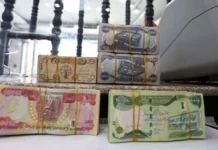
He added that “the amounts recovered so far amount to approximately (12,170,227) euros, (347,803,899) US dollars, (22,707,875,477) Iraqi dinars, (1,735,064) Japanese yen,” noting that “the total amount of recovered funds is equivalent to approximately (379,344,897) US dollars.”
Regarding the Fund’s future plans, he stated that “the Fund seeks to conclude cooperation agreements with international and local institutions to develop its work, acquire expertise, and enhance efforts to investigate and recover Iraqi funds,” indicating that “a number of agreements have recently been signed with local and international entities in this regard.”
Regarding the issue of frozen and smuggled funds abroad, he stressed that “it is difficult to accurately determine all the amounts, as some of them are unknown, and some are deposited in personal accounts belonging to the henchmen of the former regime, while another part is known and frozen by local decisions and laws, and there is an effort to verify and recover them in cooperation with the competent authorities and committees.”
He pointed out that “among the funds frozen abroad, there are approximately (193,947,000) dollars in Turkey, (700,000,000) dollars in Jordan, and (1,450,000,000) dollars in Syria.”
Regarding the number of cases filed by Iraq against entities and individuals involved in stealing and smuggling Iraqi funds, Mohammed noted that “the Fund has been pursuing non-cooperative individuals who may possess Iraqi funds, and approximately (39) requests for judicial assistance have been organized,” noting that “these cases are being considered by a judge assigned to the Fund’s cases, based on Article (12) of the Iraqi Funds Recovery Fund Law No. (9 of 2012) as amended, which stipulates that the Judicial Council assign a first-class judge to consider cases related to the Fund’s tasks.”
He explained that “the follow-up on these cases is done on two fronts: internally through the owners of the Iraqi funds recovery fund and in cooperation with the relevant authorities, and externally through international companies and specialized law firms.” https://www.economy-news.net/content.php?id=66774
European Airlines Profit From The Iran War
Money and Business Economy News – Follow-up Since the end of February, the war in Iran has sent shockwaves through the aviation world, with travelers feeling the immediate impact of higher ticket prices, while airlines have had to recalculate their routes to avoid closed airspace, making flights longer and more expensive.
Fuel prices, which account for about a third of the cost of flights, have jumped to record highs, especially in Europe, where prices have doubled in a few days due to the partial closure of the Strait of Hormuz and uncertainty about supplies.
On the other hand, some European and Asian airlines have taken advantage of the crisis to offer direct flights between Europe and Asia, especially for passengers from Switzerland, Italy, Spain, the Netherlands, Germany and France.
Despite prices rising to levels described by passengers as exorbitant, experts insist that it is not exploitation, but a necessity to deal with rising fuel costs and limited supply.
Low-cost carriers such as Ryanair and EasyJet are ramping up flights within Europe to mitigate the impact of the crisis on travelers, while private jets have seen increased demand as a safe option to avoid route changes and airspace closures.
Amid all this, European tourism has begun to be affected, as travelers look for closer alternatives. Hotels in Barcelona, Lisbon, Rome, Paris, Amsterdam and Berlin are experiencing increased demand, and flexibility in planning has become the key to traveling safely.
Do you think airlines are exploiting the crisis or acting out of necessity? And would you pay thousands of euros for a flight now or wait for prices to drop? https://www.economy-news.net/content.php?id=66769
Iraq to boost its imports of Egyptian food products during 2025
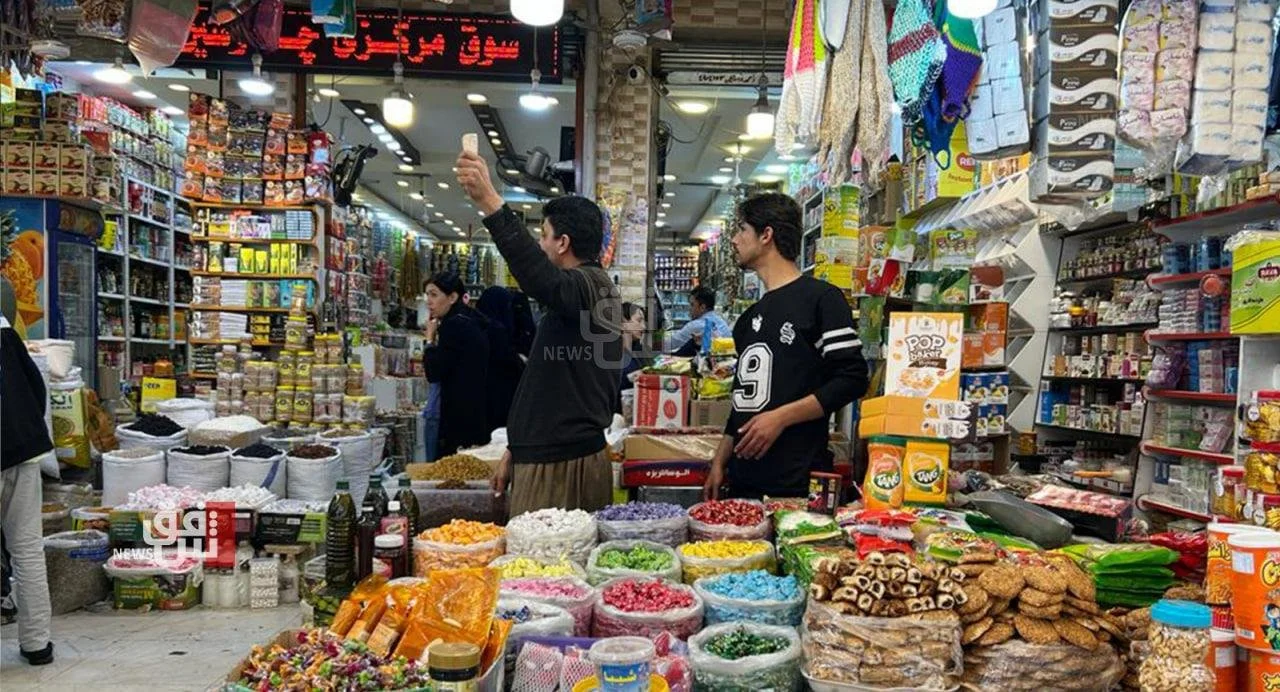
Money and Business Economy News – Baghdad Data from the Egyptian Food Export Council on Sunday showed that Iraq’s imports of food products rose during 2025 to reach more than $200 million.
According to the data, Iraq was among the largest importers of Egyptian food products last year, recording $236 million compared to about $184 million in 2024, amid increasing demand for Egyptian food products in regional markets.
In the same context, Saudi Arabia topped the list of the largest importers with a value of $563 million in 2025, followed by the United States of America with about $438 million.
Egypt’s food exports to Jordan also increased to $287 million, while exports to the United Arab Emirates reached about $237 million during the same year.
Exports to Algeria amounted to approximately $244 million, while Egyptian food industry exports to Lebanon reached approximately $201 million.
In European and Asian markets, Egyptian exports to Germany amounted to about $181 million, to the United Kingdom about $137 million, while to China they reached about $136 million.
The data indicates that the top 10 foreign markets accounted for about 39% of Egypt’s total food industry exports during 2025, with a total value of about $2.66 billion.https://www.economy-news.net/content.php?id=66778
Dollar STEADY IN Baghdad, RISES IN Erbil
2026-03-15 Shafaq News- Baghdad/ Erbil The US dollar opened Sunday’s trading stable in Iraq, hovering around 154,000 dinars per 100 dollars.
According to a Shafaq News market survey, the dollar traded in Baghdad’s Al-Kifah and Al-Harithiya exchanges at 154,050 dinars per 100 dollars, the same level recorded on Saturday’s closure.
In the Iraqi capital, exchange shops sold the dollar at 154,500 dinars and bought it at 153,500 dinars, while in Erbil, selling prices stood at 153,950 dinars and buying prices at 153,850 dinars.
https://www.shafaq.com/en/Economy/Dollar-steady-in-Baghdad-rises-in-Erbil
Gold Prices Steady In Baghdad, Erbil
2026-03-15 Shafaq News- Baghdad/ Erbil On Sunday, gold prices held ground in Baghdad and Erbil markets, hovering near 1.085 million IQD per mithqal, according to a survey by Shafaq News Agency.
Gold prices on Baghdad’s Al-Nahr Street recorded a selling price of 1.090 million IQD per mithqal (equivalent to five grams) for 21-carat gold, including Gulf, Turkish, and European varieties, with a buying price of 1.086 million IQD, unchanged from Saturday.
The selling price for 21-carat Iraqi gold stood at 1.060 million IQD, while the buying price reached 1.056 million IQD.
In jewelry stores, the selling price per mithqal of 21-carat Gulf gold ranged between 1.090 million and 1.100 million IQD, while Iraqi gold sold for between 1.060 million and 1.070 million IQD.
In Erbil, 22-carat gold was sold at 1.123 million IQD per mithqal, 21-carat gold at 1.072 million IQD, and 18-carat gold at 919,000 IQD. https://www.shafaq.com/en/Economy/Gold-prices-steady-in-Baghdad-Erbil-8
EIA: Iraq’s Oil Exports To US Rank Third Over Week
2026-03-15 Shafaq News- Baghdad/ Washington Iraq’s crude oil exports to the United States rose to 309,000 barrels per day (bpd) last week, ranking third among the largest suppliers, US Energy Information Administration (EIA) data showed on Sunday.
According to the data, Iraqi shipments were up 155,000 bpd from 154,000 bpd a week earlier.
Total US crude imports from nine major suppliers increased to 5.799 million bpd, up 134,000 bpd from 5.655 million bpd the previous week. Canada remained the top supplier at 4.227 million bpd, followed by Saudi Arabia with 607,000 bpd, Iraq with 309,000 bpd, Venezuela with 232,000 bpd, and Nigeria with 156,000 bpd.
Additional imports came from Mexico at 140,000 bpd, Columbia at 76,000 bpd, Brazil at 50,000 bpd, and Libya at 2,000 bpd. https://www.shafaq.com/en/Economy/EIA-Iraq-s-oil-exports-to-US-rank-third-over-week-4