Finance Minister: We Seek To Reduce The Oil Dominance Over The General Budget
Money and Business Economy News – Baghdad Finance Minister Taif Sami confirmed on Wednesday the effort to reduce the oil sector’s dominance over the general budget.
The ministry stated in a statement received by “Al-Eqtisad News” that “Minister of Finance Taif Sami Mohammed received today a high-level delegation from the World Bank for the Middle East and North Africa region, where the two sides reviewed prospects for joint international cooperation to support the reform program currently being pursued by the Iraqi government and to expand the map of major development projects in the country.”
During the meeting, the Minister of Finance affirmed that “the Ministry is committed to creating an attractive environment for foreign and local investments by simplifying financial and banking procedures and providing all necessary facilities to stimulate the movement of money and business, thereby ensuring sustainable development that positively impacts the level of services provided to citizens,” stressing that partnership with international institutions represents a fundamental pillar in the strategy to advance the national economic reality.
According to the statement, “The meeting witnessed a discussion of the executive steps to activate the role of the private sector as a pivotal partner in the economic development process by providing technical and financial support for vital projects that contribute to creating job opportunities and modernizing infrastructure.”
Sami explained that “empowering the private sector and giving it a leading role in the economic cycle is a strategic goal that we seek to achieve in cooperation with the World Bank to ensure the resilience of the Iraqi economy and its ability to face global challenges,” noting that the ministry attaches paramount importance to stimulating the productive and industrial sectors to reduce total dependence on imports and localize international expertise in Iraqi institutions.
The discussions also focused on mechanisms to maximize non-oil revenues through the automation of tax and customs systems and the strengthening of public treasury resources to ensure long-term financial stability. Sami indicated that “the Iraqi government is determined to carry out deep structural reforms aimed at diversifying sources of national income and reducing the dominance of oil over the general budget by activating electronic collection and controlling border crossings.” https://economy-news.net/content.php?id=64813
SOMO: A Plan To Maximize The Value Of Iraqi Oil By Diversifying Markets
nergy Economy News – Baghdad The State Oil Marketing Company (SOMO) announced on Wednesday a plan to maximize the value of Iraqi oil by diversifying markets, while indicating that it has adopted a flexible and well-thought-out system for export movement in line with the global market.
The company’s general manager, Ali Nizar Al-Shatri, told the Iraqi News Agency, as reported by “Al-Eqtisad News”: “The Oil Marketing Company relies on an integrated system of accurate data that includes export levels, shipping flows, and supply and demand trends in the main markets, which allows for flexible and well-thought-out planning of export movements in line with global market conditions in coordination with the Organization of (OPEC).”
He added that “the company coordinates through regular official and technical channels with member countries, including data exchange, participation in technical meetings and specialized committees, and continuous communication about market developments and emerging challenges,” stressing that “coordination ensures a collective commitment to agreed policies and enhances trust among producing countries, which positively impacts the balance of supply and demand and the stability of the global oil market.”
He explained that “the role of the oil marketing company is not limited to the commercial aspect only, but extends to contributing to achieving market stability and protecting Iraq’s interests within an international system that relies on cooperation and coordination to achieve common goals that serve both producers and consumers.”
He added that “the Oil Marketing Company prepares daily, weekly and monthly reports that monitor the market situation in terms of supply and demand and geopolitical developments, and in light of these studies, decisions are made that contribute to the success of the marketing process, taking into account the organization’s goals of achieving stability in the global market,” noting that “the Oil Marketing Company faces a fundamental challenge, which is to achieve a delicate balance between the requirements of the national economy in terms of oil revenues, and the collective responsibility of Iraq as an active member of the (OPEC+) alliance to maintain the stability of the global market.”
He explained that “the Iraqi economy relies heavily on oil revenues to finance the general budget, support basic services, and implement development projects, which imposes continuous pressure to maximize returns,” adding that “any ill-considered increase in oil supply could lead to downward pressure on prices, which would negatively affect total revenues even if exported quantities increased.”
He added that “the company faces challenges related to fluctuations in global demand, geopolitical conditions, and changes in energy policies of consuming countries, in addition to the need to maintain Iraq’s reliability as a committed partner within the alliance,” noting that “commitment to quotas and voluntary reductions is not seen as a burden, but rather as a strategic tool and investment to ensure market stability in the medium and long term, achieving more sustainable returns compared to short-term gains, thus serving the interests of Iraq and producing and consuming countries alike.”
Al-Shukri stressed that “the Oil Marketing Company is working in coordination with the Ministry of Oil and the relevant authorities to maximize the value of Iraqi oil by diversifying markets, improving marketing conditions, and raising the efficiency of operations, in order to ensure the best possible revenue within the agreed ceilings, and in a way that serves the interest of Iraq and the stability of the global oil market at the same time. https://economy-news.net/content.php?id=64818
Iraq’s Imports Exceeded $17 Billion In The Third Quarter Of 2025
Money and Business Economy News – Baghdad Iraq’s imports of goods in the third quarter of 2025 amounted to more than $17 billion, according to Trading Economics.
The website said in a statistic seen by “Al-Eqtisad News” that Iraq’s imports in the third quarter of last year amounted to $17.929 billion, up from $17.534 billion in the second quarter of the same year.
He added that Iraq’s average imports between 1988 and 2025 amounted to $13.478 billion, recording its highest level ever at $50.155 billion in the last quarter of 2012, and its lowest level at $2.681 billion in the last quarter of 1994.
The statistics indicated that Iraq’s most important imports are: machinery and transport equipment, which constitute 38% of total imports; manufactured products, which constitute 27%; mineral fuels, which constitute 10%; and chemicals and related products, which constitute 7%.
The main import partners are: Syria (18% of total imports), China (14%), and the United States (6%). Other partners include South Korea, Jordan, Germany, and India, according to the website. https://economy-news.net/content.php?id=64816
Gold Prices Jump To Over One Million Dinars In Iraq
Stock Exchange Economy News – Baghdad Gold prices, both foreign and Iraqi, rose on Wednesday, with 21-karat gold recording more than one million dinars for the first time in the local markets of the capital, Baghdad.
Gold prices in the wholesale markets of Al-Nahr Street in Baghdad this morning recorded a selling price of 1.020 million dinars per mithqal of 21-karat gold from the Gulf, Turkey and Europe, and a buying price of 1.016 million dinars, while yesterday, Tuesday, they recorded 982 thousand dinars.
The selling price of one mithqal of 21-karat Iraqi gold reached 990,000 dinars, and the buying price was 986,000 dinars.
Regarding gold prices in jewelry stores, the selling price of a mithqal of 21-karat Gulf gold ranges between 1.025 million dinars and 1.030 million dinars, while the selling price of a mithqal of Iraqi gold ranges between 995 thousand and 1.000 million dinars. https://economy-news.net/content.php?id=64814
The Dollar Is Rising In Baghdad Today.
Economy News – Baghdad The exchange rate of the US dollar rose this morning, Wednesday, in the markets of the capital, Baghdad.
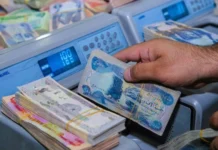
The dollar exchange rate rose in the Al-Kifah and Al-Harithiya exchanges in Baghdad, recording 148,000 Iraqi dinars for every 100 dollars, after it had recorded 147,650 dinars for 100 dollars on Tuesday.
Selling prices in exchange shops in the local markets of Baghdad have increased, with the selling price reaching 148,500 dinars for 100 dollars, while the buying price reached 147,500 dinars for 100 dollars. https://economy-news.net/content.php?id=64810
Gold Prices Surge In Baghdad And Erbil
2026-01-21 Shafaq News- Baghdad/ Erbil Gold prices in Baghdad’s Al-Nahr Street surged nearly 4% on Wednesday, with 21-carat gold —including Gulf, Turkish, and European varieties— hitting 1.020 million IQD per gram, while the buying price stood at 1.016 million IQD.
In jewelry stores, the selling price per mithqal of 21-carat Gulf gold ranged between 1.025 million IQD and 1.030 million IQD, while Iraqi gold sold for between 995,000 and 1 million IQD.
In Erbil, 22-carat gold was sold at 1.070 million IQD per mithqal, 21-carat gold at 1.025 million IQD, and 18-carat gold at 878,000 IQD. https://www.shafaq.com/en/Economy/Gold-prices-surge-in-Baghdad-and-Erbil-1
Iraq Achieves Total Control Over Syrian Frontier
2026-01-19 Shafaq News– Baghdad Iraq has fully secured its border with Syria, the country’s Armed Forces said on Monday, framing the move as a measure to protect national security and prevent illegal groups from exploiting border vulnerabilities.
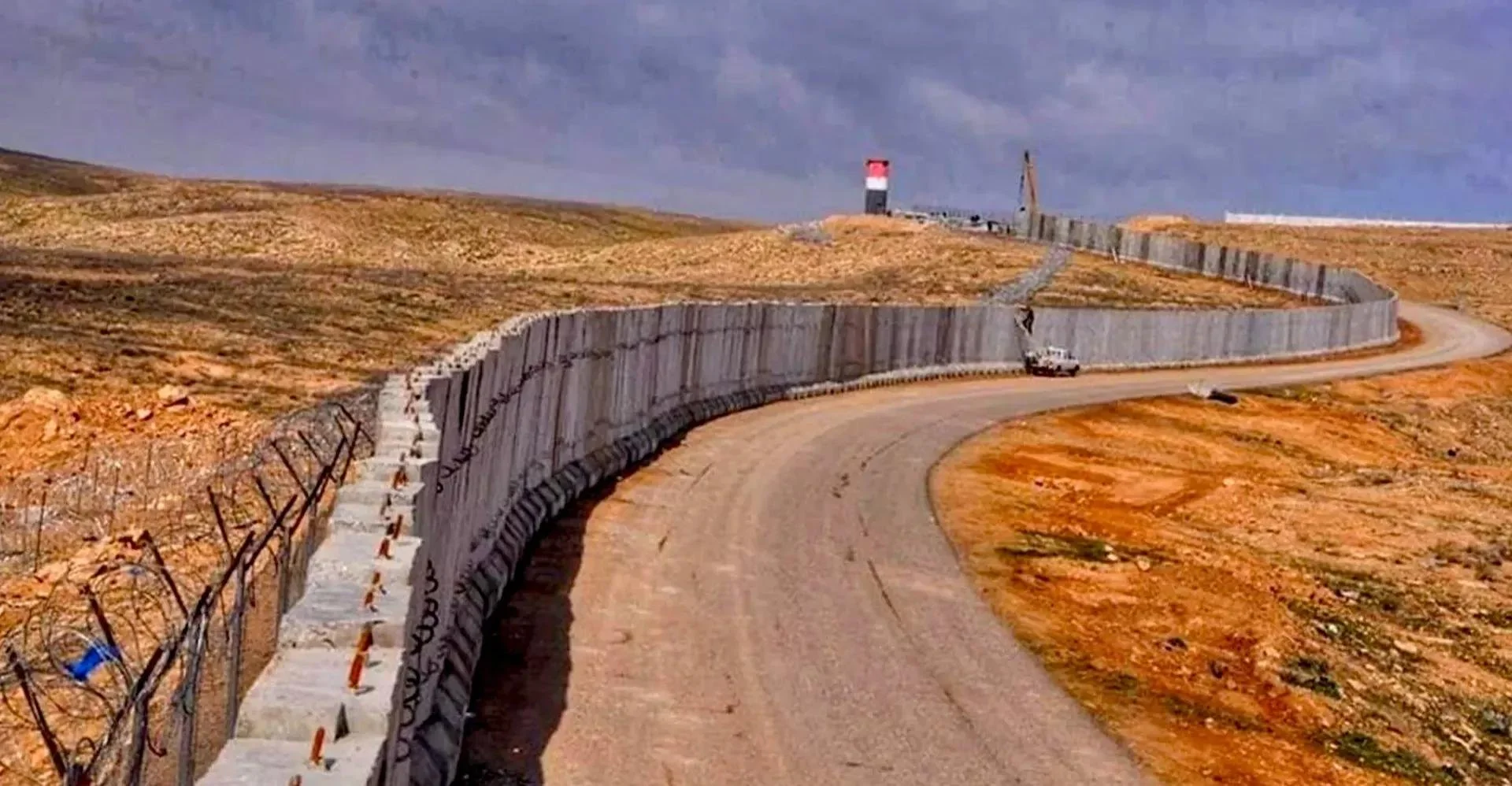
Speaking to Shafaq News, Sabah Al-Numan, spokesperson for the Iraqi Armed Forces, indicated that the concrete wall along the 600-kilometer Iraq-Syria frontier is now about 80% complete. The border has also been reinforced with additional personnel, advanced technical and logistical equipment, and fixed defense lines maintained by both the Iraqi Army and Popular Mobilization Forces (PMF).
”Iraq’s borders with all neighboring states are experiencing the same high level of stability,” he noted.
Earlier today, PMF confirmed the deployment of its 25th Brigade along the border as part of a broader security plan, intended to support Iraqi forces and strengthen intelligence and field operations.
Muqtada Al-Sadr, leader of Iraq’s Patriotic Shiite Movement (PSM), had previously cautioned against handling the situation in Syria “naively,” urging authorities to secure the borders and reinforce deployments promptly.
The warning comes amid rising tensions in northeastern Syria, where clashes between the Syrian army and the Kurdish-led Syrian Democratic Forces (SDF) left dozens dead or injured and forced thousands of Kurdish families to flee. Meanwhile, Syria’s transitional President Ahmad Al-Sharaa signed a new agreement with the SDF, ending the clashes and paving the way for the group’s integration into state institutions. https://www.shafaq.com/en/Security/Iraq-achieves-total-control-over-Syrian-frontier