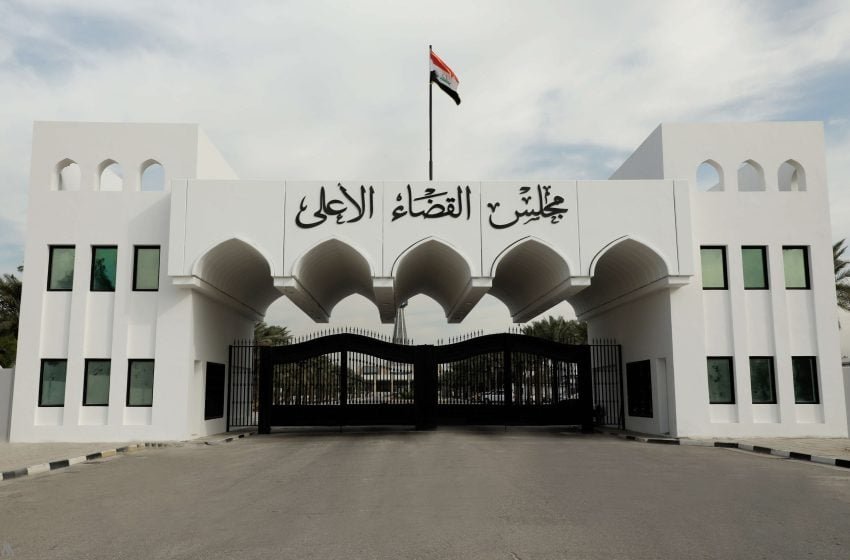
Iraq’s Supreme Judicial Council President, Judge Faiq Zidan, has made one thing very clear — the upcoming parliamentary elections must follow the Constitution’s timeline. Holding them earlier than allowed, he said, would be a direct violation of the Constitution.
Judge Zidan explained that the peaceful handover of power through elections every four years is one of Iraq’s biggest democratic wins since 2003. According to the Constitution, Iraq is a republican and parliamentary system, and the Council of Representatives — or Parliament — is at the center of forming the government.
He pointed to the Iraqi Constitution and the 2019 Election Law, which clearly describe how elections should be organized and how power should transition in a way that respects the people’s vote and keeps political stability intact.
The Legal Timeline
According to Article 56 of the Constitution:
- Elections for a new parliament must be held no later than 45 days before the current term ends.
- The current parliament started its term on January 9, 2022, and it lasts four years.
That means the correct date for the next election should be around November 24, 2025.
So, setting the election for November 11, 2025, Judge Zidan said, would be unconstitutional — it has no legal basis at all.
What Happens After the Elections
Zidan also broke down what happens once elections are over:
- Voters get three days to file any appeals about the results.
- The Electoral Commission then has seven days to review and send those appeals to the Electoral Judiciary.
- The Electoral Judiciary has ten days to issue final rulings.
- Once all appeals are settled, the Federal Supreme Court certifies the final results.
- The President of Iraq must then call the new Parliament to meet within 15 days.
When Parliament meets for the first time, the oldest member presides over the session to elect a Speaker and two deputies. Then, within 30 days, Parliament must elect a President of the Republic.
Once elected, the President asks the largest parliamentary bloc to form the government. The Prime Minister-designate then has 15 days to start the process and 30 days more to present the new cabinet for approval.
The Full Timeline — and the Delays
Judge Zidan said the entire process — from announcing results to forming a new government — could take around four months. But the word “within” in the Constitution means it doesn’t have to take that long.
“If every stage happens on time,” he explained, “a new government could be in office by early January 2026, not March.”
Still, he warned that previous governments rarely met these deadlines. The elections might happen on time, but choosing the Speaker, President, and Prime Minister often drags on for weeks or months longer than allowed. These delays, he said, are clear violations of the Constitution, even though there are no penalties for breaking those deadlines.
The Call for Reform
Judge Zidan wrapped up his message with a strong reminder: Iraq needs to respect its own Constitution — and maybe even amend it to include clear consequences for missing deadlines.
He said, “If we truly want democracy, rule of law, and peaceful power transitions, then respecting constitutional timelines isn’t optional — it’s essential.”