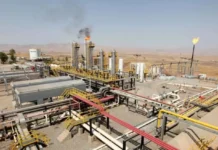
In a remote industrial site in Karnal, northern India, conveyor belts carry discarded batteries into crushers — part of a fast-growing industry turning electronic waste into strategic minerals.
India is increasingly tapping into the “urban mining” sector, extracting lithium, cobalt, nickel and rare earth elements from old electronics to reduce reliance on imports and strengthen its geopolitical position.
Why it matters
Global concerns over China’s dominance in critical minerals have pushed New Delhi to accelerate domestic alternatives. As India aims to become a major artificial intelligence and advanced manufacturing hub, securing access to materials used in:
- Smartphones
- Electric vehicles
- Fighter jets
- Renewable energy systems
has become a strategic priority.
However, domestic mining projects are unlikely to produce significant output for years. That makes e-waste an increasingly attractive source.
A growing mountain of e-waste
India generated nearly 1.5 million tonnes of e-waste last year, according to official data — though experts believe the real number may be double.
Old electronics contain valuable materials:
- Batteries → lithium, cobalt, nickel
- LED screens → germanium
- Circuit boards → platinum, palladium
- Hard drives → rare earth elements
Industry estimates suggest India’s urban mining sector could eventually be worth up to $6 billion annually, though it will not fully meet projected demand.
Formal vs informal recycling
Despite policy efforts, most e-waste still flows through informal backyard workshops.
In places like Seelampuri in Delhi, narrow lanes are lined with dismantled cables and broken electronics. Workers often extract easily saleable metals like copper and aluminium but leave behind critical minerals.
According to a recent note from the United Nations Development Programme, more than 80% of India’s e-waste is still processed informally.
The Institute for Energy Economics and Financial Analysis says India has 100% import dependency for key critical minerals including lithium, cobalt and nickel.
Government-backed think tank NITI Aayog has warned that formal recycling capacity is lagging behind both waste growth and policy goals.
Government push
Prime Minister Narendra Modi’s government approved a $170 million program last year to boost formal recycling of critical minerals.
This builds on Extended Producer Responsibility (EPR) rules requiring manufacturers to collect and route e-waste to licensed recyclers.
Industry leaders say the rules are gradually shifting waste into the formal sector. But tracking remains weak, and critics argue official figures may overstate progress.
Industrial-scale recovery
At Exigo Recycling’s plant in Haryana, discarded e-scooter batteries are ground into black powder, chemically processed into a red solution, then refined into a white powder: lithium — sometimes called “white gold.”
Other companies claim they can recover more than 20 critical minerals from electronic waste, including dysprosium from hard drive magnets — essential for advanced electronics and clean energy systems.
Risks and integration challenges
Informal recycling often involves open burning, acid baths and unsafe dismantling — exposing workers to toxic fumes and contaminating soil and water.
Experts say the solution is not eliminating informal workers, but integrating them into traceable, safer supply chains.
Some initiatives are training informal workers in safer dismantling techniques and better sorting practices, helping preserve mineral value while reducing health risks.
Strategic outlook
While urban mining alone will not eliminate India’s reliance on imports, it may:
- Cushion supply shocks
- Strengthen domestic supply chains
- Reduce foreign dependency
- Support AI, EV, and defense ambitions
As global competition for critical minerals intensifies, India’s mountains of e-waste may become one of its most valuable hidden assets.