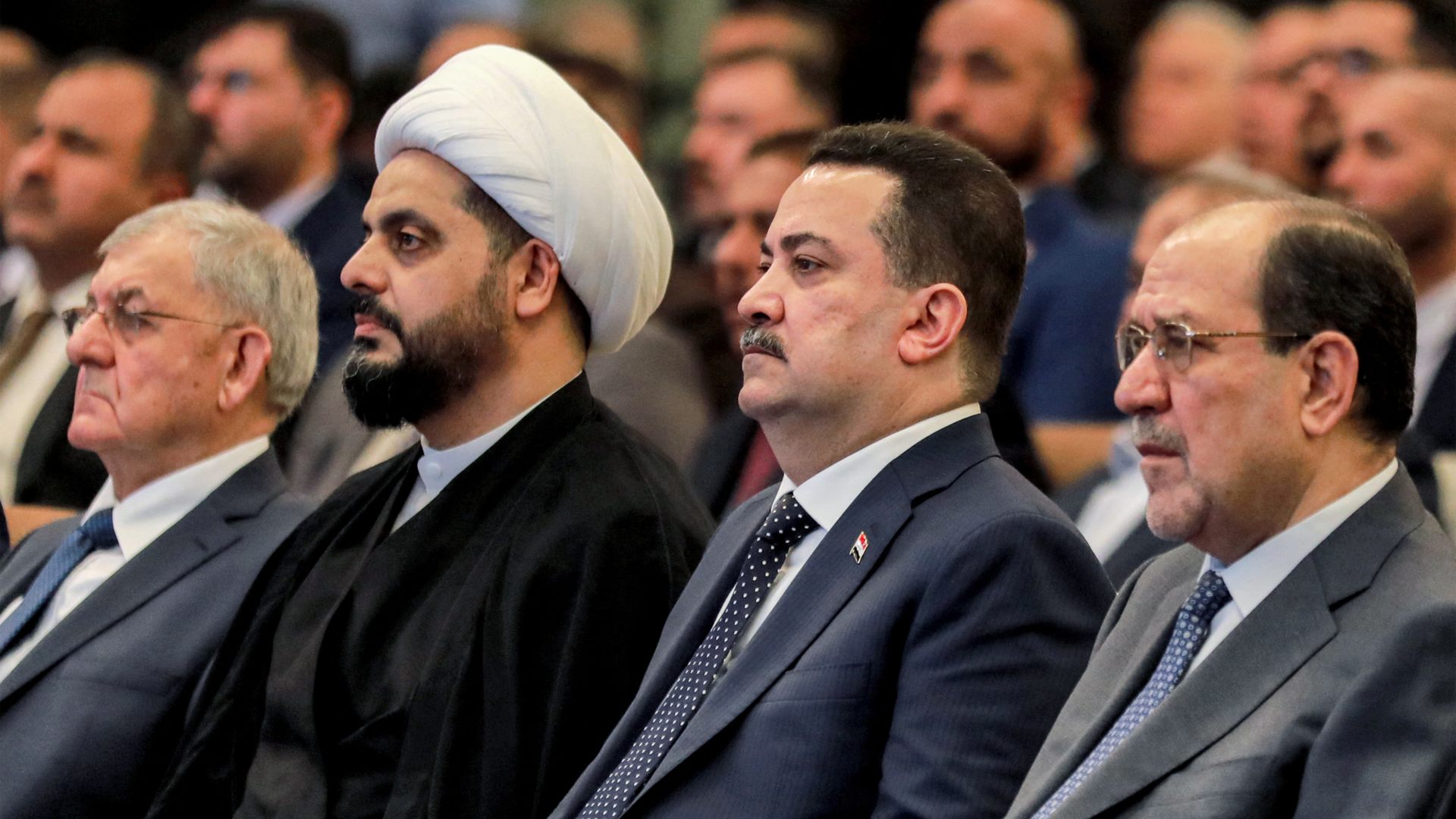
A political source from the Coordination Framework said on Thursday that Nouri al-Maliki, leader of the State of Law Coalition, has set conditions if he is to withdraw his bid to become Iraq’s next prime minister.
According to the source, Maliki sent messages through a mediator to political parties that oppose his nomination. The mediator is trying to calm the dispute among Shiite factions over who should lead the next government.
One of Maliki’s main conditions is that the current caretaker prime minister, Mohammed Shia al-Sudani, should not be given another term. He also rejected the idea of choosing Haider al-Abadi, leader of the Victory Coalition, as a compromise candidate. Instead, Maliki wants a candidate who is acceptable to all sides and also approved by him.
The source said political groups within the framework have received the message and started discussing the demands. A final position may be announced after the Eid al-Fitr holiday.
The Coordination Framework had officially nominated Maliki on January 24, which started talks to form a new government. But progress slowed because political groups could not agree on choosing a president, which must happen before a prime minister can be assigned to form a government.
Maliki’s nomination has also faced strong opposition. Some Sunni parties rejected it, and there were also objections from groups within the Shiite alliance. In addition, the administration of Donald Trump reportedly warned that the United States could stop aid to Iraq if Maliki became prime minister.
Meanwhile, the Asaib Ahl al-Haq movement believes that keeping Sudani in office may be the safest option right now. The group says Iraq cannot afford more political tensions during the current regional crisis.
MP Mohammed al-Baldawi, from the Sadiqun Bloc linked to Asaib Ahl al-Haq, said the Coordination Framework leadership must quickly find a solution and form a fully empowered government.
He said renewing confidence in Sudani would help Iraq avoid new conflicts and possible international sanctions.
Al-Baldawi also pointed to the difficult economic situation, especially after the closure of the Strait of Hormuz and the halt in oil exports. He said the government is trying to find other ways to secure funds to pay public salaries.
The Coordination Framework was supposed to hold a meeting earlier this week to settle the issue of the prime minister candidate. But the meeting was postponed because leaders could not agree.
According to another political source, most groups in the framework had supported giving Sudani another term. However, Maliki’s insistence on running and the objections from other factions blocked the meeting.
Political sources say discussions may now continue privately until after Eid al-Fitr.
Meanwhile, Hadi al-Amiri, head of the Badr Organization, is trying to bring the leaders of the Coordination Framework together to solve the crisis.
Sources say Amiri may host a meeting during an iftar or suhoor gathering in the coming days to help resolve the dispute over the next prime minister and the formation of the new government.
Right now, the framework appears divided into three main groups. One supports Maliki and includes figures such as Mohsen al-Mandalawi and Hussein Mounis. Another group opposes Maliki and includes Ammar al-Hakim and Qais al-Khazali. A third group remains neutral for now and includes Amiri, Humam Hamoudi, and Sudani.
Leaders hope the upcoming meetings will help them finally agree on a candidate and move forward with forming Iraq’s next government.