Clare: A positive appearance: Exchange rate stability reflects the strength of reserves and the flow of goods.
4/4/2026
The financial advisor to the Prime Minister, Mazhar Muhammad Saleh, confirmed on Saturday that the stability of exchange rates in the local market reflects positive indicators, while pointing out that the strength of reserves and the accumulation of commodity stock contributed to reducing the fluctuations of the parallel market.
Saleh told Al-Furat News Agency: “The stability of exchange rates in the local market reflects positive indicators that are embodied in two main directions.”
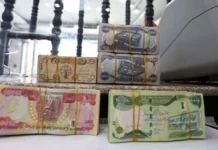
He added that “the flexibility of financing foreign trade from the country’s foreign currency reserves, which are among the most efficient according to the standard of trade efficiency of reserves,” indicating that “these reserves extend to cover more than a year of imports, compared to the global standard, which is estimated at only about three months, in addition to continuing to meet the demand for foreign currency at the official rate of 1320 dinars per US dollar.”
He added that “the accumulation of diverse commodity stocks, both governmental and private, covers the country’s needs for essential and durable goods for a period ranging from one to three years,” noting that “this stability came as a result of adopting alternative trade methods, through the efficient and rapid use of the ports of neighboring countries, which ensures the smooth flow of goods to local markets.”
He pointed out that “these factors combined have contributed to reducing exchange rate fluctuations in the parallel market, and have led to a high degree of price stability, with the exception of some seasonal fluctuations in the prices of a limited number of goods.”
He stressed that “the market maintained its expectations that the conflict in the Gulf and Middle East region will remain short-term and will not extend for a long period.”
From… Ragheed LINK
*************
Clare: Banking warnings: Dollar shortage threatens imports and raises the cost of living in Iraq
4/2/2026
Reports and financial sources that spoke to Al-Mustaqilla indicate a growing sense of concern within financial and economic circles in Iraq, with increasing talk about the possibility of a decline in the ability of the government and the Central Bank of Iraq to secure dollars in the coming period,
in light of rapidly evolving regional and international complexities, most notably the tension between Iran and the United States, and the tightening of control measures on financial transfer routes.
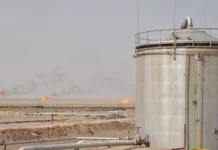
Iraq relies almost entirely on oil revenues deposited in dollars in foreign accounts. The movement of these funds, their transfer mechanisms, and auditing processes are subject to strict oversight linked to financial compliance regulations, making the dollar issue highly sensitive to any further tightening or disruption in transfer channels. Banking sources say the mounting pressure stems from concerns about dollars leaking to sanctioned entities, as well as increasing auditing requirements for transfers and foreign trade financing.
According to sources, worrying indicators have begun to emerge in the market, including the difficulty some banks are facing in obtaining dollars to meet traders’ needs, and an increased reliance on the informal market for currency. There are also concerns that the gap between the official and market exchange rates will widen if the shortage persists or if transfers slow down. The sources add that any prolonged disruption to the flow of dollars could quickly impact the prices of imported goods and import costs, putting pressure on monetary stability and purchasing power, and potentially even affecting public spending if economic pressures escalate.
According to a widely circulated economic assessment, the next phase could unfold along three main paths. The first path involves continued pressure, potentially leading to a rise in the dollar’s price on the parallel market, increased inflation, and disruptions to import chains.
The second path entails successful technical agreements with external regulatory bodies that ease restrictions and maintain the flow of remittances, which could result in relative stability in the exchange rate and trade financing.
The third path involves partial solutions aimed at reducing reliance on the dollar in certain transactions and expanding the use of alternative currencies or trade settlement mechanisms with neighboring countries, while the dollar remains a central pillar of the Iraqi economy.
Banking sources believe the core of the problem is not simply a “dollar shortage,” but rather stems from a rentier economic structure dependent on oil, a banking system facing challenges in compliance and aligning its systems with international standards, widespread reliance on the dollar in most commercial activities, and a cumulative weakness in oversight of trade finance channels over the years. They indicate that any serious solution requires addressing the loopholes that increase risks and necessitate stricter external auditing.
Regarding solutions, financial circles say that urgent measures should focus on supporting official channels for currency transfers and trade finance, reducing the size of the informal market through more effective oversight, and ensuring that dollars reach traders through compliant banks.
In the medium term, there is a need to enhance transparency in dollar sales through approved platforms, tighten controls on entities accused of currency smuggling or invoice manipulation, and improve technical communication with external regulatory bodies to reduce complexities without compromising compliance requirements.
As for the strategic term, economic readings confirm that reducing the fragility of the dollar issue goes through diversifying sources of income, expanding local production, reducing dependence on imports, in addition to developing the banking sector and linking it more deeply to the global financial system, and opening a well-considered space for the use of other currencies in some commercial transactions in a way that reduces the pressure on the dollar, without disrupting market stability.
The sources conclude that any delay in reforms could leave the market vulnerable to sharp fluctuations, while institutional remedies could give Iraq an opportunity to reduce dollar sensitivity and lessen the impact of regional tensions on domestic financial stability. LINK
Courtesy of Dinar Guru: https://www.dinarguru.com/
Militia Man The plan they have is indeed underway. It’s obvious the work is visible right in front of our face. The external environment is giving Iraq’s diversification efforts more tailwind than headwind. They’re not having a headwind. It’s not slowing them down.
Steve There’s a lot Iraq is being forced to deal with right now. I’m believing that is for a specific reason. The dinar revaluation being one of those reasons. Because if nothing changes, I don’t think Iraq has that much time. Unless they get these things under control their country is going to fall apart…I don’t believe that’s the case… Everything we’re seeing is putting the pressure on Iraq that was needed to force them to level up and stop kicking the can down the road. I think we are in very, very exciting times.
Bruce [via WiserNow] …we heard was that there were …group meetings of redemption center leaders…we were told from one of people that attended the meeting that this that we should get notifications this weekend…Saturday and Sunday. I’m going to say the weekend is in play for us. We also heard…Sunday, Monday, Tuesday.
************
April Could Be HUGE for Dinar Investors!
Dinar For Dummies: 4-4-2026
In this video I cover what we are looking for in the month of April.
https://www.youtube-nocookie.com/embed/H0AKa8zQT4I?feature=oembed&enablejsapi=1