The news site Middle East Online says Iraq’s economic crisis is no longer just a short-term cash problem. It warns the country is now facing a much deeper, structural crisis.
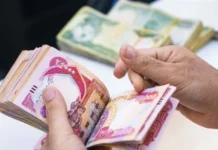
According to a report reviewed by dinaropinions.com, the government recently pulled more than 20 trillion dinars from Rafidain Bank and 8 trillion dinars from Rasheed Bank to cover public sector salaries. It also reportedly withdrew around $7 billion from other banks to make sure millions of state employees get paid each month.
At first, this may look like a simple liquidity issue — just a temporary shortage of cash. But experts quoted in the report say the real problem runs much deeper.
They argue that Iraq’s economy is still heavily dependent on oil. When global oil prices drop or markets fluctuate, the country feels the shock immediately. Years of weak financial management, poor oversight of public funds, and failure to diversify the economy have made things worse.
The report warns that without serious reforms, the crisis could come back even stronger in the future.
It also points to political deadlock and the limited powers of a caretaker government as major obstacles. Without a fully empowered government, it’s difficult to make bold economic decisions or push through urgent reforms.
Iraqi economist Manar Al-Obaidi said the country is no longer in an “early warning” stage. He described Iraq as being “in the heart of the economic storm.”
He stressed that this moment will test whether Iraq can handle growing financial pressure. Keeping social stability intact, he said, is critical. If the crisis is not managed properly, it could lead to serious unrest and even wider security problems.
Al-Obaidi believes the crisis is now too big for government institutions to solve alone. He says it’s a shared responsibility that involves society as a whole.
At the center of the problem, he argues, is a lack of trust between the state and its citizens. Without rebuilding that trust, real reform will remain out of reach.
He also warned that the current strategy — using up present and future resources just to maintain basic stability — is reaching its limits. He called for full transparency, including a review of all state budgets since 2003, and real accountability for corruption and mismanagement of public money.