Good Morning,
Burning Tankers, Rising Oil: Gulf Conflict Shakes Energy Markets and Global Financial Stability
Escalating attacks on oil infrastructure signal a dangerous shift toward economic warfare in one of the world’s most critical energy corridors.
Overview
The conflict involving the United States, Israel, and Iran has escalated into a broader energy and economic crisis centered on the Persian Gulf.
Attacks on commercial shipping, rising oil prices, and threats to the Strait of Hormuz are now rippling through global markets. While political leaders claim progress on the battlefield, financial markets are signaling deep concern about potential energy supply disruptions and long-term instability.
Key Developments
1. Tanker Attacks Signal Shift to Economic Warfare
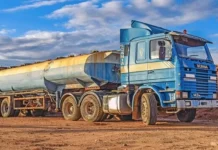
Two fuel tankers were reportedly set ablaze in Iraqi waters, with maritime security sources attributing the attack to Iranian explosive-laden boats targeting commercial shipping vessels.
At least three merchant ships were struck, leaving one crew member dead and several vessels on fire.
Analysts say the attacks represent a strategic shift away from military targets toward commercial energy infrastructure, signaling a deliberate attempt to destabilize global energy markets and disrupt maritime traffic through the Gulf.
2. Oil Prices Surge as Markets React to Supply Risk
Energy markets reacted quickly to the escalation.
After briefly retreating from earlier highs, oil prices surged back above $100 per barrel during Asian trading.
Iranian officials warned that continued instability could push prices as high as $200 per barrel, a level that would represent one of the most severe global energy shocks since the 1970s oil crises.
In response, the International Energy Agency recommended the largest coordinated strategic oil release in history, potentially reaching 400 million barrels from global reserves.
The United States alone plans to release approximately 172 million barrels from its Strategic Petroleum Reserve to help stabilize markets.
Despite these efforts, traders remain skeptical that supply disruptions can be contained if attacks continue.
3. Threats to the World’s Most Critical Oil Chokepoint
The most alarming development is the potential disruption of traffic through the Strait of Hormuz, one of the most vital maritime corridors in the global energy system.
Roughly 20 percent of the world’s oil supply normally passes through this narrow channel.
Iranian officials claim the strait is now effectively under their control, and maritime security reports indicate possible naval mines deployed in the shipping route.
Western governments are now discussing naval escort missions for oil tankers, a proposal reportedly being examined by the Group of Seven nations.
Such operations could protect shipping but also raise the risk of direct military confrontation in the Gulf.
4. Regional Energy Infrastructure Under Attack
The conflict is also expanding beyond Iran’s borders and into other Gulf states.
Reported incidents include drone strikes on oil storage facilities in Salalah and attacks on fuel tanks in Muharraq.
Additional reports describe a container vessel strike near the United Arab Emirates and a drone attack injuring civilians in southern Kuwait.
These incidents suggest the conflict is widening across the Gulf region, increasing the risk that multiple countries could be drawn further into the crisis.
Why It Matters
The escalation highlights one of the most fragile structural points in the global economy: the concentration of energy supply routes in a few narrow maritime chokepoints.
Even limited attacks on tanker traffic or port infrastructure can trigger major volatility across energy markets, shipping insurance costs, supply chains, and global inflation.
This means the true frontline of the conflict may not be territorial control but the stability of the global energy system itself.
Why It Matters to Foreign Currency Holders
Large energy shocks have historically triggered major shifts in currencies and monetary policy.
When oil prices surge dramatically:
• Global inflation pressures intensify
• Central banks face pressure to tighten monetary policy
• Energy-exporting nations gain geopolitical leverage
Energy disruptions can also accelerate the development of alternative payment systems, commodity-linked trade structures, and non-dollar settlement mechanisms, trends already emerging within several BRICS economies.
Implications for the Global Reset
- Pillar 1: Energy and Commodity Power
• Control of energy supply routes increasingly determines geopolitical influence.
• Continued instability in the Strait of Hormuz could place oil once again at the center of global economic policy decisions.
- Pillar 2: Market Instability and System Stress
• Major energy shocks often trigger cascading financial effects, including inflation spikes, currency volatility, and debt market instability.
• These pressures frequently expose structural weaknesses in the global financial system, conditions that historically precede periods of economic restructuring.
The longer the conflict persists, the more likely energy markets become a trigger point for wider financial disruption.
This is not simply a regional geopolitical conflict — it is a stress test for the global economic and financial architecture.
Seeds of Wisdom Team
Newshounds News™ Exclusive
Sources
- Modern Diplomacy — “Burning Tankers, Rising Oil: Iran Escalates Gulf Pressure as Trump Declares Victory”
- Reuters — “Oil prices surge as Gulf tensions threaten tanker traffic and supply routes”
~~~~~~~~~~
🌱 A Message to Our Currency Holders🌱
If you’ve been holding foreign currency for many years, you were not foolish.
You were not wrong to believe the global financial system would change.
What failed was not your patience — it was the information you were given.
For years, dates, rumors, and personalities replaced facts, structure, and proof. “This week” predictions created cycles of hope and disappointment that were never based on how currencies actually change.
That is not your failure.
Our mission here is different:
• No dates • No rates • No hype • No gurus
Instead, we focus on:
• Verifiable developments • Institutional evidence
• Global financial structure • Where countries actually sit in the process
Currency value changes only come after sovereignty, trade, banking, settlement systems, and fiscal coordination are in place. History and institutions confirm this sequence.
You will see silence. You will see denials. That is not delay — that is discipline.
Protect your identity. Organize your documents.
Verify everything.
Never hand your discernment to anyone who cannot show proof.
You deserve truth — not timelines.
Seeds of Wisdom Team
Newshounds News
~~~~~~~~~~
Seeds of Wisdom Team RV Currency Facts Youtube and Rumble
Newshound’s News Telegram Room Link
RV Facts with Proof Links Link
RV Updates Proof links – Facts Link
Follow the Gold/Silver Rate COMEX
Follow Fast Facts
Seeds of Wisdom Team™ Website