Tishwash: Cash hoarded in home safes and lost trust in bank vaults
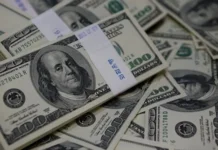
At the heart of the banking confidence crisis that is hindering the spread of electronic payments in Iraq, the majority of economic transactions are still conducted in cash, while savings remain completely outside the formal banking system.
However, the average Iraqi citizen manages his daily life entirely by relying on paper money, as he withdraws his salaries in cash, pays for his purchases in cash, and keeps his savings at home away from banks.
Meanwhile, electronic payment cards have become a routine part of daily life in neighboring countries, revealing that Iraq is about twenty years behind in adopting the simplest modern financing tools.
This delay reflects “weak confidence in banks,” as observers describe it, since the huge amount of cash is hoarded inside homes and exceeds 90 trillion dinars, or about 90 percent of the total cash in circulation, according to the latest data from the Central Bank.
In addition, statistics indicate that less than 20 percent of the population has bank accounts, compared to more than 50 percent in Saudi Arabia and the UAE, where digital payments have been commonplace for years.
A Baghdad resident said via Facebook, “I prefer to keep my money at home for fear of any potential banking crisis, as past experiences do not encourage trust.”
A local economic activist stated, “The sector needs radical reforms to build trust, especially with the push to end cash payments in government institutions by July 2026.”
A banking source noted that “electronic transactions grew by 17.7 percent in the first quarter of 2025, but reliance on cash still prevails despite the launch of platforms such as ePassole in the Kurdistan Region.”
Despite these government efforts, the biggest challenge remains convincing citizens of the security of the digital system amid fears of losing or freezing deposits. link
************
Tishwash: Al-Sudani Coalition signals constitutional action over Iraq’s presidency stalemate
Press release from the Reconstruction and Development Parliamentary Bloc
posted on facebook
Iraq’s Reconstruction and Development (Al-Ima’ar wal Tanmiya) Coalition, the largest electoral bloc in parliament, on Thursday warned of potential constitutional action over the delayed election of the country’s president, describing the impasse as a “clear violation” of constitutional deadlines.
In a statement, the bloc, led by caretaker Prime Minister Mohammed Shia al-Sudani, explained that parliament has yet to elect a head of state despite the passage of almost two months since lawmakers chose the speaker and his two deputies.
The coalition urged the Presidency of the Council of Representatives to hold a dedicated session next week to elect a president, calling on parliament to assume its “national responsibility” and end what it characterized as institutional paralysis. It also called on Kurdish political forces to agree on a single nominee ahead of the session, enabling lawmakers to proceed with the remaining constitutional steps —most notably the formation of “a fully empowered government” in line with the election results.
The continued operation of a government with limited powers, it cautioned, is causing “direct harm” to citizens and state institutions, adding that it would resort to “all available constitutional means and procedures” if the stalemate persists.
Under Iraq’s post-2003 power-sharing arrangement, the presidency is traditionally held by a Kurd, the prime ministership by a Shiite Muslim, and the speakership by a Sunni Arab. The constitution requires parliament to elect a president within 30 days of its first session —a deadline that expired on January 28.
Previous attempts to elect a president have failed due to disagreements between the Kurdistan Democratic Party (KDP) and the Patriotic Union of Kurdistan (PUK), the two main Kurdish parties, which have not agreed on a joint candidate, repeatedly preventing the quorum required for a vote.
text: Arabic and international…
All news (Press Release)
Nearly two months have passed since the election of the Speaker of Parliament and his two deputies. Given the continued delay in electing a President of the Republic, which constitutes a clear violation of the constitutional timelines stipulated in the Iraqi Constitution, we in the Reconstruction and Development Bloc affirm the following:
We call upon the Speaker of Parliament to expedite the convening of a session dedicated to electing the President of the Republic within the coming week. This is necessary to end the current situation of exceeding constitutional deadlines and obstructing the resolution of fundamental entitlements. We urge the Speaker to fulfill its national responsibility by ending this paralysis, which has negatively impacted the performance of state institutions.
We also call upon our brothers in the Kurdish political forces to finalize their candidate for the presidency before the session convenes. This will allow us to move forward with fulfilling the remaining constitutional requirements, foremost among them the formation of a fully empowered government, in accordance with the election results, capable of providing services to citizens, protecting the country’s interests, and consolidating political and institutional stability.
The continued existence of a government with limited powers constitutes a direct harm to our people and to the work of the state and its institutions. If this obstruction continues, the Reconstruction and Development Bloc will resort to using all available constitutional means and procedures to ensure the end of the stalemate and to maintain the correct constitutional path.
Tishwash: US sanctions threaten an “oil blockade,” and the Iraqi central bank may find itself in a “predicament” – Urgent
After the language of escalation and American threats, sanctions began to loom on the horizon, and Iraq may find itself facing an “oil embargo,” and the Iraqi Central Bank may be in a “predicament” if Washington implements sanctions against Baghdad.
Sanctions on the financial and oil sectors
Political analyst Wael Munther confirmed in his interview with “Baghdad Today” that “the issue of sanctions that the United States of America may impose on Iraq, whether in the oil or financial sector, is based on legal frameworks and approved contexts that authorize it to prevent dealing with institutions, individuals, or even countries in the financial and economic aspects.”
Munther explains that “Washington has the ability to impose sanctions that are not limited to the entities directly involved, but extend to include companies or institutions that deal with them, which means including any party that cooperates with those entities within the circle of financial targeting.”
“The oil embargo” and the search for alternatives
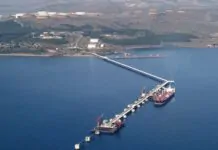
The political analyst points out that “the threat of imposing such sanctions will negatively affect the economic situation in Iraq, especially with regard to the mechanism for exporting oil, as Iraq may find itself in a situation similar to an oil embargo, as a result of the reluctance of international companies that are accustomed to buying Iraqi oil to complete their deals, for fear of being exposed to financial sanctions from the American side, which will push them to look for alternatives in other markets.”
Regarding the sanctions on the Central Bank of Iraq, Munther explained that “any potential sanctions that may affect the Central Bank will directly impact its foreign relations, as international banks and financial institutions will avoid dealing with it, fearing exposure to American punitive measures, which in turn will affect the movement of financial transfers and the country’s foreign trade.”
Baghdad’s calculations will change 180 degrees if former Prime Minister Nouri al-Maliki returns to the premiership, after the US President explicitly threatened Iraq that “if al-Maliki, known for his leanings towards Tehran, enters the government through the front door, American protection will be withdrawn immediately.”
Trump, known for his sharp words, used three explicit threats in his tweet, expressing his opposition to Maliki’s election: “No more aid to Iraq if he wins, no chance for Baghdad to succeed, and the country could sink into chaos and poverty.”
This threat should not be read in isolation, but rather within a much broader economic context where the United States already has cards to play on any government in Baghdad that is not to Trump’s liking, and oil, which finances about 90% of the state’s revenues, is at the heart of this equation. link