Tishwash: US Central Command: 7,000 ISIS detainees will be transferred from Syria to Iraq
The US Central Command announced on Wednesday that approximately 7,000 ISIS detainees will be transferred from Syria to Iraq as part of joint security measures.
The US Central Command said in a statement: “We have begun a mission to transfer ISIS terrorist detainees from Syria to Iraq and place them in secure detention centers.”
She added, “We expect that the number of ISIS terrorist detainees who will be transferred from Syria to Iraq will reach around 7,000.”
“We are coordinating with partners in the region and the Iraqi government, and we appreciate their role in ensuring the defeat of the ISIS terrorist organization,” she affirmed. link
Tishwash: Government advisor: We are still in the middle of tax reform.
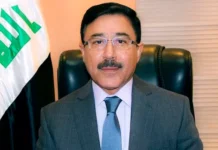
Advisor to the Prime Minister, Abdul Hussein Al-Anbaki, confirmed that good steps have been taken in the tax reform process, noting that the procedures are “halfway through.”
Al-Anbaki said in a press statement : “Talking about the existence of a fixed strategy for economic reform is inaccurate, as Iraq has witnessed the preparation of more than 16 strategies and roadmaps for economic reform since 2009.”
He explained that “the work continued until the last government, which was the government of Mohammed Shia Al-Sudani, where the focus was on some aspects of economic reform, including tax reform, which included the Supreme Committee, and we were able to put in place a number of good steps, but we are still in the middle of the road and need to complete them.”
The path to tax reform
Al-Anbaki expressed his fear that “the new governments will follow the approach of previous governments by leaving projects incomplete and starting anew, as if there were no previous scientific or intellectual output or visions for economic reform.”
He pointed out that “all visions are available, but the problem lies in the institutional structure, in addition to the absence of economic specializations, as people from other specializations are handling the file, which leads to repeated mistakes.”
He added that “economic reform has been delayed for too long due to temporary appeasement and populist policies, under governments that operate within short time periods without long-term thinking,” explaining that “Iraq, since 2003 until now, has not achieved long-term requirements, which necessitates working in two directions; short and long term; because neglecting the long term leads to the fragility of the state and exposes it to crises and global changes.”
Economic policy is being run in reverse.
He stated that “Iraq has not been able, during the past 23 years, to create a financial lever to protect the economy from crises, as economic policy is managed in reverse, where spending expands with the expansion of the economy and contracts with its contraction, contrary to economic theories that assume that the state should intervene with expansion during periods of contraction and with contractionary policy during inflation.”
He pointed out that “as an expert in the Organisation for Economic Co-operation and Development (OECD) for more than 15 years, Iraq has provided important outputs for economic reform, including a roadmap for restructuring state-owned enterprises in 2015, which was highly praised in Paris, but it has not been implemented.”
He stressed, “the importance of reactivating the relationship with international organizations to find out where the world has reached in economic reform, especially in the field of the digital economy, in which Iraq is still lagging behind.”
He explained that “the International Tax and Investment Organization (ITIC) has emphasized the role of tax reforms in attracting foreign direct investment, as the lower the cost of compliance, the greater the opportunities to attract investors.”
He stressed that “this requires a great effort and a comprehensive improvement of the business environment, not just tax reform.” link
************
Tishwash: Conflicting interpretation of an Iranian message regarding Maliki: Will Savaya attend the “framework” session on Saturday?
The Shiite alliance enters the final stretch of the battle
Over the past few days, the Coordination Framework has received conflicting messages from Tehran and Washington regarding the name of the next prime ministerial candidate.
Political assessments indicate that the matter may be resolved early next week, either in favor of Nouri al-Maliki, leader of the State of Law Coalition, or by proposing a compromise candidate acceptable to the conflicting parties.
As of the time of this report, two key factions within the Shiite alliance still oppose Maliki’s candidacy for the premiership.
The CoordinationFramework has reached a political impasse due to Maliki’s insistence on running, while his opponents have exhausted all means of pressure and maneuvering without achieving a decisive breakthrough.
Political sources suggest that a meeting of the Coordination Framework scheduled for next Saturday will be pivotal for two main reasons:
First, the arrival of an Iranian message that has been interpreted in contradictory ways by both the pro- and anti-Maliki camps.
Second, the meeting coincides with the visit of US President Donald Trump’s envoy to Iraq, Mark Savaya, who is expected to deliver a significant political message.
While a political source close to a pro-Maliki faction, who requested anonymity, stated that “the Iranian message endorsed Maliki’s selection,” another source from a camp described as “neutral” offered a different interpretation, suggesting that “Tehran is preoccupied with its internal and regional affairs and has not intervened as it has in the past, limiting itself to general, indirect signals.”
This view is reinforced by statements from Husam al-Hassani, a leader in the Hikma Movement, who confirmed in a television interview that “the Iranian message did not support a specific name but rather advocated for the principle of consensus,” explaining that its essence was: “Put your trust in God regarding what you have agreed upon.”
Maliki’s movements and Washington’s messages : Over the past 48 hours, Maliki intensified his meetings with leaders of the opposition camp, meeting separately with Ammar al-Hakim, leader of the Hikma Movement, and Qais al-Khazali, leader of Asa’ib Ahl al-Haq, in an attempt to bridge the differences regarding the next prime minister, without any clear indications of a resolution.
Meanwhile, the American position remains shrouded in ambiguity. A neutral political source says that “Safia will be in Baghdad on Saturday, carrying a message that may not be in Maliki’s favor,” thus opening the door to the option of a “compromise candidate.”
The US envoy recently escalated his rhetoric, stating that “reforming Iraq begins with confronting corruption decisively,” considering “militias to be the symptom, while corruption is the disease.” In a post on the X platform, he described the corruption network in Iraq as “complex and deliberately built over more than two decades,” emphasizing that dismantling it is a prerequisite for restoring stability and sovereignty.
According to circulating information, the US envoy is expected to move towards activating a package of decisions that Al-Mada newspaper exclusively published last year, which includes closing most Iraqi banks and keeping only a limited number, no more than “four to six banks,” as part of a strict US campaign to combat money laundering and dry up Iran’s sources of funding.
Mark Savia had held a series of meetings with officials in Washington during the past week, which received direct praise from US President Donald Trump, reinforcing the impression that the envoy is operating with a broad mandate and unprecedented powers.
Within Iraq, perceptions of Safia’s stance toward the Shiite alliance vary. Some see him as an adversary seeking to undermine its influence, while others consider him a potential partner in reshaping the political landscape according to new equations.
What does the opposition want?
Domestically, Hakim and Khazali remain steadfast in their rejection of Maliki’s nomination, as confirmed by Badr Organization leader Mukhtar al-Moussawi.
Al-Moussawi, a member of parliament, told Al-Mada yesterday, “These are still the current positions regarding Maliki, and perhaps they changed Tuesday evening after the latest meeting held by the opposition forces, but I cannot confirm that yet.”
Al-Moussawi, whose bloc has not yet announced a definitive position on the crisis, believes that “the problem is not Maliki himself, but rather his inability so far to convince the opposition of its share of the government.”
The “Coordination Framework” failed last week to hold two meetings that were supposed to finalize the candidate’s name.
Al-Mada observed a clear divergence of opinions within the “Coordination Framework” regarding Nouri al-Maliki’s nomination. Some parties believe he is “unsuitable” for the position at this stage, while others consider his selection a potentially “provocative message” given the repercussions of the Syrian crisis.
The opposition camp believes that the number of seats held by the State of Law coalition does not qualify al-Maliki for the premiership, unless the circulating reports about Prime Minister Mohammed al-Sudani relinquishing his political “points” in his favor prove true.
However, Hussam al-Hassani, a leader in the Hikma Movement, denied these assessments, asserting that the “Reconstruction and Development” bloc, headed by al-Sudani, was asked if it was prepared to concede its entitlement to the State of Law coalition in exchange for the prime ministership.
His response was decisive: “No, we have our political entitlement.”
Al-Sudani had surprised the “Coordination Framework” by announcing his willingness to relinquish the position to al-Maliki, followed by reports of an alliance between the two sides, although the latter has not yet officially confirmed it. However, the opposition camp continues to promote the narrative that al-Sudani is engaging in political maneuvering, placing al-Maliki at the forefront of the crisis to pave the way for his return to the premiership.
The Shiite alliance has thus far failed to secure a clear stance from the Najaf religious establishment, which has repeatedly refused to intervene in this matter.
This is compounded by the silence of Muqtada al-Sadr, leader of the Sadrist Movement, regarding the unfolding crisis. With the prospects of removing al-Maliki through consensus dwindling, his opponents are promoting what they call a “policy of entrapment ,” meaning pushing him to the forefront at the height of the crisis to hold him politically responsible.
In this context, Sunni forces have begun launching indirect attacks against him, a notable development after weeks of his name circulating as a potential candidate.
Over the past two days, Mohammed al-Halbousi has continued to level veiled criticisms, reminiscent of al-Maliki’s era in power.
In a notable post yesterday, he said, “Those who do not learn from history cannot build the future,” recalling the events of the “Arab Spring” and what accompanied it in Iraq in terms of “crisis management, sectarian incitement, and the arrest of innocent people.” He considered that those policies were used at the time to cover up the escape of senior terrorists from Abu Ghraib prison, which took place during the second Maliki government, in “an incident described as the strangest, which passed without any accountability or condemnation of those responsible for it.”
He added that the fugitives later managed to occupy and destroy entire provinces before they were reclaimed “through immense sacrifices and the displacement of millions,” referring to the tragedy of the Bzeibiz Bridge.
Al-Halbousi added that the scenario is being repeated today amidst regional and international turmoil, through the so-called SDF and its smuggling of ISIS leaders from its prisons, warning of the danger of repeating the same mistakes.
He called on “the wise men of Iraq” to recognize the magnitude of the challenges and adopt a unified national stance that prevents “a return to the past, whatever the reasons,” while emphasizing the need to preserve the security, political, and social stability achieved after the defeat of ISIS.
Last Monday, Al-Halbousi had called for the appointment of a figure with broad national acceptance “away from a return to painful, lean days,” a statement widely interpreted as referring to Nouri al-Maliki.
Similarly, Sunni leader Ahmed Abdullah Abdul Jabouri (Abu Mazen) stressed that “Iraq cannot afford to turn back the clock,” calling for the formation of a national unity government built on trust and partnership, in a post on social media.
Researcher and academic Ziad al-Arar believes that the Sunni position on Nouri al-Maliki assuming the premiership is “diverse and not unified,” as it is divided between a genuine rejection of al-Maliki’s return to office and other stances that can be described as “political maneuvering,” linked to specific demands and conditions, or based on positions al-Maliki has recently taken, particularly his rejection of a specific Sunni figure assuming the speakership of parliament.
Al-Arar, speaking to Al-Mada, points out that the political voices within the Sunni community opposing al-Maliki’s return appear to be more numerous and influential than those supporting him. Furthermore, the Kurdish position has not yet crystallized clearly.
However, he emphasizes that the final decision should remain with the “Shia framework,” as it is the body authorized to choose the prime ministerial candidate. He recalls that the framework previously allowed Sunni forces the freedom to choose Mohammed al-Halbousi as Speaker of Parliament.
He adds that Mohammed al-Sudani’s move to withdraw or nominate al-Maliki for the next prime minister came, in his view, within the framework of striving to preserve the unity of the “coordination framework” and break the political deadlock. At the same time, he stresses that al-Sudani remains a viable candidate, and that the final outcome will depend on internal political developments, as well as the impact of regional events in shaping the final picture of the Iraqi political landscape. link