Tishwash: International development is moving towards three investment categories in Iraq.
The International Development Bank announced the launch of three new financial and investment products targeting investors, entrepreneurs, startups, and small and medium enterprises, in a move that the bank says aims to enhance liquidity, stimulate economic growth, and empower the private sector through flexible solutions with competitive returns.
The bank stated that the new products came in response to the market’s need for more flexible financing tools that help with expansion and support financial stability within a safe banking environment.
The bank stated in a press release that the three products include a profit account, which offers customers a 6.5% profit rate paid upfront, providing immediate liquidity for reinvestment or managing financial obligations from day one; project finance loans with a reduced interest rate of 3.5% to support business growth and accelerate expansion, enabling startups and SMEs to enhance productivity and create jobs; and an investment deposit account with annual returns of up to 10% distributed monthly, providing investors with a regular income, as confirmed by the bank.
In a move that it said comes within its social responsibility and in consideration of the humanitarian dimension, the International Development Bank announced the postponement of all installments due during the month of Ramadan for government sector employees, with the aim of easing their financial burdens and enabling them to meet their needs. link
Tishwash: Sudani sponsors the signing ceremony of two preliminary agreements between Iraqi oil companies and US-based Chevron.
Iraqi Prime Minister Mohammed Shia al-Sudani oversaw the signing ceremony of two preliminary agreements between Iraqi oil companies and the American company Chevron on Monday (February 23, 2026).
The Prime Minister’s Media Office stated in a statement received by “Baghdad Today” that “the first agreement was concluded between the Basra Oil Company and the American company Chevron to transfer the management of the West Qurna/2 field, while the second agreement relates to the Dhi Qar and North Oil Companies to develop the Nasiriyah field and the four exploration blocks in Dhi Qar Governorate, in addition to developing the Balad field in Salah al-Din Governorate, with the amendment of the previous agreement to add the Nasiriyah field to it.
The signing ceremony was attended by the US Special Envoy to Iraq, Tom Barrack, and the US Chargé d’Affaires, Joshua Harris.”
During the ceremony, the Prime Minister stressed “the importance of these agreements in promoting reforms in the oil sector, and their positive impact on the economic and living standards in the governorates of Dhi Qar and Salah al-Din.”
It is worth noting that Basra Oil Company and Lukoil had previously signed a settlement agreement, under which the contract was temporarily transferred to Basra Oil Company and all financial dues between the two parties were settled, with the settlement to become effective after the Cabinet approved it.
The statement indicated that “a framework agreement was signed between Basra Oil Company, Lukoil and Chevron, allowing for the temporary transfer of the contract to Basra Oil Company, which will later transfer it to Chevron after completing negotiations on the terms of the new contract. The agreement guarantees exclusive negotiation for one year for Chevron according to the standards agreed upon by the parties.” link
*************
Tishwash: A new round of negotiations to join the World Trade Organization
Iraq is continuing its technical and legislative preparations to complete its accession process to the World Trade Organization, a move reflecting its efforts to strengthen its integration into the global economy and create a more stable and attractive investment environment. The Ministry of Trade confirmed that work is progressing rapidly to update the technical files related to goods.
In addition to reviewing the memorandum on the foreign trade system, in line with the new decisions relating to customs tariffs, as part of preparations for the fourth round of negotiations with the member states of the organization.
The spokesperson for the Ministry of Trade, Mohammed Hannoun, explained to Al-Sabah that the technical teams are continuing to complete the updating of the required data and information, in preparation for resuming negotiations on the goods and services files, which are among the basic pillars in the accession process.
He noted that the timeframe for Iraq’s full membership in the organization remains contingent on progress in completing these negotiations, as well as the stability of the domestic economic situation. He expressed hope that Iraq’s acceptance as a member would be announced in 2028-2029, provided the procedures proceed as planned.
Addressing the reasons for the delays in the accession process over the past years, Hanoun explained that one of the most significant factors was the failure to enact several important economic laws during the previous parliamentary session, most notably the draft Intellectual Property Law, which is considered essential for fulfilling Iraq’s obligations to member states.
This law is viewed as part of a package of legislation necessary to guarantee the protection of commercial and industrial rights and to align the domestic legal environment with international trade rules.
According to experts, Iraq faces a number of objective challenges that require careful consideration before fulfilling the membership requirements. Foremost among these challenges is the continued heavy reliance on the oil sector as the primary source of revenue, given the weak diversification of the national economy’s productive base. There is also a pressing need to modernize the legislative framework in the areas of trade, investment, and government subsidies, in order to align with the organization’s rules and minimize any potential conflicts with its commitments.
Among the key areas of focus are the harmonization of customs and trade policies, enhancing transparency in administrative procedures, simplifying import controls, and developing the institutional and technical capacities of the entities responsible for managing the accession process and implementing international obligations. These steps are essential to ensure an orderly transition to a more open and competitive trade environment, without causing sudden shocks to the domestic market.
In the same context, the Administrative Undersecretary of the Ministry of Agriculture, Dr. Mahdi Suhr al-Jubouri, affirmed that Iraq has reached an advanced stage of negotiations, particularly regarding aligning agricultural policies with international standards. In a statement to Al-Sabah newspaper, he explained that the Ministry is working to adapt to the requirements of the Agreement on Sanitary and Phytosanitary Measures (SPS) of the World Trade Organization, which allows countries to take measures to protect human, animal, and plant health, while adhering to international standards issued by recognized institutions such as the International Plant Protection Convention and the World Health Organization.
Al-Jubouri explained that the legal framework governing the agricultural sector includes legislation that complies with international standards, such as the Animal Health Law No. (32) of 2013 and the Agricultural Quarantine Law No. (76) of 2012. These laws regulate pest and disease prevention measures, import controls, oversight of health certificates, and the application of agricultural quarantine rules at border crossings. He noted that these laws form an important foundation for enhancing confidence in Iraqi agricultural products in foreign markets.
In contrast, Al-Jubouri warned that the anticipated trade liberalization upon joining the WTO would lead to increased competition in the Iraqi market due to the gradual reduction of customs barriers, posing challenges for local producers, particularly in the agricultural sector. He emphasized the need for targeted and regulated agricultural support within clear legal frameworks to contribute to increased production efficiency, improved quality, and enhanced competitiveness.
Economic experts believe that completing the accession process represents a strategic step to enhance Iraq’s position in the international trading system, provided that this is accompanied by genuine structural reforms that contribute to diversifying the economy, improving the business environment, and developing the legislative and institutional infrastructure. link
Tishwash: The Central Bank warns against scams and fraud perpetrated using various banknotes.
The Central Bank warned on Monday of scams and fraud perpetrated using various banknotes.
The Central Bank’s media office stated in a statement received by the Iraqi News Agency (INA) that “a number of fraud and deception operations have been detected, perpetrated by unscrupulous individuals against citizens for the purpose of financial gain,” calling for “the need to take precautions and be wary of falling victim to these operations.”
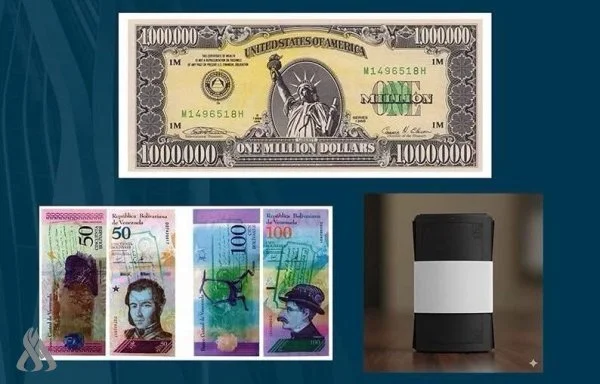
He added that “the most prominent of these operations that are practiced inside Iraq are divided into several methods, including: selling a (1,000,000) million dollar note as a banknote, when in fact it is a commemorative note that is not in circulation, and that the highest denomination is (100) US dollars, with the promotion of black papers cut to the same dimensions as the dollar note as real (100) dollar notes, but they are coated with a black substance, claiming that after removing the black substance they will return to circulation, and there is absolutely no truth to that.”
He explained that “among the operations carried out inside Iraq is also the promotion of banknotes withdrawn from circulation from several countries that have no monetary value and are exchanged for Iraqi currency in high amounts, using different methods, pretexts and claims to sell them to victims of fraud, as well as banknotes of dollars and dinars that are copied or printed bearing the word model or invalid or void, used as children’s toys and bearing the features of the banknote and promoted as real banknotes.”
The Central Bank confirmed, according to the statement, that “the relevant authorities have been notified in order to prevent its printing or importation from outside Iraq link