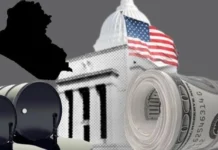
From the moment the Trump administration released its National Security Strategy 2025, it was clear this was not a normal policy document. The language is different. The mindset is different. The United States no longer talks like a traditional superpower guarding the world. Instead, it talks like a businessman looking at the world as a deal sheet — weighing profits, losses, and risks.
In this strategy, geopolitics feels less like diplomacy and more like accounting. Every move is judged by what it brings back. That shift changes how the Middle East appears. It’s no longer described mainly as a battlefield or a security burden. It’s treated more like an investment zone.
Before even getting to the Middle East, the document makes one thing clear: Washington now sees the world as a space for economic competition, not moral leadership. Politics, trade, security, industry, and technology are all tied together. The U.S. no longer wants to play global police officer. It steps in only when the return is worth the cost, and it steps back when the price is too high.
Power, in this view, is no longer about who has the biggest army. It’s about who controls production, technology, and key resources. China is seen first as a trade rival, not a military enemy. Russia is treated as a disruptor, not a future leader. Europe is viewed as a partner that hesitates too much and needs to stand on its own feet.
The rest of the world is quietly split into two groups: countries that create value, and countries that drain resources. Geography matters less than usefulness. Old friendships matter less if they don’t produce results.
This is where Iraq becomes important.
For more than 20 years, Iraq was at the center of U.S. attention. Today, it sits in a gray zone. Washington doesn’t want to walk away completely, but Iraq is no longer at the top of the list either. The new American view sees Iraq as a country with resources, a growing market, and a sensitive location — but also as a place where the U.S. does not want to sink into another heavy military commitment.
In simple terms, America’s relationship with Iraq is now based on clear benefits.
Politically, the U.S. wants to stay involved, but at low cost. It prefers intelligence sharing, limited support, and targeted influence instead of large troop deployments. Iraq, meanwhile, faces a difficult balance: how to benefit from this relationship without giving up its sovereignty, and how to manage pressure from both regional and global powers.
Economically, Washington expects something in return. Support is tied to access — access to the Iraqi market, energy projects, technology deals, and infrastructure work. Any closer relationship will be judged not just by security cooperation, but by whether Iraq offers a competitive, stable environment for business. Iraq is expected to balance ties with both East and West without turning into a battlefield for rival powers.
This shift can actually work in Iraq’s favor. There are real opportunities in gas development, renewable energy, transportation, and rebuilding projects. But if Iraq fails to move smartly, it risks being pushed aside in a region where alliances are changing fast and missed chances quickly turn into problems.
At a deeper level, this strategy is not just foreign policy. It’s a new American worldview. One where values take a back seat to outcomes, and where involvement depends on profit and loss — not history, loyalty, or moral duty.
In this world, countries that bring value stay relevant. Those that don’t are quietly ignored.
For Iraq, this is neither a clear danger nor a guaranteed opportunity. It’s a test. A test of whether Baghdad understands that today’s relationships are built on shared interests, not old memories. If the Middle East is becoming an “investment arena,” as critics say, then Iraq faces a serious question:
Will it act as a player that sets its own terms — or will it be treated like an asset traded in deals made elsewhere?
In the end, Trump’s new strategy is more than a policy update. It signals a new phase in America’s role in the world. This phase will likely bring power gaps, new alliances, and fresh tensions. And it will force every country — from Baghdad to Berlin, from Beijing to Mexico City — to rethink what the United States is today, and what it no longer wants to be.