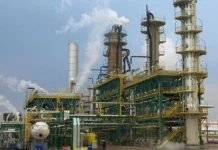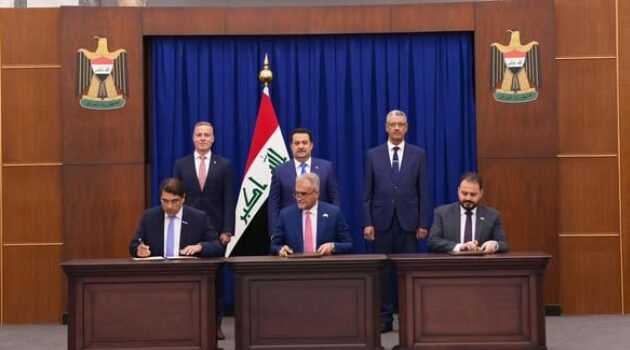
BAGHDAD — ExxonMobil has signed a preliminary agreement with the Iraqi government to develop the Majnoon oil field, one of the country’s largest and most strategically important energy assets. The move marks the U.S. oil giant’s potential return to Iraq after nearly two years away and signals renewed Western interest in the Iraqi energy sector, long dominated by Chinese companies.
The agreement, described as a non-binding “Heads of Agreement,” was signed on October 8 between top Iraqi officials and ExxonMobil’s vice president. Iraqi Prime Minister Muhammad Shia’ Al-Sudani hailed the deal as an “extraordinary agreement” and a diplomatic victory that could help strengthen Baghdad’s global partnerships.
“Iraq has long needed such agreements with integrated global companies possessing expertise and technology,”
said Ali Nizar Al-Shatri, Director General of the State Oil Marketing Organization (SOMO).
A Strategic Realignment
Analysts suggest that ExxonMobil’s return could represent a broader shift in Iraq’s energy diplomacy, as Baghdad seeks to rebalance ties between Washington and Beijing.
Energy analyst Muwafaq Abbas said the accord “signals Baghdad’s intent to rebalance regional relationships and deepen Iraq’s integration with Western markets.” He added that Iraqi officials view the partnership as a key step toward modernizing the country’s energy sector and improving relations with the United States.
Oil and Diplomacy Intertwined
The deal even appeared to echo in international politics. During the October 13 summit in Sharm El-Sheikh, Egypt, former U.S. President Donald Trump reportedly addressed Prime Minister Sudani directly, saying:
“You have a lot of oil, and you do not know how to handle it. It is a big problem.”
For many observers online, Trump’s blunt comment reflected the uneasy dependency that has long defined Iraq’s oil sector—one often viewed as vulnerable to Western influence.
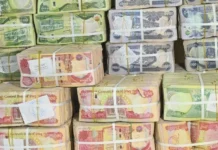
A post circulating on Twitter/X argued that Iraq’s hydrocarbon wealth remains subject to Washington’s oversight, noting that the country’s oil revenues are still channeled through the U.S. Federal Reserve Bank of New York — a practice dating back to the 2003 U.S.-led invasion.
Skepticism and Uncertainty
Despite the optimism, some Iraqi experts have voiced caution.
Prominent oil analyst Nabil Al-Marsoumi questioned whether ExxonMobil is truly committed to a long-term return, recalling the company’s 2024 withdrawal after disputes with Baghdad over risk-sharing and profit terms.
Marsoumi warned that ExxonMobil might eventually resell its stake in Majnoon to the state-owned Basra Oil Company, as it did in the past.
Others have pointed out that the current agreement remains non-binding and that technical studies, environmental assessments, and negotiations could take years before production resumes.
Outlook
The Majnoon oil field, located near Basra, is one of Iraq’s “supergiant” fields with reserves exceeding 12 billion barrels. It represents both a major investment opportunity and a test of Iraq’s ability to attract and retain global partners amid an unpredictable political and economic landscape.
While ExxonMobil’s reentry could help Iraq revitalize its energy infrastructure and diversify its partnerships, experts warn that success will depend on stable policy, clear contract terms, and genuine commitment from both sides.