Leaders from around the world are expected to wrap up a major AI summit in New Delhi on Friday with a shared message on how artificial intelligence should be handled.
The five-day AI Impact Summit brought together presidents, ministers, tech CEOs, and experts to talk about the risks — and the promise — of fast-growing AI technology.
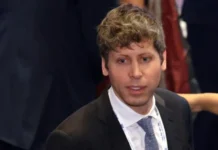
On Thursday, Sam Altman, the head of OpenAI, said the industry needs rules — and it needs them fast.
“This technology needs regulation, urgently,” he said.
Altman has supported oversight before. But last year, he also warned that too many restrictions could slow the United States in its race against other powers in AI.
Speaking in Delhi, he gave a clear warning: “Centralisation of this technology, in one company or country, could lead to ruin.”
At the same time, he stressed that powerful tools like AI must have safeguards — just like other major technologies in the past.
Big money, big concerns
The boom in generative AI — tools like ChatGPT — has sent company profits soaring. But it has also raised serious worries.
People are concerned about job losses, online abuse, misinformation, and the huge amounts of electricity needed to power massive data centers.
This year’s summit is the biggest yet. It’s also the first time the event has been held in a developing country. India is using the moment to show it wants to compete with the US and China in AI.
The government says it expects more than $200 billion in AI-related investments over the next two years. Several major US tech companies have already announced new deals and infrastructure projects during the summit.
Will there be real action?
Some experts say strong, clear rules are urgently needed. Others worry that the summit may end with broad promises but few concrete steps — similar to past meetings in France, South Korea, and Britain.
Niki Iliadis, from The Future Society, said that governance usually starts with basic agreement.
“First, you define the risks. You agree on what’s unacceptable,” she explained. She also pointed out that while tech companies are powerful, they are not governments.
Indian Prime Minister Narendra Modi said AI should serve everyone.
“We are entering an era where humans and intelligent systems work together,” he said. “We must make sure AI is used for the global common good.”
Meanwhile, UN Secretary-General Antonio Guterres urged tech leaders to back a $3 billion global fund. The goal would be to improve AI skills worldwide and make computing power more affordable.
“The future of AI cannot be decided by a handful of countries — or left to the whims of a few billionaires,” he said.