Talk about corruption and suspicious government contracts is once again back in the spotlight, with growing calls to open old files, hold those responsible accountable, and recover public money that was lost over the years.
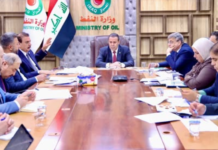
Many previous governments promised to fight corruption and stop the waste of state funds, but most of those efforts failed to produce lasting results. Today, Prime Minister Ali al-Zaidi is facing increasing pressure to tackle these long-standing issues, despite the huge number of unresolved cases and the influence of powerful political groups that are believed to have benefited from some of these deals.
MP Duha al-Sadkhan of the National Approach bloc said that any serious campaign against corruption must include all state institutions without exception. She stressed that stolen public funds must be recovered and that anyone involved in corruption should face legal consequences.
According to Al-Sadkhan, excluding any individual or institution from investigation would damage public trust and raise doubts about the government’s commitment to fighting corruption. She also emphasized that allegations involving political parties or influential groups must be handled through legal evidence and the courts, not through political accusations.
Political analyst Talib Muhammad Karim said that any genuine reform effort will inevitably face resistance from interests that have become deeply rooted in parts of the state and the economy over many years.
He explained that the success of reforms should not be measured by how much opposition they face, but by the government’s ability to apply the law fairly and equally to everyone. Karim also called for giving the government enough room to implement its plans without political pressure or interference, which he said had disrupted many reform projects in the past.
A major development came with the arrest of Adnan al-Jumaili, Deputy Minister of Oil for Refining Affairs and Director General of the North Refineries Company and Baiji Refinery. He was detained by a special security force accompanied by a team from the Integrity Commission.
The arrest is being seen as one of the first serious steps toward reopening investigations into corruption allegations linked to previous contracts. Authorities reportedly seized large amounts of money, property, and land connected to the case. Initial judicial investigations indicate that Al-Jumaili may have been involved in large-scale corruption activities, with further investigations still underway.
For many Iraqis, the case is being closely watched as a test of whether the government’s anti-corruption campaign will lead to real accountability or become another unfinished promise. dollar