The ongoing war between the United States and Iran is creating serious economic pressure across the region, and Iraq is feeling much of the impact. A drop in oil exports through Iraq’s main seaport, along with limited use of alternative routes through Kurdistan, Turkey, and Syria, has made the situation even more difficult.
These challenges are putting pressure on the government as it tries to secure enough money to cover spending and keep services running. Many fear that difficult economic decisions may be ahead, and ordinary citizens could end up paying the price.
Former parliamentary finance committee member Abdul Hadi al-Saadawi said the government should be very careful before making any changes to the exchange rate. According to him, protecting the value of the Iraqi dinar must remain a top priority.
He pointed out that there is still a large gap between the official exchange rate and the rate seen in local markets, with the difference exceeding 20 points. However, he noted that both the government and the Central Bank have already taken several positive steps to improve the country’s financial and monetary conditions.
Al-Saadawi stressed that real financial reform requires bold decisions. He also expressed hope that the government can successfully deal with the current economic crisis.
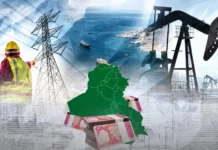
Economic researcher Qasim al-Tamimi said Iraq’s oil sector is facing growing challenges because of rising regional tensions and the conflict involving the United States, Iran, and Israel.
He explained that Iraq’s heavy dependence on oil revenue has left the country vulnerable whenever regional events disrupt exports. As a result, economic pressures increase quickly.
According to Al-Tamimi, Iraq is dealing with several export-related problems at the same time. These include concerns over shipping through the Strait of Hormuz, export issues involving Kurdistan and Turkey, and challenges connected to tanker shipments toward Syria and the port of Banias. Together, these problems are creating additional pressure on the economy and limiting the government’s options.
Meanwhile, Member of Parliament Ali Al-Azirjawi warned that Iraq’s growing debt burden is becoming a major concern. He said the continued reliance on borrowing shows a lack of clear long-term financial planning.
Al-Azirjawi cautioned that depending on loans to cover government expenses could further weaken the economy and increase financial pressure on the state. He called for a clear reform strategy that focuses on managing public finances more effectively and sustainably.
He added that Iraq’s financial problems cannot be solved through temporary measures alone. Instead, the country needs long-term and fundamental reforms that reduce dependence on borrowing and create a stronger economic foundation for the future.