Iraq’s Financial Transformation: Money Supply and Domestic Debt Grow Sharply Over a Decade
Iraq’s financial landscape changed significantly between 2014 and 2024, with major increases in both money supply and domestic debt as the country dealt with economic pressures, rising government spending, and changing fiscal needs.
According to figures from the Central Bank of Iraq’s annual statistical reports, the amount of currency in circulation grew dramatically over the past ten years. Cash circulating in the economy, excluding money held in Central Bank vaults, increased from about 39.8 trillion Iraqi dinars at the end of 2014 to more than 100.5 trillion dinars by the end of 2024.
This means the volume of cash circulating in the market more than doubled during the decade.
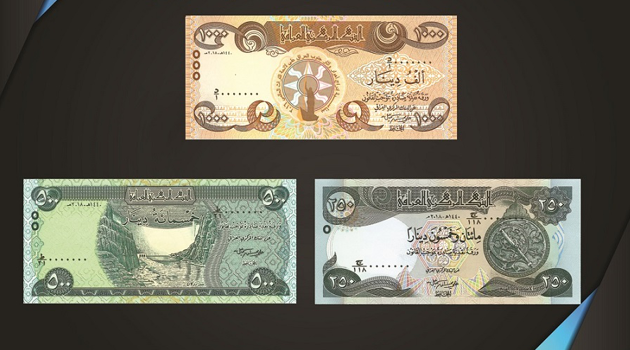
The growth was not only in the amount of money but also in the types of banknotes being used. In 2014, the 25,000-dinar note was the most common denomination in circulation. However, after the Central Bank introduced the 50,000-dinar note in 2015, it gradually became a major part of the money supply.
By the end of 2024, the 50,000-dinar note represented more than 38.8% of all currency circulating in the Iraqi economy, highlighting a major shift in the structure of cash transactions.
Currency in circulation is considered one of the most important indicators of economic activity. An increase in money supply often reflects higher demand for cash in the market, expanding government spending, and growing economic activity.
One of the biggest drivers behind this increase was government spending on salaries and employee compensation.
Data shows that salary allocations more than doubled over the decade, rising from 28.4 trillion dinars in 2014 to 60.5 trillion dinars in 2024. This increase made public-sector wages one of the main factors behind the expansion of the money supply.
The figures also point to broader fiscal changes that took place during the period. As government spending increased and economic challenges emerged, domestic debt and monetary expansion became increasingly important tools for managing public finances.
The decade-long rise in money supply reflects Iraq’s efforts to support government operations, meet growing expenditure needs, and maintain economic stability during a period marked by fluctuating oil revenues, security challenges, and changing economic conditions.
While the expansion helped provide liquidity to the economy, it also highlights the growing importance of balancing public spending, debt management, and monetary policy to ensure long-term financial stability.
The data illustrates how deeply Iraq’s fiscal and monetary environment has evolved over the past ten years, with larger cash circulation, higher government spending, and increasing financial obligations shaping the country’s economic future.
Click here to read the full article (Arabic).