Telecom Minister Claims Dinar Redenomination Finalized, Drawing Criticism
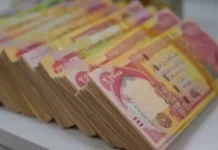
Iraq Jawad Al-Samarraie August 16, 2026 Baghdad (IraqiNews.com) — Minister of Communications Mustafa Sanad stated in a televised broadcast that the government decision to redenominate the Iraqi Dinar and delete three zeros from the national currency is officially finalized. Sanad asserted that replacing the current banknotes will force hoarded cash back into formal banking channels while eliminating an estimated 8 trillion IQD ($6.1 billion) in unexchanged currency tied to illicit gains, corruption, and lost funds.
However, the minister’s pronouncements have triggered backlash from economic monitors over fiscal messaging and central bank authority.
Key Statements & Fiscal Arguments
- Finalized Redenomination: Sanad stated the decision to remove zeros and issue a restructured currency is fully resolved.
- Tackling Hoarded & Illicit Liquidity: Replacing existing currency will compel citizens to deposit hoarded cash into formal banking institutions, bringing idle liquidity back into the national economic cycle.
- Projected 8T IQD Money Supply Contraction: An estimated 8 trillion IQD in physical banknotes may never be submitted for exchange due to illicit origins,criminal gains, or deceased/unclaimed holdings.
- State Balance Sheet Relief: Sanad argued that unexchanged legacy banknotes will permanently exit circulation, meaning the state will not be required to issue equivalent replacement notes, reducing the overall money supply.
Sanad’s declarations prompted criticism from economic monitoring group Eco Iraq Observatory, which rebuked cabinet ministers for announcing sensitive monetary policies outside official central banking channels.
The observatory warned that broadcasting national currency reforms through ad-hoc political interviews rather than institutional communiqués undermines market confidence, fuels currency speculation, and signals fragmented inter-agency coordination. Eco Iraq formally urged the Central Bank of Iraq (CBI) and the Ministry of Finance to issue an official clarification detailing the veracity, operational mechanics, and statutory timeline of any currency restructuring plan.
Iraq Has Finalized Its Decision To Redenominate The Iraqi Dinar By Removing Three Zeros From The National Currency.
Iraqi News @IraqiNews_com The move is meant to force hoarded cash back into formal banking channels while eliminating an estimated 8 trillion IQD, about $6.1 billion, in unexchanged currency tied to illicit gains, corruption, and lost funds.
Since old banknotes that are never exchanged will permanently exit circulation, the state won’t need to issue equivalent replacement notes, effectively shrinking the overall money supply.
The announcement has drawn criticism from economic monitoring group Eco Iraq Observatory, which warned that announcing sensitive currency reforms through ad hoc interviews rather than official channels risks undermining market confidence and fueling speculation.
The group has called on the Central Bank of Iraq and Ministry of Finance to issue an official clarification on the plan’s details and timeline. https://iraqinews.com/iraq/sanad-din
Economic Observatory: Government Silence Regarding “Currency Change” Is Confusing The Iraqi Dinar Market
2026-08-16 Shafaq News – Baghdad On Sunday, the Economic Observatory of Iraq criticized the confusion in the government’s discourse, which is represented in announcing sensitive economic and monetary decisions, such as changing the currency, through unqualified entities, amid the silence of the Central Bank of Iraq and the Ministry of Finance.
The observatory stated in a statement received by Shafaq News Agency that “managing a file as large as the national currency through scattered statements, instead of clear official conferences and statements issued by the competent monetary and financial authorities, reflects a weakness in government coordination,” explaining that “such confusion opens the door to rumors, speculation, market disruption, and harm to citizens and the country.”
The observatory warned that “this ambiguity affects the economic security of citizens and may affect their confidence in the national currency and increase the demand for foreign currencies and gold, thus exacerbating the state of anxiety in the market.”
Eco Iraq held the Central Bank and the Ministry of Finance “responsible for clarifying the truth about the decision and any confusion in the Iraqi market resulting from their silence,” demanding that the competent authorities “issue an official statement explaining the reasons for changing the currency, the implementation mechanisms, the timetable, and guarantees to protect citizens’ savings and market stability.”
https://www.shafaq.com/ar/اقتصـاد/مرصد-اقتصادي-الصمت-الحكومي-زا-تغيير-العملة-يربك-سوق-الدينار-العراقي
Mustafa Sand Reveals A Government Plan To Remove Zeros And Change The Currency… And 8 Trillion Dinars Is The Value Of The “Missing Figures”.
Baghdad – One News Communications Minister Mustafa Sand revealed a government plan to reintroduce the project of removing zeros from the Iraqi dinar and changing the currency, noting that the value of what he described as the “missing figures” amounts to about 8 trillion dinars, in a move that would bring the national currency file back to the forefront of economic discussion after years of raising it and postponing it.
Talk of the project comes amid controversy and questions about its implementation mechanism and its potential repercussions on markets, prices and citizens’ savings, as well as the fate of the large amount of cash circulating outside the banking system.
The idea of removing zeros is based on issuing a new currency and recalculating nominal values after removing three zeros, so that every thousand dinars of the current currency becomes equivalent to one dinar in the new currency, with salaries, prices, savings, debts and contracts being recalculated in the same proportion.
Thus, removing zeros does not in itself mean an increase in the purchasing power of the dinar or an increase in the value of citizens’ savings, but rather represents a renaming and reorganization of monetary values, unless it is accompanied by other changes in monetary policy or the exchange rate.
Changing the currency may give monetary authorities an opportunity to reorganize the money supply and withdraw some of the money circulating outside the banking system, as replacing the old currency with the new one requires introducing large quantities of cash into banks and exchange outlets within a time period determined by the competent authorities.
But the new talk opens the door to questions about the final official position on the project, especially since it comes after a previous government denial, last June, of the existence of an official decision to remove zeros, change the currency, or amend the exchange rate of the dinar.
The government position at the time had confirmed that Iraq was facing a temporary liquidity crisis and not a structural financial crisis, while the Central Bank of Iraq had confirmed in previous statements that there was no intention to change the exchange rate.
Between the new statements and previous positions, the implementation of the project to remove zeros remains contingent on an official announcement clarifying the nature of the decision, its implementation mechanism, and the timetable for currency replacement, as well as how to deal with salaries, savings, contracts, prices, and the cash holdings outside banks.https://1news-iq.net/مصطفى-سند-يكشف-عن-توجه-حكومي-لحذف-الأصف/
106 Trillion Outside Banks… Removing Zeros Unlocks The Vaults Of The Money Supply
Baghdad – Al-Sa’a Network The Iraqi government’s move to revisit the project of removing zeros from the dinar has sparked widespread controversy and concern in the markets, amid questions about the implications of the move on the value of the currency, prices and savings, and whether the project will be limited to renaming the currency denominations or will turn into a tool for reorganizing the money supply and withdrawing funds circulating outside the banking system, according to the “Eram News ” website.
The website, in a report seen by Al-Sa’a Network, quoted its sources as saying that “removing the zeros could coincide with the return of funds to the banking system, especially since about 106 trillion dinars, representing about 94% of the total money supply of 113 trillion dinars, is circulating outside banks .”
He added that “returning these funds to bank accounts could allow banks to reinvest them in the form of loans with appropriate interest rates, and direct them to the production, industry, agriculture, trade and real estate sectors, thus turning funds outside the banking system into part of the formal economic cycle .”
He noted that “discussions regarding the removal of zeros are still ongoing, and there is a difference of opinion regarding whether to change the currency or just remove the zeros, and therefore the project has not yet reached the stage of a final decision .”
He explained that “the government’s approach and the Central Bank’s management aim, within the proposed vision, to withdraw about 10 trillion dinars from the money supply, which is equivalent to about 7.6 billion dollars according to a rate of 1310 dinars to the dollar, and return it to the banking cycle, but the process at the same time has costs and needs to study its effects on the market .” https://alssaa.com/post/show/58808-106-تريليونات-خارج-المصارف-حذف-الأصفار-يفتح-خزائن-الكتلة-النقدية
Removing Zeros Will Include Converting Salaries, Prices, Balances, And Financial Obligations
1 News – One News @onenewsiq Translated from Arabic Al-Araby Al-Jadeed newspaper: Removing zeros will include converting salaries, prices, balances, and financial obligations by the same ratio without increasing the citizen’s purchasing power. #OneNews
“It Affects Economic Security”: Eco Iraq Criticizes The Proposal To Change The Currency Outside Of Official Institutions And Warns Of Increased Demand For The Dollar And Gold.
The Economic Observatory “Eco Iraq” criticized on Sunday what it described as the confusion in the government’s discourse regarding sensitive economic and monetary issues, particularly talk about changing the currency, warning that the absence of official clarifications from the Central Bank of Iraq and the Ministry of Finance may open the door to rumors, speculation and market confusion.
The observatory said in a statement that managing a file as large as the national currency through scattered statements issued by unqualified parties, instead of clear official conferences or statements from the relevant monetary and financial institutions, reflects a weakness in government coordination and increases the ambiguity about the true directions being proposed.
He added that dealing in this way with a file that is directly related to monetary policy and citizens’ savings may lead to the spread of rumors and speculation in the market, and affect citizens’ view of the stability of the national currency.
Eco Iraq warned that continued uncertainty regarding currency change could affect what it described as the “economic security of citizens” and impact confidence in the Iraqi dinar, potentially leading to increased demand for foreign currencies and gold, and hedging against any possible changes.
The observatory noted that any increase in anxiety levels within the market, as a result of the lack of official information, may be reflected in the movement of demand, prices and economic expectations, especially in light of the sensitivity of issues related to the exchange rate and monetary policy.
The observatory held the Central Bank of Iraq and the Ministry of Finance responsible for clarifying the truth about what is being proposed regarding changing the currency, in addition to addressing any confusion that the market may witness as a result of the continued official silence regarding the issue.
“Eco Iraq” called on the relevant authorities to issue an official statement clarifying the true nature of the proposed approach, its reasons, and the mechanisms for its implementation if there is an actual decision, as well as specifying the timetable and guarantees for protecting citizens’ savings and maintaining market stability.
The observatory stressed that clear official communication and coordination among relevant institutions are essential factors in preventing the spread of inaccurate information and curbing speculation, especially when it comes to monetary decisions that can directly affect citizens’ confidence in the national currency and the Iraqi market. https://1news-iq.net/يمس-الأمن-الاقتصادي-إيكو-عراق-ينتقد/
Iraq Struggles to Contain Volatile Dinar Currency Disparity
Daban Mohammed
At a Glance
- The Iraqi dinar reached its peak value during the 1970s when one dinar was worth four U.S. dollars.
- Conflict and economic embargoes during the 1990s caused the currency to crash to 3,000 dinars per dollar.
- The Central Bank fixed the official rate at 1,320 IQD, but parallel market rates remain high at 1,530 IQD.
- The government has failed to contain the significant price gap between official state channels and open market vendors.
Channel8 has learned that decades of geopolitical conflict, sanctions, and market resistance have left Iraq unable to bridge the gap between its official 1,320 IQD peg and parallel market rates exceeding 1,530 IQD, cementing a historic decline from its four-dollar peak in the 1970s.
Key Statements and Focus Area
- On current market disparity: A persistent, wide gap remains between Iraq’s official and market exchange rates, with open markets trading at 1,530 IQD despite the Central Bank’s 1,320 IQD official peg.
- On structural historical declines: This modern monetary disparity mirrors the volatile historical trajectory of the Iraqi dinar, which collapsed from its historic peak of four dollars per dinar to some of its lowest historical levels.
- On modern monetary interventions: Although the government devalued the dinar to 1,460 IQD in 2021 due to crashing oil revenues and later revalued it to 1,320 IQD in 2023, the market resisted, with street prices occasionally spiking to 1,700 IQD.
Chronological Eras of the Iraqi Dinar Value
- 1968–1979 (The Peak): The currency maintained its absolute highest valuation, trading at a stable rate of 1 IQD to $4.00 USD.
- 1980–1988 (The Iran-Iraq War): Wartime economic strain caused a minor depreciation, adjusting the value to 1 IQD to $3.30 USD.
- 1991–2003 (The Sanctions Era): Under a crushing economic blockade and excessive domestic printing, the currency collapsed to 3,000 IQD to $1 USD.
- 2004–2021 (Post-War Stabilization): The introduction of a new currency stabilized the market, keeping exchange rates steady between 1,180 IQD and 1,200 IQD per dollar.
In recent weeks, the Iraqi dinar strengthened against the U.S. dollar, with the exchange rate dropping from a peak of nearly 160,000 IQD to 153,000 IQD per 100 dollars.
This decline was driven by the U.S. government lifting restrictions on several private Iraqi banks and the Central Bank of Iraq addressing rumors of currency devaluation.
Market traders told Channel8 that ongoing government financial stabilization measures, including organized customs duty collections via the ASYCUDA system, helped restore public sector confidence, keeping the dollar from climbing back to its June peaks.
Speaking to Channel8 today, Jabar Goran, spokesperson for the Slemani Currency Exchange Market, highlighted that deleting zeros from the dinar would compel holders of hidden cash reserves to disclose their origins, effectively rendering tens of trillions in illicit funds unusable.
Goran also dismissed rumors of an Iraqi dinar exchange-rate adjustment, stating that a devaluation is unnecessary because rising revenues have offset increased expenditures.
The spokesperson previously predicted that if regional geopolitical tensions ease and vital maritime trade channels like the Strait of Hormuz remain stable, the parallel market exchange rate could significantly strengthen, potentially dropping down to a range between 146,000 and 147,000 IQD per $100 USD.
FYI
The Iraqi dinar was originally introduced into circulation in 1932. Following the regime change in 2003, the Coalition Provisional Authority introduced an entirely overhauled banknote series widely known as the “Bremer Print.”
This new issue systematically replaced both the pre-1991 high-quality “Swiss Print” and the poorly printed, easily counterfeited banknotes produced locally during the 1990s sanctions era.
This monetary timeline demonstrates that prolonged foreign wars, domestic mismanagement, and geopolitical shifts remain the primary drivers behind the dynamic instability of the dinar against global currencies.