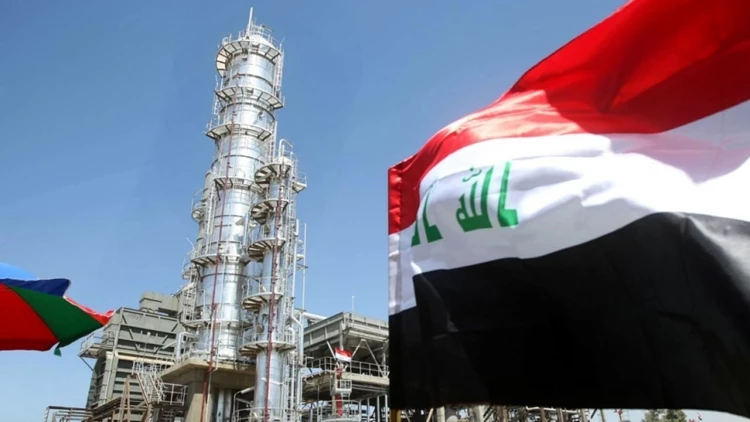
Economic expert Manar al-Obeidi has warned about the consequences of forecasts showing a 6.8% contraction in Iraq’s economy during 2026, stressing that the impact of lower oil production and exports extends far beyond the energy sector and affects the broader economy.
Al-Obeidi explained that Iraq’s non-oil economy remains heavily dependent on the public sector, while the public sector itself relies largely on oil revenues. As a result, any decline in oil income directly affects government spending, investment projects, market activity, consumer demand, and employment opportunities.
He noted that non-oil sectors have recently faced a number of challenges, including stricter regulations and customs procedures, rising business costs, reduced support for agriculture and industry, limited financing incentives, and difficulties for Iraqi companies seeking access to foreign markets.
According to Al-Obeidi, most Iraqi businesses still depend primarily on the domestic market. This makes them particularly vulnerable to declining consumer confidence and reduced household spending, which can negatively affect sales, investment decisions, and business expansion.
He also highlighted concerns within the banking sector, stating that bank financing alone is no longer sufficient to drive private-sector growth. He explained that declining public confidence in banks, combined with the government’s increasing reliance on bank financing, has encouraged banks to focus on lower-risk government lending rather than financing private-sector projects.
Al-Obeidi emphasized that strengthening the private sector will require attracting greater levels of local and foreign investment and creating financing channels beyond traditional bank lending. He pointed to the need to activate the Iraq Stock Exchange, encourage more companies from different sectors to go public, establish legal frameworks for investment funds, and make it easier for both domestic and international investors to participate in the Iraqi market.
He stressed that Iraq’s main challenge is not simply returning to economic growth after 2026. Instead, the country must build a stronger private sector that can access capital, expand its activities, and create jobs even when government spending becomes more limited.
According to Al-Obeidi, developing a more diversified economy and reducing dependence on oil revenues will be essential for achieving sustainable growth and improving economic resilience in the years ahead.