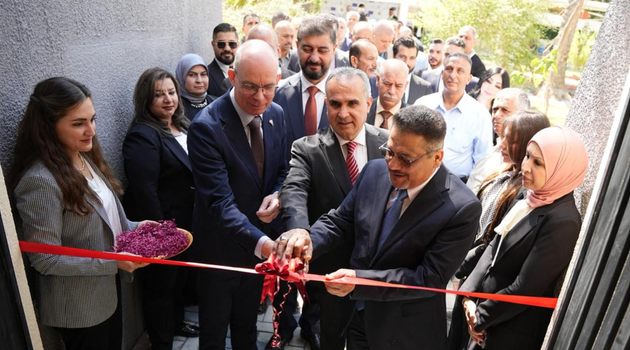
Iraq has reopened its rehabilitated National Plant Genetic Resources Bank in Abu Ghraib, Baghdad, in a joint effort by the Food and Agriculture Organization of the United Nations (FAO), the European Union and Iraq’s Ministry of Agriculture.
The project aims to protect Iraq’s plant diversity, support agricultural research and strengthen the country’s food security as climate change creates new challenges for farmers.
The inauguration ceremony was attended by Agriculture Ministry officials, European Union representatives, FAO officials and specialists working in seed testing and genetic resources.
Established in 1977, the National Gene Bank has helped preserve Iraq’s plant genetic resources for nearly 50 years. Its modernization, alongside the recently inaugurated Seeds/Gene Bank in Sulaymaniyah, strengthens the country’s ability to conserve seeds and protect important crop varieties.
The rehabilitation was funded by the European Union through a project focused on restoring and strengthening agricultural systems in southern Iraq. FAO carried out the work in partnership with the Ministry of Agriculture.
The upgrades include improved seed storage and conservation technology, expanded storage capacity, digital recordkeeping systems and solar energy solutions.
Iraq lies within the Fertile Crescent, one of the world’s most important regions in the history of agriculture. The country has a wide variety of crops, including wheat, barley, lentils and chickpeas, along with their wild relatives.
Protecting these plant resources is important because they can help researchers develop crop varieties that are better able to withstand drought, rising temperatures, pests and other agricultural challenges.
The modernized bank can now store up to 30,000 seed samples for medium-term conservation and another 20,000 for long-term preservation. Digital systems will also help staff document and manage the collections, making them more accessible for research and crop improvement.
Technical Deputy Minister of Agriculture Dr. Mithaq Al-Khafaji said the project protects Iraq’s agricultural heritage while providing farmers and researchers with resources to support more productive and sustainable farming.
European Union representative Wim Riepma said the investment would help preserve Iraq’s agricultural diversity and strengthen the country’s ability to respond to climate change and future food security risks.
FAO Representative in Iraq Salah El Hajj Hassan described the project as a long-term investment in food security, biodiversity and agricultural resilience. He also highlighted the cooperation between the Iraqi government, the European Union, FAO and technical partners.
Beyond storing seeds, the facility will support researchers, plant breeders and agricultural specialists working to improve crops and protect biodiversity.
The project also contributes to the United Nations Sustainable Development Goals, particularly those focused on ending hunger, tackling climate change and protecting life on land.
Overall, the rehabilitation gives Iraq stronger facilities for preserving valuable plant resources and developing more resilient agricultural systems for future generations.