Tishwash: Trump condemns attacks on Kurdistan and affirms Washington’s support for protecting Iraq’s security.
On Wednesday evening (April 1, 2026), the President of the Kurdistan Region, Nechirvan Barzani, received a phone call from US envoy Tom Barrack, who conveyed a message of solidarity from US President Donald Trump following the recent attacks targeting the region.
Trump strongly condemned the drone attack that targeted President Barzani’s house in Duhok, stressing Washington’s full support for protecting the security and stability of Iraq and the Kurdistan Region. Barzani expressed his appreciation for the US positions and assistance.
The Kurdistan Region Presidency stated in a statement received by 964 Network that “His Excellency Mr. Nechirvan Barzani, President of the Kurdistan Region, received this evening (Wednesday, April 1, 2026), a telephone call from Mr. Tom Barrack, Special Envoy of US President Donald Trump to Syria and US Ambassador to Turkey.”
The statement continued, “Mr. Barak conveyed a message from President Donald Trump, in which he strongly condemned the attacks targeting the Kurdistan Region, and the drone attack that targeted the home of President Nechirvan Barzani in Duhok. President Trump expressed his solidarity with His Excellency, and his condolences to the families of the martyrs, wishing a speedy recovery to the wounded.”
He added that “in the phone call, Mr. Barack affirmed President Trump’s and the United States’ full support for protecting the security and stability of Iraq and the Kurdistan Region. For his part, President Nechirvan Barzani thanked him for the call, expressing his appreciation for America’s positions and assistance to Iraq and the Kurdistan Region.”
He pointed out that “the repercussions of the war formed another axis of communication in the region. link
************
Tishwash: The World Bank expresses “deep concern” over the economic consequences of the war.
World Bank Managing Director Pascal Donohoe expressed “deep concern” about the impact of the war in the Middle East on the global economy, at a time when a number of countries were already in a difficult situation due to a series of global crises.
“We are very concerned about the consequences this will have in terms of inflation, jobs and food security, and that is why we are preparing to provide assistance” to countries that request it, Donohue told AFP.
The Washington-based organization pays particular attention to the situation in African and Asian countries, which are especially vulnerable to rising energy prices and supply shocks.
He added, “We are consulting with several governments and countries to understand their needs, and I expect we will have more information in the coming weeks.”
The World Bank, in particular, will have to use its spring meetings, to be held in Washington from April 12 to 17, “to assess the scale of the potential response.”
Donohue said that currently “we are seeking to identify the available funds and interventions that may be necessary to help countries deal with the short-term effects of the war in Iran.”
As part of these efforts, the World Bank on Wednesday issued a joint statement with the International Monetary Fund and the International Energy Agency announcing the creation of a “coordination group to ensure the most effective response” by these institutions to the ongoing crisis.
It is an initiative that can be expanded to include other institutions with the aim of providing expertise in different fields. link
************
Tishwash: Oil companies are withdrawing from Iraq, deeming it high-risk.
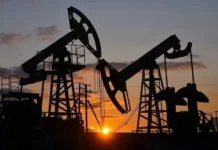
Tishwash: Oil companies are withdrawing from Iraq, deeming it high-risk. International oil companies, including BP , have begun evacuating foreign staff from their sites in Basra and Kirkuk, as security threats escalate in the country.
Politico reported on Thursday (April 2, 2026) that companies described Iraq as a “high-risk environment” due to the increasing number of rocket and drone attacks targeting vital facilities and Western interests.
The report indicated that the evacuation was part of precautionary measures to protect employees, while maintaining operational processes at a minimum through local staff.
This move comes after a series of evacuations that began in March, involving foreign employees at oil fields in southern Iraq, following drone incidents inside production sites.
Hundreds of workers from American and European companies have also gradually left their posts, amid fears that energy facilities could become direct targets in the ongoing conflict.
These developments coincide with an escalation of attacks inside Iraq, which have targeted oil fields and facilities, military sites, and diplomatic missions.
Despite continued production, the reduction in foreign presence raises concerns about declining investments and a slowdown in field development, at a time when Iraq is almost entirely dependent on oil revenues.
The Iraqi government had previously affirmed its commitment to keeping the country out of the conflict, stressing that Iraq “is not a party to the conflict” and refuses to be drawn into it.
However, developments on the ground, and the evacuation of foreign companies, reflect the magnitude of the challenge in shielding Iraq from the repercussions of regional escalation. link
Tishwash: A coalition of 40 countries threatens Iran with harsh sanctions if it does not reopen the Strait of Hormuz.
International pressure is mounting on Iran as some 40 countries lead a move to immediately reopen the Strait of Hormuz, in a scene reflecting growing global concern over the choking of the world’s most important energy artery.
British Foreign Secretary Yvette Cooper’s remarks reveal a sharp tone, as she considered that Tehran is “holding the global economy hostage,” at a time when Western countries are moving towards coordinating new sanctions if the shutdown continues.
The crisis is deepening as shipping traffic has plummeted by 93% since the outbreak of the war in the Middle East, according to data from Kpler. This has led to sharp increases in oil and gas prices, especially since approximately 20% of global supplies pass through the street. The limited transit figures – only about 225 tankers since the start of the conflict – demonstrate the extent of the disruption to global supply chains, with only a few ships, mostly Iranian or Asian, continuing to pass through.
International positions on how to handle the crisis are divergent. US President Donald Trump is pushing for direct intervention to protect the strait, calling on the countries that benefit from it to “seize and secure it,” while French President Emmanuel Macron warns against any military action, describing it as unrealistic and fraught with serious risks. This divergence reflects a Western division regarding the limits of possible escalation.
Regional and international actors have become involved in the crisis, with the Gulf Cooperation Council calling for a UN mandate authorizing the use of “all means” to ensure navigation, while Italy is pushing for the establishment of a humanitarian corridor to avert a potential global food crisis. Meanwhile, China blames the United States and Israel, arguing that their military operations are the root cause of the disruption to shipping, further deepening the international divide over the narrative of the crisis.
Alternative economic moves, such as Iraq resorting to exporting oil via Syria, reveal the beginning of a temporary redrawing of the energy map, while Iran pledged to allow some tankers, in a move that suggests attempts to contain the escalation without making a full concession link