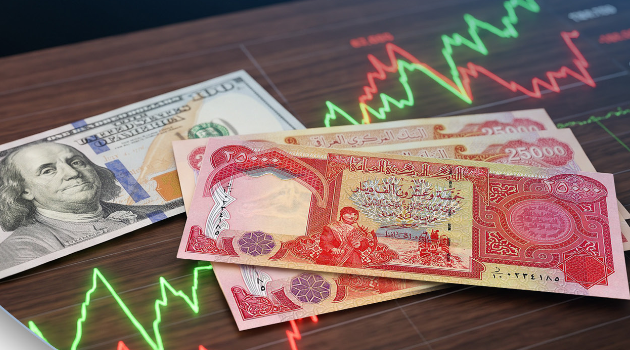
Iraq’s exchange rate policy between 2020 and 2026 has played a major role in the country’s economic stability. However, its success depends heavily on how strong and diverse the domestic economy is. The Central Bank of Iraq (CBI) follows a fixed exchange rate system by linking the Iraqi dinar to the US dollar. The main goal is to control inflation, keep prices stable, and protect the purchasing power of citizens. But this system faces major challenges because Iraq depends heavily on oil income to support its economy and government spending.
Oil accounts for more than 90% of Iraq’s public revenues and remains the country’s main source of foreign currency. This means the government’s financial position is closely tied to oil exports and global oil prices. The Ministry of Finance receives dollars from oil sales and exchanges them with the Central Bank for Iraqi dinars. The government then uses these dinars to pay salaries, cover public expenses, and meet other budget commitments, especially day-to-day spending.
This system has created a major problem for Iraq’s exchange rate policy. Instead of helping local businesses become more competitive, supporting production, or correcting economic imbalances, the exchange rate has largely become a way to convert oil dollars into Iraqi dinars to finance government spending.
As a result, the Central Bank has limited room to manage monetary policy independently. Its decisions are closely linked to the government’s financial needs, particularly as public spending continues to grow. This makes it harder for the bank to control the money supply and respond to economic pressures on its own.
Another major challenge is Iraq’s foreign currency market, where the Central Bank remains the main source of dollars for the private sector. The bank regularly uses its foreign currency reserves to maintain the dinar’s value against the dollar. However, Iraq’s weak domestic production means the country still depends heavily on imported goods rather than producing enough products locally.
This creates a difficult situation. On one side, higher government spending increases demand for goods and services, much of which comes from imports. On the other side, the Central Bank tries to keep the exchange rate stable and control inflation. These competing pressures put continued demand on the country’s dollar reserves.
Over time, this imbalance puts pressure on Iraq’s foreign currency resources and creates further inflation and economic challenges. Without stronger local production and less dependence on oil, maintaining exchange rate stability will remain a difficult task for Iraq.