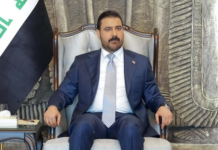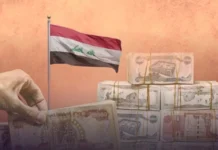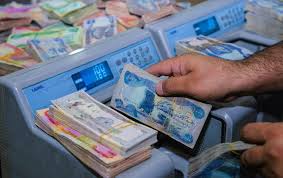
Economic expert Manar Al-Obaidi warned that Iraq’s worsening fiscal imbalance is narrowing the government’s economic options, with borrowing increasingly becoming the primary method to finance monthly expenditures estimated at around 10 trillion Iraqi dinars.
Al-Obaidi stated that declining oil revenues, combined with the lack of effective alternative income sources, have placed the government under growing financial pressure. He stressed that borrowing is “not a radical solution,” and may instead deepen the crisis over time.
According to him, interest payments on Iraq’s public debt reached nearly 7 trillion dinars in 2025 and could exceed 10 trillion dinars this year — equivalent to roughly 10% of mandatory operating expenditures. He warned that Iraq could eventually reach a stage where new borrowing is used merely to pay interest on existing debt rather than fund public services and development projects.
Al-Obaidi argued that the real solution lies in restructuring and rationalizing operating expenditures, especially salaries and social welfare allocations, while maintaining citizens’ living standards. He pointed to recent audits of the social welfare system during the first quarter of the year, which reportedly saved around 700 billion dinars.
He estimated that annual savings from partial welfare reviews alone could exceed 2.8 trillion dinars, adding that broader reviews covering salaries and other spending sectors could generate even larger savings.
The expert concluded that Iraq effectively faces only two choices:
- Continue borrowing, risking long-term structural debt burdens.
- Implement spending controls and fiscal reforms to gradually restore financial balance and protect economic stability.
He cautioned against relying on overly optimistic economic assumptions that are not supported by accurate financial realities.