The European Bank for Reconstruction and Development (EBRD) has warned that economic growth across many emerging markets is expected to slow in 2026 as higher energy costs and supply chain disruptions continue to affect global trade.
In its latest outlook, the EBRD said Iraq and Lebanon experienced some of the largest downward revisions compared with its previous forecast released in February. The bank now expects Iraq’s economy to shrink by 1.5% in 2026, while Lebanon’s economy is projected to contract by 2%.
According to the report, Iraq’s economic performance is expected to weaken further after a modest decline of 0.4% in 2025. The EBRD believes the slowdown will be driven mainly by restrictions on energy supplies and major disruptions to oil exports.
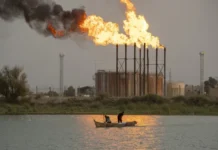
Oil remains the backbone of Iraq’s economy, providing more than 90% of government revenue. Because of this heavy dependence, any interruption in oil production or exports has a direct impact on public finances and overall economic activity.
The report pointed to ongoing shipping difficulties linked to the closure of the Strait of Hormuz, a key route for global energy exports. These disruptions have reduced the movement of oil shipments, affecting Iraq’s ability to export crude at normal levels.
The EBRD also noted that Iraq continues to rely heavily on natural gas imports from Iran, creating additional pressure on the economy during a period of regional uncertainty.
Despite these challenges, inflation in Iraq has remained relatively low, standing at around 2.2%, which has helped limit some of the economic strain on consumers.
Looking beyond 2026, the bank expects conditions to improve. The EBRD forecasts that Iraq could return to growth in 2027, with the economy potentially expanding by around 4% if regional tensions ease and global trade conditions become more stable.
While the near-term outlook remains challenging, the report suggests that a recovery is possible once energy exports normalize and international supply chains begin operating more smoothly.