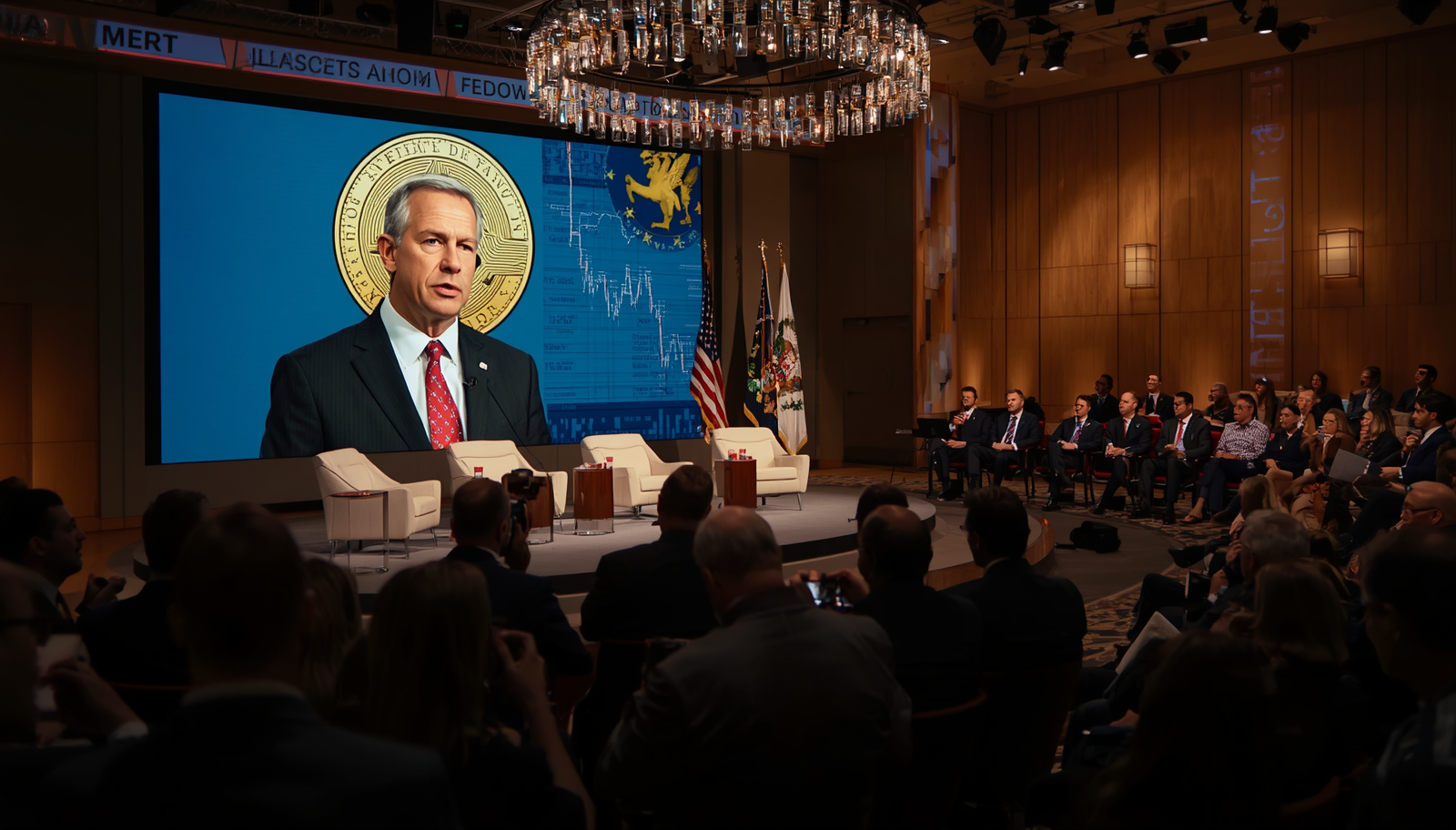
Dollar-backed stablecoins are gaining increasing attention from policymakers, with U.S. Federal Reserve Governor Christopher Waller saying their growing use around the world could strengthen the global influence of the U.S. dollar and even extend the reach of American monetary policy into other economies.
Speaking at the Dubrovnik Economics Conference in Croatia, Waller said that countries and users adopting dollar-backed stablecoins may effectively import U.S. monetary conditions along with the digital assets. He described stablecoins as useful payment tools that encourage competition in the payments industry rather than posing a major threat to the financial system.
His comments come as U.S. lawmakers continue debating new rules for the cryptocurrency sector, including legislation aimed at creating a clearer regulatory framework for stablecoins. One of the key points of disagreement remains whether stablecoin issuers should be allowed to offer interest or yield to users.
The discussion has become increasingly important as policymakers worry that delays in passing crypto legislation could leave the United States behind other countries in the race to develop digital asset markets. Senator Cynthia Lummis recently warned that the U.S. risks losing its competitive edge if lawmakers fail to act soon.
However, not everyone shares the same view about the future of stablecoins.
Megan Greene, a policymaker at the Bank of England, suggested that tokenized bank deposits could eventually become more popular than stablecoins. She believes several forms of digital money—including central bank digital currencies (CBDCs), stablecoins, and tokenized deposits—may coexist, but sees tokenized deposits as the most likely long-term winner.
Greene also rejected the idea that interest in central bank digital currencies has disappeared. Her comments contrast with Waller’s long-standing criticism of CBDCs and his belief that enthusiasm for them has weakened in recent years.
Meanwhile, officials at the Bank of England continue to take a more cautious approach toward stablecoins. Governor Andrew Bailey has warned that widespread use of dollar-backed stablecoins across borders could create financial stability risks, particularly during periods of market stress when large numbers of users may try to redeem their holdings at the same time.
At the same time, UK regulators are reviewing parts of their proposed stablecoin rules after industry groups argued that some requirements could make pound-backed stablecoins difficult to use on a large scale. Proposed measures included reserve requirements and limits on how much stablecoin individuals could hold.
As the digital asset industry continues to grow, experts say the future success of stablecoins may depend on more than regulation alone. Factors such as compliance standards, privacy protections, interoperability between systems, and fast settlement speeds could play a major role in determining which forms of digital money gain widespread adoption among businesses and financial institutions.
The debate highlights a growing global competition over the future of digital payments, with governments, central banks, and private companies all seeking to shape the next generation of financial technology.