US Dollar Rises In Baghdad And Erbil
2026-11-12 09:11 Shafaq News- Baghdad/ Erbil The US dollar closed Thursday’s trading higher in Baghdad and Erbil, hovering around 169,200 dinars per 100 dollars.
According to a Shafaq News market survey, the dollar traded in Baghdad’s Al-Kifah and Al-Harithiya exchanges at 169,250 dinars per 100 dollars, up from the morning session’s 169,150 dinars.
In the Iraqi capital, exchange shops sold the dollar at 169,750 dinars and bought it at 168,750 dinars, while in Erbil, selling prices stood at 169,200 dinars and buying prices at 169,100 dinars.
Economic expert Manar Al-Obaidi, head of the Iraq Future Foundation for Economic Studies and Consultations, attributed rising demand for dollars on Iraq’s parallel market to restrictions on international transfers, difficulties financing trade with Iran, customs policies, limited banking access for small traders, dollar hoarding, and speculation over changes to the official exchange rate. https://www.shafaq.com/en/Economy/US-dollar-rises-in-Baghdad-and-Erbil-2
Gold Rebounds From One-Year Low Ahead Of US Inflation Data
2026-11-13 03:18 Shafaq News Gold rose on Friday as bargain hunting emerged after prices hit a more than one-year low in the previous session, while market focus shifted to upcoming US inflation data.
Spot gold rose 0.6% to $3,898.27 per ounce by 0740 GMT, but has lost 4.1% so far this week. US gold futures for December delivery gained 0.5% to $3,902.70.
“Today’s move is more of a positioning adjustment, given that several intraday short-term momentum indicators had kind of hit an extreme oversold level after yesterday’s dramatic fall,” said Kelvin Wong, a senior market analyst at OANDA.
“A short-term driver that could be bullish for gold will be a sudden turn of the US Treasury yield, that would potentially slow down the US dollar.”
Spot gold prices hit their lowest level since October 2025 on Thursday as oil prices climbed on fading hopes for peace in the Middle East, spurring fears of higher inflation and elevated interest rates.
Markets see an 89% chance of a 25-basis-point US rate hike in December, while the probability of a larger 50-basis-point move is priced at 11%, according to CME’s FedWatch tool.
Although gold is typically seen as an inflation hedge, higher interest rates increase the opportunity cost of holding non-yielding bullion, reducing its appeal to investors.
Federal Reserve Bank of New York President John Williams said on Thursday more rate hikes are likely as the US central bank seeks to lower high levels of inflation in an otherwise healthy economy.
Data showed the number of Americans filing new claims for unemployment benefits increased more than expected last week, but remained at a level consistent with a stable labour market.
Market participants now await the US Producer Price Index data due at 1330 GMT.
Among other metals, spot silver rose 0.1% to $50.05 per ounce, platinum fell 0.1% to $1,517.06 and palladium climbed 1.6% to $1,009.62. All three metals were headed for weekly declines. (Reuters)
2026-11-13 00:54 Shafaq News Oil prices inched down on Friday and were headed for a second weekly decline as a continued US blockade of Iran eased fears of renewed fighting in the Middle East, though shipping attacks remained a supply risk.
Brent futures fell 28 cents, or 0.29%, to $95.54 a barrel at 0527 GMT. US West Texas Intermediate (WTI) futures declined by 56 cents, or 0.63%, to $88.18 a barrel.
Friday’s declines reversed two days of gains amid a volatile trading week, with earlier hopes for a rapprochement in the US-Israel war against Iran, now in its ninth month, offset by strikes on Saudi Arabian infrastructure by Yemen’s Iran-backed Houthis and attacks on tankers shipping crude out of the Gulf.
US President Donald Trump said on Truth Social a deal with Iran was not necessary to end the war.
“Trump’s indications that further military escalation against Iran may not be necessary have raised expectations that Washington could increasingly rely on economic sanctions and restrictions on oil shipments rather than intensifying military operations,” said Sugandha Sachdeva, founder of SS WealthStreet, a New Delhi-based research firm.
The weakness in oil prices is also largely driven by signs of softening US demand, as rising crude oil and fuel inventories indicate a relatively subdued consumption outlook, Sachdeva said.
US crude and fuel inventories rose last week, driven by softer refined products demand and a jump in oil imports, the Energy Information Administration said on Thursday.
Brent is set for a 2.9% drop this week, after plunging 16% the previous week, while WTI is set for a 2.9% decline, after dropping 13% previously.
Despite the easing prices, risks remain for oil shipments out of the Strait of Hormuz, the key waterway for crude exports from the main Middle East producers.
On Thursday, Iran’s military said four oil tankers were hit by explosions in the Strait of Hormuz after ignoring warnings. Reuters could not immediately verify the Iranian accounts.
That same day, Yemen’s Iran-aligned Houthis said they had attacked a pumping station on the Saudi East-West oil pipeline, an oil facility in the Saudi Red Sea city of Yanbu, and an Aramco building in the capital Riyadh.
“Geopolitical risks remain elevated, and any fresh disruption to oil supplies could quickly reignite upward pressure on prices,” Sachdeva of SS WealthStreet said. (Reuters)
Iran-Iraq Shalamcheh Crossing Handles 20,000+ Daily Travelers
2026-11-13 06:31 Shafaq News- Tehran More than 20,000 people cross the Shalamcheh border between Iran and Iraq daily, with passenger and commercial traffic operating around the clock, Khuzestan Deputy Governor for Security and Law Enforcement Valiollah Hayati said.
In a statement carried by Iran’s IRNA news agency on Thursday, Hayati outlined plans to relocate customs procedures to the main Arbaeen parking area starting next week to ease truck congestion and facilitate exports, while confirming that passenger traffic and passport control remain unaffected.
Located about 15 kilometers west of Khorramshahr in Iran’s Khuzestan province and 20 kilometers east of Basra, Shalamcheh is a major crossing for trade and religious pilgrimage, serving as one of several entry points through which more than 3.33 million Iranian pilgrims traveled to Iraq for Arbaeen*, according to figures released on August 4 by Iran’s Central Arbaeen Committee chief Ali Akbar Pourjamshidian.
Iraq and Iran are developing a 36-kilometer railway linking Basra to Shalamcheh, approximately 70% complete as of September, with additional plans for a free-trade zone and industrial facilities. Bilateral trade exceeded $10 billion in 2025, largely driven by Iranian exports, while the Iran-Iraq Joint Chamber of Commerce projected in September 2026 that the figure could double if trade barriers were eased.
Read more: Faith and finances: Religious tourism fuels Iraq’s economy
*Arbaeen, observed 40 days after Ashura, commemorates Imam Hussein bin Ali, the Islamic Prophet Muhammad’s grandson and third Shia Imam, who was killed alongside relatives and companions in the Battle of Karbala in 680 CE.
Imports Push Baghdad’s Leather Trade To The Margins
2026-11-12 13:59 Shafaq News- Baghdad On Al-Rashid Street, the historic avenue in Baghdad’s Rusafa district that was once home to the capital’s leather tanneries, only one or two workshops are still working. “Hardly anyone is left,” said Maitham Abd, who took over the trade from his father and has been working with leather since 1990.
Across the Tigris, in Karrada, the city’s leather street still stands, but its shopkeepers are struggling with falling demand, rising costs and uneven quality, as cheaper imported goods take a growing share of the market.
Iraq built a reputation for leather goods in the 1940s and 1950s, when winter leather jackets, known locally as “qamasil,” were a symbol of elegance and wealth. As the industry spread, a dedicated leather street opened in Karrada in the 1950s, selling clothing, bags, and shoes alongside mending and dyeing services. Since 2003, however, many Iraqi industries have declined or disappeared, and leather manufacturers have struggled with rising raw material costs and competition from cheaper imports.
Cheaper Imports
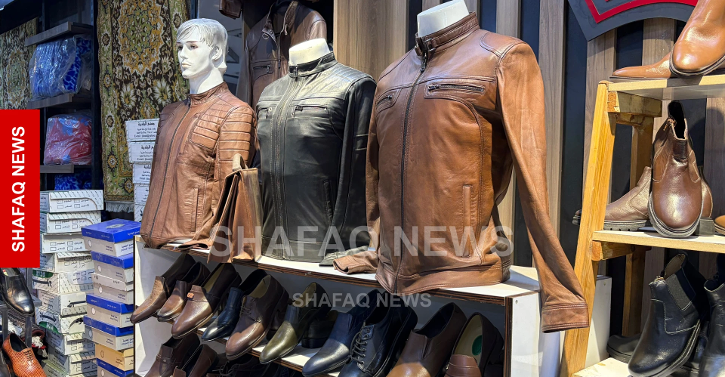
Adnan Al-Shammari has run his shop for more than 20 years, selling jackets, bags and belts. His stock includes locally made goods from the state-owned General Company for Leather Industries alongside imports from China, Turkiye and Iran.
Leather jackets sell for 150,000 to 300,000 dinars (about $99 to $197), with some pieces costing far more, Al-Shammari told Shafaq News. Over the years, he has watched demand for Iraqi products fall, as many customers prefer imported goods for their durability and lower prices. An Iraqi leather wallet costs up to 35,000 dinars (about $23), and belts start at 20,000 dinars (about $13), prices he said drive some buyers away from local goods.
Tanneries Close
Many shopkeepers on the street inherited the trade and stayed in it despite the downturn. Tanneries were once widespread, Abd said, and during the sanctions years of the 1990s, when imports were banned, the market relied entirely on local production.
Today he estimates imports account for about 90% of leather goods sold, with local products making up 10% at most, because importing is cheaper. Leather tailoring requires skill, he added, and the training courses and vocational institutes that once taught it to men and women have disappeared in recent years. A shortage of workers forced most of the Al-Rashid Street tanneries to close.
Cow, goat and sheep hides are all used, though sheepskin now dominates, according to traders.
Durability and Tailoring
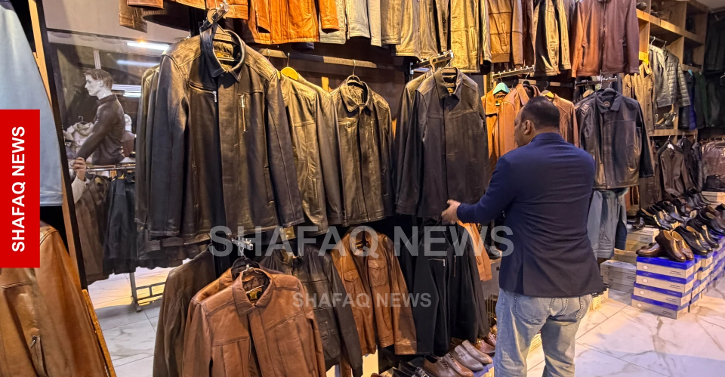
Customers still come to Karrada in search of style, durability and winter warmth. Ghaith Azhar told Shafaq News he buys there for the quality and lifespan of some products, with black and brown the most popular colors. He tells genuine leather from the synthetic version, known locally as “mushamma’,” by watching whether it shrinks when exposed to flame. He has stopped buying local products, however, after finding that some were made of imitation leather but sold at high prices.
Zahraa Ali recalls products once sold in Iraq by Bata, the international footwear company whose jackets, shoes and bags were known for their quality. Iraqi leather used to be hard-wearing, she said, while goods sold today wear out faster, though genuine leather jackets and bags remain popular for their elegance and longevity.
Some members of the security forces also shop in Karrada. Yahya Al-Azzawi prefers local shops because they let customers inspect the leather, choose the design, color and size to suit their work, and have jackets tailored, altered and repaired when needed.
A price gap
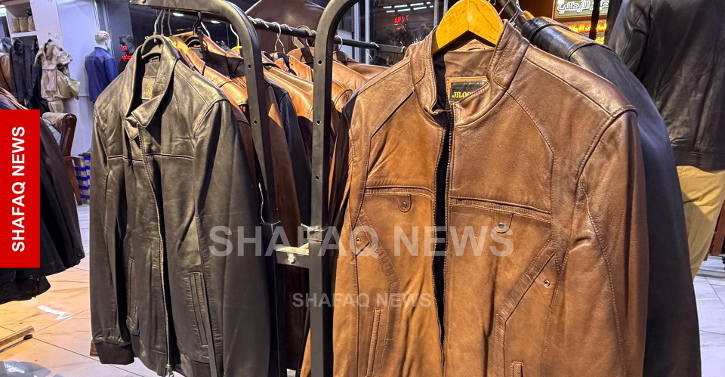
Economist Muzhir Al-Dhahabi attributes the decline of Iraqi industries, including leather, to political factors and other changes, chiefly the low prices of imports and many consumers’ reluctance to buy local. An imported leather jacket costs no more than 60,000 dinars (about $39) on average, he told Shafaq News, about half the price of a local one, with similar gaps across other leather goods.
Worker shortages in tanning and higher raw material costs have stalled an industry that once rivaled international products in quality, Al-Dhahabi said. Reviving local industry could save the government large sums, he added, but it would require a national decision and broad domestic and international support.
Read more: Can “Made in Iraq” rise again? Challenges and hopes for local manufacturing